
The European Federation of Geologists (EFG) wishes to express its solidarity with the people of Nepal and Tibet following the catastrophic debris avalanche and flash flood that struck the Langtang region on 26 August 2026. EFG extends its sincere condolences to the families of those who have lost their lives and its support to all communities affected by the disaster.
The event demonstrates the complex and cascading nature of geological hazards in high-mountain environments. Glacial collapses can mobilise large quantities of ice, water and rock, which may rapidly transform into debris flows and floods, travelling far beyond the location where the initial failure occurs.
EFG stresses that while natural mountain processes cannot be prevented, their impacts on society can be significantly reduced through sound hazard assessment, geological and geomorphological mapping, systematic monitoring of unstable slopes and glaciers, appropriate land-use planning, early-warning systems and effective emergency preparedness.
In this context, professional geologists and other geoscience professionals play an essential role in identifying and characterising unstable terrain, assessing downstream hazard propagation, monitoring changes in mountain environments, and providing scientific evidence to support risk-informed decisions by public authorities and civil protection services.
The event in the Himalayan region also highlights the importance of integrating geological, glaciological, hydrological, seismic and remote-sensing information when assessing hazards in mountain regions. Rapid analysis of satellite imagery and other Earth-observation data can be particularly valuable during and immediately after an event, helping authorities to map inundation and debris-flow extent, identify affected infrastructure and communities, and support emergency response and recovery.
Ongoing climatic and environmental changes in high mountain areas may affect the frequency or magnitude of certain hazards. EFG believes that increasing pressures on mountain environments make sustained investment in geoscience, monitoring and risk preparedness increasingly important. Strengthening national geological and scientific institutions, improving access to high-quality geological and geospatial data, developing interoperable monitoring systems and fostering international scientific cooperation are essential elements of effective disaster risk reduction.
The European Federation of Geologists reiterates its solidarity with all affected communities. EFG also expresses its support to all those working to understand the event, respond to its consequences and strengthen resilience to future geological and cascading hazards.
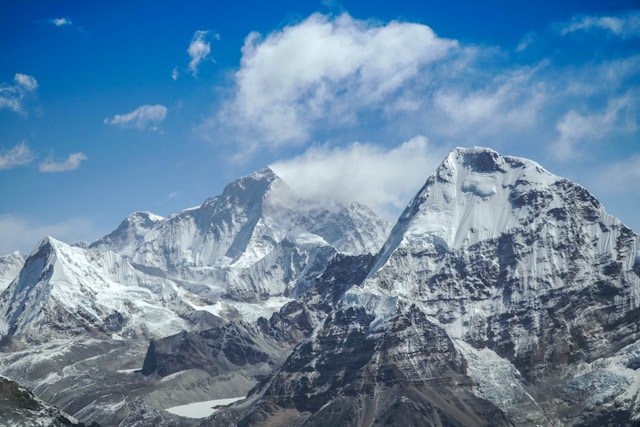
Photo: Bisesh Gurung via Unsplash
