
European Geologist Journal 61
Public participation for sustainable groundwater management: the case of the Ebro river basin
by Y. San Juan1, T. Carceller1, M. García-Vera1
1 Oficina de Planificación Hidrológica (Confederación Hidrográfica del Ebro)
* Corresponding author: ysanjuan@chebro.es
Abstract
Sustainable groundwater management in large river basins requires robust regulatory frameworks, transparent decision-making, and effective public engagement. The Ebro River Basin District (northeastern Spain) provides a representative case study for assessing the integration of scientific evidence, hydrogeological diagnosis, and stakeholder participation within the context of the EU Water Framework Directive (WFD) [1]. This study presents a comprehensive review of the groundwater-related measures of the 2022–2027 River Basin Management Plan (RBMP) developed by the Confederación Hidrográfica del Ebro [2, 3], analyses the extensive public consultation process supporting its development, and evaluates the implications of the resulting regulatory framework for current and future planning cycles.
The RBMP identifies 105 groundwater bodies covering 54,652 km², 73 of which are at risk of failing to achieve WFD [1] environmental objectives due to quantitative and/or chemical pressures. Quantitative risk is primarily associated with high exploitation indices, steady long-term piezometric declines, and reduced baseflow contributions to dependent ecosystems, whereas chemical risk is dominated by diffuse nitrate pollution from agricultural sources. The Plan therefore introduces strengthened management measures, including the prohibition of new abstractions in highly overexploited systems, mandatory internal regulation of groundwater and alluvial-aquifer abstractions, minimum spacing between wells in intensively exploited areas, and spatial restrictions on livestock activities within nitrate-vulnerable zones.
Comprising multi-phase consultations, targeted workshops, technical webinars, and direct engagement with local authorities and sectoral representatives, the public participation process was fundamental to achieving a consensual River Basin Management Plan. A total of 529 submissions were received, resulting in substantive modifications to groundwater-related articles of the reglamentation, including revised criteria for abstraction prohibitions, differentiated spacing requirements, and the incorporation of exemptions for small-scale privative uses.
The analysis demonstrates that participatory planning enhances regulatory legitimacy, improves the alignment of technical criteria with socio-economic realities, and strengthens basin-scale governance. It also highlights persistent challenges, such as nitrate pollution, the management of concession novations, and the reconciliation of restrictive measures with agricultural and municipal water needs. As the fourth-cycle RBMP (2027–2033) is initiated, the Ebro case underscores the necessity of integrating hydrogeological diagnostics, adaptive regulation, and stakeholder involvement to secure the long-term sustainability of groundwater resources.
Keywords
Groundwater Management, River Basin Planning, Stakeholder Participation, Environmental Governance
Cite as: San Juan, Y., Carceller, T.& García-Vera, M. (2026). Public participation for sustainable groundwater management: the case of the Ebro river basin. European Geologist, (61). https://doi.org/10.5281/zenodo.21886634
Note:
Papers published in this special issue of the European Geologist journal have undergone a thorough peer-review process but have not been copy-edited. Authors bear full responsibility for the linguistic accuracy of their contributions.
 This work is licensed under a Creative Commons Attribution 4.0 International License.
1. Introduction
The Water Framework Directive (WFD, 2000/60/EC) [1] established a comprehensive regulatory framework for the protection of surface and groundwater resources across the European Union. It introduced a cyclical six-year river basin planning process (European Parliament and Council, 2000), which requires the periodic review and updating of River Basin Management Plans (RBMPs)—the key instruments for water resource governance at the basin scale [4]. These plans define and delineate groundwater bodies, compile data on water availability, pressures, and monitoring networks, assess their quantitative and chemical status, and establish management measures designed to ensure sustainable exploitation and compliance with the WFD’s “good status” objective.
Achieving this objective requires the timely implementation of management measures that, while essential to prevent potentially irreversible impacts of overexploitation and pollution, may entail substantial restrictions for water users and result in significant social costs (European Commission, 2019). Within this framework, river basin planning must adopt a participatory and transparent approach that ensures the active involvement of all relevant social and economic stakeholders in the decision-making process [5].
The RBMP for the Ebro River Basin District 2022–2027, approved by Royal Decree 35/2023 (Boletín Oficial del Estado, BOE -official Spanish gazette-)” [3]), was developed through an extensive multi-phase public participation process. This participatory mechanism ensured the involvement of public authorities, economic sectors, social organisations, and the general public across several consultation stages, resulting in valuable inputs that led to substantial revisions of the final document. Consequently, key management measures—such as the delineation of areas subject to restrictions on new abstractions, the mandatory internal regulation of intakes from alluvial aquifers, the establishment of minimum spacing between abstractions in intensively exploited zones, and the restriction of livestock activities within nitrate-vulnerable areas [2]—were defined on the basis of both technical criteria and stakeholder feedback gathered throughout the participatory process.
Currently, the Ebro River Basin Authority (Confederación Hidrográfica del Ebro) is working on the preparatory stage of the 2027–2033 River Basin Management Planning cycle [6], with the aim of reviewing and, where necessary, reinforcing groundwater management measures in response to emerging challenges associated with resource pressures and recent episodes of prolonged drought [7]. In this framework, a comprehensive assessment of the current status of groundwater bodies, the achievement of environmental objectives, and possible exemptions to legal requirements are essential to support informed decision-making for future management.
2. Groundwater Status and Environmental Objectives
The river basin planning process primarily aims to achieve the good status of all water bodies and to ensure an adequate and sustainable water supply, securing sufficient availability to meet the demands of all user sectors (domestic, agricultural, industrial, and others) (Ministry for Ecological Transition and the Demographic Challenge [4]).
It is essential to distinguish between an aquifer and a groundwater body. Under the Spanish legal framework (Texto Refundido de la Ley de aguas, art. 40-bis d -consolidated water act-) [8], an aquifer is defined as one or more subsurface layers of rock or geological strata possessing sufficient porosity and permeability to allow groundwater flow or abstraction [8]. Conversely, the groundwater body, introduced by the Water Framework Directive (WFD) as the fundamental unit of management, represents a clearly delineated volume of groundwater that may comprise one or several aquifers. This concept emphasizes the content (the water itself) rather than the container (the geological formation), providing a practical and functional basis for integrated river basin management and planning [7].
The WFD stipulates that the overall status of a groundwater body is determined by the lower of its quantitative and chemical status. Accordingly, assessing whether a groundwater body achieves good status requires evaluating both piezometric trends and the presence of contaminants that may compromise water quality [1].
The current RBMP identifies 105 groundwater bodies within the Ebro River Basin District, covering a total area of 54,652 km² (Ebro River Basin Authority [2]. Of these, 73 groundwater bodies are considered at risk of failing to meet the established environmental objectives due to significant pressures—21 with quantitative risk and 71 with chemical risk, including 19 groundwater bodies affected by both types of pressure [2].
2.1. Groundwater Bodies: Quantitative Status
Under the Spanish Water Legislation, the quantitative status of a groundwater body is defined as the extent to which direct and indirect abstractions have an influence on the groundwater resource (article 3.o. of RD 907/2007) [9].
A groundwater body is considered to be in good quantitative status when: its long-term average annual abstraction does not exceed the available water resources and, is not subject to human-induced alterations that could prevent its associated surface waters to meet the established environmental objectives, causing significant impacts on linked terrestrial ecosystems, or induce flow modifications resulting in salinisation or other intrusions (Article 3.e. of RD 907/2007) [9].
Conversely, a groundwater body is considered to be at quantitative risk when current or foreseeable pressures could result in an imbalance between available resources and abstractions, leading to sustained declines in piezometric levels, reductions in baseflows of dependent rivers, or adverse impacts on connected wetlands [2].
Appendix 01.05 of the 2022–2027 Ebro River Basin District Hydrological Plan [2] provides a comprehensive characterization of groundwater bodies, detailing their status and the principal pressure factors influencing the attainment of environmental objectives. The standardized technical criteria underpinning the identification of groundwater bodies at quantitative risk—which enable assessment of abstraction sustainability relative to available resources—are summarized below:
- An exploitation index exceeding 0.7, indicating that water abstractions surpass 70% of the groundwater body’s annual natural recharge. Under such conditions, the pressure on the groundwater body is regarded as high and may jeopardize its long-term equilibrium.
- Abstractions exceeding 80% of the available resources in specific groundwater bodies, associated with localized declines in piezometric levels.
- Significant declines in groundwater bodies connected to dependent groundwater ecosystems (EDAS) in poor conservation status, indicating a direct environmental impact on associated habitats.
- Widespread declines or unbalanced available resources, indicating structural overexploitation in specific hydrogeological units.
Collectively, these criteria enable the objective identification of groundwater bodies where the balance between available resources and abstraction pressures may be at risk, providing the technical foundation for prioritizing management measures designed to achieve the Water Framework Directive’s environmental objectives [1].
2.2. Chemical status of groundwater bodies
The qualitative status corresponds to the chemical status of groundwater. Good chemical status is defined for a groundwater body as one that: a) has a chemical composition free from salinisation or other intrusions; b) complies with established quality standards; c) does not compromise the achievement of environmental objectives in associated surface waters; and d) does not cause significant harm to connected terrestrial ecosystems. (art. 3.g. RD 907/2007) [9].
As in the previous section, the criteria used to assess chemical risk in groundwater bodies can be found in the supplementary documentation of the Ebro River Basin Hydrological Plan [2]. Pressures on the chemical status of groundwater bodies include both point sources—such as urban and industrial discharges, contaminated soils or abandoned industrial facilities, and landfills—and diffuse sources, including urban runoff, agriculture, transport, and mining. Each groundwater body identified at risk undergoes a detailed characterization that specifies the significant pressures affecting it. The risk of failing to achieve good chemical status is justified in each characterization sheet using technical criteria linked to the contaminant responsible for the risk. Considered Key criteria include:
- Groundwater bodies at risk due to point-source contaminants, as identified by the Groundwater Quality Division, affecting less than 20% of the body.
- Groundwater bodies at risk from nitrate pollution, defined as those with average or maximum concentrations between 40 and 50 mg/l over the last four years affecting more than 20% of the body, or concentrations exceeding 50 mg/l.
- Groundwater bodies impacted by nitrates, with an average or maximum concentrations exceeding 50 mg/L over the last four years in more than 20% of the body.
The combined application of these technical criteria, and those employed to identify groundwater bodies at risk of failing to achieve good quantitative status, enable the precise identification of water bodies at risk of non-compliance with the environmental objectives set by the WFD. This assessment provides a robust foundation for defining management and monitoring measures within the framework of the Hydrological Plan’s programme of measures [2].
2.3. Overall Status and Environmental Objectives
According to the WFD, EU Member States are required to implement the necessary measures to achieve good ecological and chemical status for both surface and groundwater bodies within a fifteen-year timeframe from the Directive’s entry into force [1]. Consequently, RBMPs must identify all existing water bodies and establish specific environmental objectives for each of them, ensuring sustainable water resource management [4].
For the Ebro River Basin, the risk assessment process resulted in the development of 73 supplementary characterization sheets for groundwater bodies identified as being at risk of failing to meet the environmental objectives set by the WFD [2].
Moreover, the Plan provides for the application of extensions for compliance under article 4.4 of the WFD. Accordingly, the Ebro River Basin Hydrological Plan grants extensions for 39 groundwater bodies, postponing the deadlines for achieving good status to 2033 or 2039 in cases where attainment by 2027 is unfeasible due to natural or technical constraints [2].
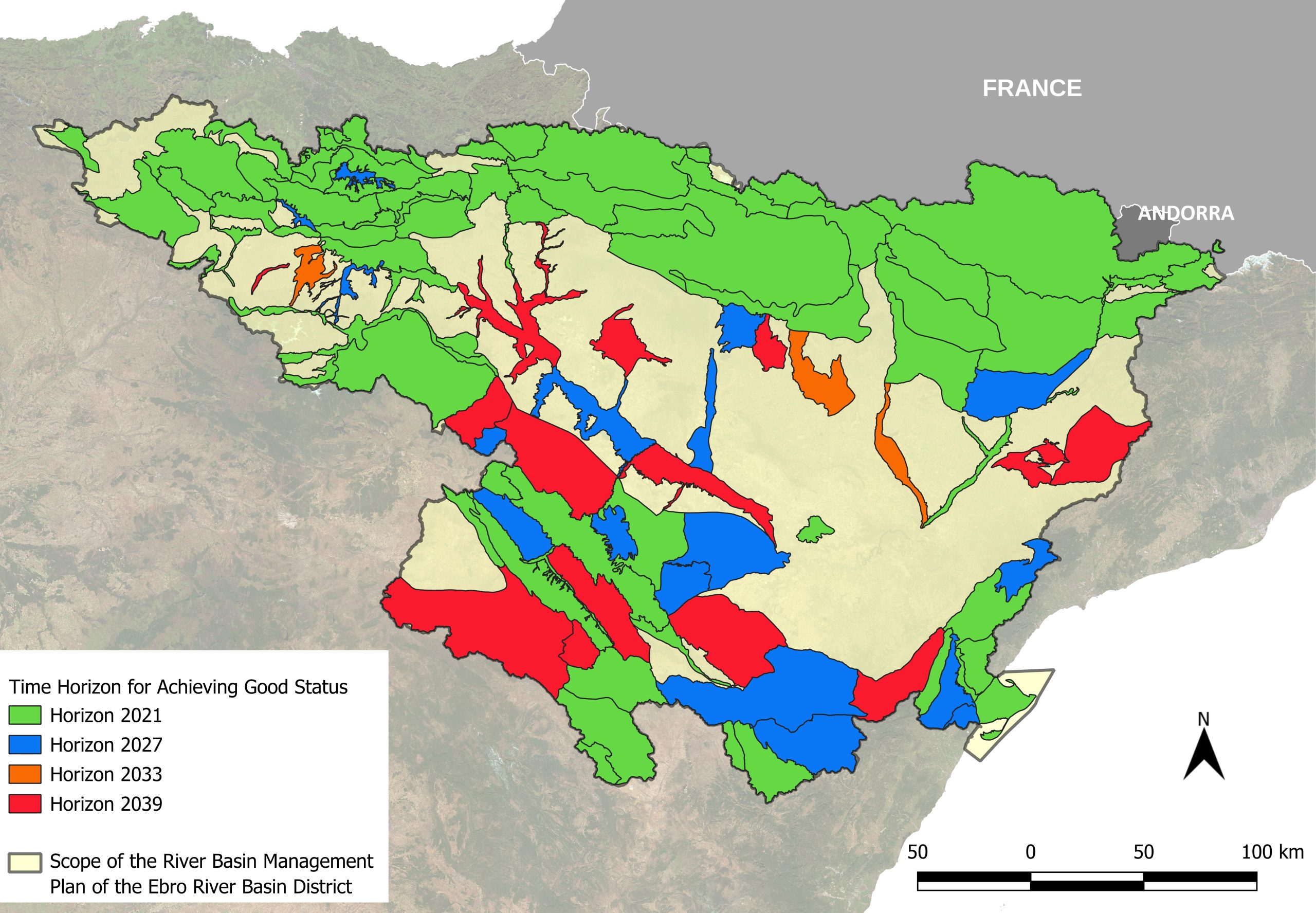
Figure 1: Timeline for achieving good status of groundwater bodies in the basin [2].
The primary cause of non-compliance is the nitrate pollution from agricultural sources, impacting 36 groundwater bodies. The persistence of this issue justifies the use of compliance extensions, as the performance of action programs in nitrate vulnerable zones, established under Directive 91/676/EEC [10] and Royal Decree 47/2022 [11], have not yet demonstrated sufficient effectiveness. Accordingly, the Plan establishes tailored action programmes for each affected groundwater body and introduces additional measures.
Secondly, six groundwater bodies have been identified as being at risk of poor quantitative status, three of which coincide with those impacted by nitrate pollution. The inability to achieve recovery by the 2027 deadline, due to the high extraction rates and hydrogeological constraints, justifies the granting of compliance extensions until 2033 or 2039 [2].
In both scenarios, the legislation (Directive 2000/60/EC, 2000 [1]; Royal Decree 1514/2009, 2009 [12]) mandates the designation of these groundwater bodies as being at risk of failing to achieve good status, and the development of tailored action programs aimed at progressively mitigating pressures and, ensuring recovery within the granted extension periods.
3. Groundwater Restrictions in the 2023 Hydrological Plan: Public Participation
Annex XII of Royal Decree 35/2023 [13] sets out the regulatory provisions of the Hydrological Plan for the Spanish portion of the Ebro River Basin District. The regulatory section of hydrological plans has traditionally constituted a cornerstone in water resources management. It defines the conditions for the sustainable and rational use of water, guiding societal practices towards the objectives established by the Hydrological Plan: “achieve good status of waters and meet water demands” (Article 40.1, TRLA) [8]. While inherently restrictive, these provisions are designed to enhance water security across the Ebro Basin within a framework of long-term sustainability.
The 1998 Plan [14] regulations introduced, for the first time, specific provisions for aquifer exploitation via technical datasheets, including criteria such as minimum spacing between water abstractions.
With the approval of the first (RD 129/2014 [15]) and second cycle plans (RD 1/2016 [16]), under the framework of the Water Framework Directive, stricter measures concerning groundwater use were introduced. Key measures included the following: the designation of areas where new concessions or expansions of existing rights are prohibited, particularly for groundwater bodies with high exploitation indices and documented declines in piezometric levels or impacts on springs; the implementation of mandatory internal regulation to secure water availability during scarcity periods and maintain operational viability of abstractions; and the establishment of minimum protection distances around springs and sensitive areas to safeguard natural discharges and prevent significant adverse effects.
These measures represented a transition towards a more restrictive management approach focused on the long-term sustainability of groundwater resources, providing the foundational framework for the current regulatory and operational context.
3.1. Public Participation Process in Water Planning
Public participation in hydrological planning is framed within the Water Framework Directive (WFD). In Spain, it is regulated by articles 72 to 75 of the Water Planning Regulation [9], which require river basin authorities to develop a specific framework for organizing and structuring procedures related to information, consultation, and active involvement. This process is grounded on key principles such as transparency and effective communication, public awareness on water management, consensus-building for conflict resolution, enhanced understanding of stakeholder needs and perceptions, and, ultimately, the promotion of good governance and shared responsibility in shaping water policies. These principles underpin participatory practices and ensure that decision-making is conducted through an open, inclusive, and socially legitimate process.
The legislative framework defines public participation through three complementary levels: (i) public information, ensuring effective access to and dissemination of information; (ii) public consultation, incorporating feedback and inputs from stakeholders; and (iii) active involvement, fostering consensus and cooperation. Whereas information and consultation are mandatory processes, active involvement is promoted as a desirable level of engagement to be encouraged by competent authorities, aligned withthe WFD [1] and national regulatory provisions.
Within this framework, the Water Council of the River Basin District (CAD, standing for Consejo del Agua de la Demarcación) serves as the participatory and advisory body of the River Basin Authorities, tasked with facilitating public information, consultation, and active participation throughout the planning process, as well as submitting the River RBMP and its subsequent updates to the Government in accordance with national water legislation (Article 35.2 TRLA) [8].
Within the Ebro River Basin, the planning cycles have implemented these participatory mechanisms with differing levels of intensity. The first cycle featured a comprehensive and decentralized approach, placing particular emphasis on both the Programme of Measures and the identification of Significant Water Management Issues (SWMIs) [17]. In contrast, the second cycle had a reduced scope due to the short temporal gap between the first two cycles. Nonetheless, the Basin Water Council (Consejo del Agua) played a pivotal role, and the outcomes of the participatory process were incorporated into the RBMPs, ensuring that stakeholder-input directly informed the formulation of water management measures.
Aligned with this approach, the third-cycle RBMP incorporated a comprehensive participatory process structured in three consecutive phases, each lasting six months. The period from 23 June to 22 December 2021, corresponding to the official public consultation stage, was particularly significant, as a total of 529 submissions were received—95 of which specifically addressed the proposed management measures. The feedback provided during this process resulted in substantial adjustments to the regulatory framework. [18].
3.2. Intermediate Documents and Public Consultation Process
Within the six-year planning cycle, the initial documents of the River Basin Management Plan [19] are intended to lay the groundwork for subsequent planning stages. These include a timetable of activities, a general characterisation of the river basin district (covering its features, pressures, and water uses), and a proposed public participation framework for the plan’s development. These documents enable stakeholders to gain insight into water management issues and to contribute their views prior to the drafting of the plan itself.
Through a Resolution issued by the Directorate-General for Water on 15 October 2018 (published in the Boletín Oficial del Estado -official state gazette-, BOE, on 19 October 2018), a six-month public consultation period was launched for the “initial documents of the hydrological planning process (third-cycle review)”. This process covered the river basin districts of the Western Cantabrian, Guadalquivir, Ceuta, Melilla, Segura and, Júcar, as well as the Spanish portions of the Eastern Cantabrian (under the jurisdiction of the General State Administration), Miño-Sil, Duero, Tagus, Guadiana, and Ebro river basin districts.
Between 20 October 2018 and 19 April 2019, the Ebro River Basin Authority (CHE) received 27 written submissions including comments, observations, and recommendations from stakeholders. [19]
Given their nature, this initial set of planning documents did not include specific proposals on groundwater use restrictions. However, several contributions were submitted concerning other groundwater-related issues, all of which received individual responses [19]. The main points of controversy were the following:
- The proposal to extend the delineation of groundwater bodies to ensure full coverage of the river basin district. Ultimately, the proposal included in the initial documents was withdrawn, and the existing delineation was maintained.
- Regarding the groundwater bodies previously classified as impacted, the status of two units proposed by the Basque Water Agency was revised and reclassified as “not impacted.” The remaining two groundwater bodies retained their “impacted” designation, as nitrate concentrations exceeded 50 mg/
- Following the concerns raised about the recovery of environmental costs in the agricultural sector, this issue was incorporated as a separate item within the Significant Water Management Issues Report.
- It was proposed to use springs and regional groundwater discharges along the Right Bank of the Ebro, as well as unexploited headwater springs, as indicators for drought assessment. The Ebro River Basin Authority (CHE) acknowledged the relevance of their monitoring, noting that these had already been addressed during the public consultation process of the Special Drought Plan, and suggested incorporating the topic into the Significant Water Management Issues Report through a dedicated item titled “Promoting the Sustainable Quantitative Management of Groundwater Bodies.”.
The second document package pertains to the Outline of Significant Water Management Issues (OSWMI), which is also subjected to public disclosure (Article 79 of Royal Decree 907/2007, Water Planning Regulations [9]) in its provisional form (Provisional Outline of Significant Water Management Issues – POSWMI). In this instance, the public consultation period, initially opened on 25 January 2020, was extended to nearly nine months due to the COVID-19 pandemic. Concurrently, a predominantly virtual public participation process was implemented, including dissemination of the documents on the CHE website, outreach via social media, publication of an explanatory brochure and a video illustrating the planning process from the Ministry, and the conduct of webinars presenting the key elements of the POSWMI.
The initial webinar, serving an introductory purpose, was delivered by the Director General for Water and the Deputy Director General for Water Planning. Subsequently, the CHE held a second webinar specifically focused on its basin. Attendance totaled 476 participants out of 573 registered. This was followed by the release of explanatory videos covering the significant water management issues and seven targeted public participation sessions addressing the 18 topics of the POSWMI. Figure 2 presents the distribution of participants by sector, according to their attendance at the seven organized sessions.

Figure 2: Attendees in the virtual sessions on the draft SWMI (Third Cycle), by sector activity. [20]
Targeted meetings were conducted with regional administrations and distinct stakeholder groups, with each session specifically addressing the topics most relevant to the audience, including irrigation, water supply, and hydroelectric operations.
Within the scope of the transboundary basins with France, particular attention was given to the meeting with the staff in charge of the Schéma d’Aménagement et de Gestion des Eaux (SAGE) of the Garonne Valley, the continuous monitoring performed throughout the planning process, and the inputs provided by the Local Water Commission overseeing this management tool.
After integrating the modifications proposed during the public consultation, the final Significant Water Management Issues – SWMI- was drafted and submitted to the Ebro River Basin Water Council for review in a plenary session held on 30 December 2020, prior to its formal adoption.
3.3. Draft River Basin Management Plan – Proposed Regulatory Limitations
The RBMP of the Ebro district (demarcación del Ebro) represents the final document in the river basin planning process for the 2022–2027 cycle. Its preparation is structured in two consecutive stages. The first stage involves drafting the RBMP for discussion and public consultation over a minimum period of six months. In the second stage, feedback and conclusions from this consultation are integrated, resulting in the final RBMP, which is subsequently submitted to the Ebro River Basin Council for formal review. [21]
The Draft River Basin Management Plan introduced ambitious measures to restrict groundwater abstractions and safeguard the public hydraulic domain, with the objective of preserving aquifer status or initiating their recovery towards good status. These measures build on earlier temporary restrictions on abstraction increases in specific areas, previously established by the Governing Board of the Ebro River Basin Authority (CHE) [21].
Initially, the regulatory framework presented in the Draft River Basin Management Plan (Proyecto de Plan Hidrológico de Cuenca) proposed, among other measures, the following actions [21]:
- Prohibition of new private water abstractions (both surface and groundwater) in areas exhibiting high exploitation indices and documented declines in groundwater levels. This measure specifically targets the Aguas Vivas river basin system, encompassing the entire Aguas Vivas and its tributaries, as well as the full stretches of the Lopín and Ginel rivers.
- Mandatory internal regulation for groundwater abstractions from wells located in alluvial deposits associated with river courses across the entire basin.
- Implementation of a minimum 500-meter separation between groundwater abstractions in highly exploited groundwater bodies, in accordance with the technical data presented in Annex 9 of the Plan.
- Prohibition on the siting of new livestock facilities in nitrate-vulnerable areas within a 100‑metre riparian buffer zone along riverbanks.
These initiatives elicited the greatest controversy, attracting the highest number of stakeholder inputs, as detailed in the following sections.
3.4. Public Consultation
On 22 June 2021, the BOE (official state gazette) (No. 148) published a notice issued by the Directorate-General for Water, announcing the commencement of the public consultation period for the documents entitled Proposed Draft River Basin Management Plan, Proposed Draft Flood Risk Management Plan, and Joint Strategic Environmental Assessment [22]. These documents form part of the review process of the corresponding planning instruments for the River Basin Districts of the Western Cantabrian, Guadalquivir, Ceuta, Melilla, Segura and Júcar, as well as for the Spanish sections of the Eastern Cantabrian (under the jurisdiction of the General State Administration), Miño-Sil, Duero, Tagus, Guadiana and Ebro.
This notice, which marked the commencement of the public consultation period, set a six-month duration, ending on 22 December 2021.
To present the Draft River Basin Management Plan for the Ebro River Basin District and to foster active public participation in its development, the Ebro River Basin Authority (CHE) provided a range of outreach materials, including an explanatory video, a summary document, and an information leaflet on the Draft RBMP for the Ebro. These resources were made available through the official CHE website via dedicated access links.
The Directorate-General for Water of the Ministry for the Ecological Transition and the Demographic Challenge, together with the River Basin Authorities, organised a series of webinars and small-scale in-person sessions to present the main features of the new planning cycle (2022–2027). The official launch event took place on 21 June 2021 and was presided over by the Minister and the Director-General for Water.
Building on the approach applied to the intermediate documents, the Ebro River Basin Authority (CHE) implemented an extensive public participation process alongside the consultation period, designed to gather feedback on the Draft River Basin Management Plan and its associated Strategic Environmental Assessment. The process targeted organisations and associations representing economic, social, and environmental interests, as well as sectoral stakeholders and the general public. Its primary aim was to ensure that comments and proposals be integrated into the final consolidation of the River Basin Management Plan, thus promoting a more inclusive approach aligned with the principles of sound water governance and participatory planning.
Due to the significance of the proposed ban on new private water abstractions across the entire Aguas Vivas River basin and the Lopín and Ginel River basins, the public participation process included direct notifications to all 51 municipalities, each accompanied by a detailed map of the affected area. The regulatory proposal was also presented through video workshops and stakeholder meetings with local authorities to enhance understanding and feedback. [20]
To engage relevant stakeholders in the preparation of the Plan, the Ebro River Basin Authority (CHE) conducted a series of online public participation workshops, where participants actively debated the Draft Hydrological Plan for the Ebro River Basin. These workshops represented a critical component of the final stage of the third hydrological planning cycle, providing the foundation for the development of the currently approved Hydrological Plan.
Overall, (Figure 3, [20]), the stakeholder groups with the largest number of registered participants were public administrations (PA) (35%) and associations, primarily related to the agricultural and environmental sectors, including Irrigation Communities (24%), alongside a substantial proportion of university and research personnel (18%).

Figure 3: Percentage distribution by sector of activity in the participation of the workshops organized by the Ebro River Basin Authority [20].
This process represented one of the most extensive public consultations conducted within the hydrological planning cycles to date, both in terms of participation and information generated, and regarding the breadth and diversity of contributions, observations, and suggestions received. As a result of the consultation, 529 documents – including proposals, observations, and suggestions (POS) – were submitted, 223 of which presented distinct content.
3.5. Analysis of Stakeholder Contributions and Modifications. Consolidated Regulatory Framework
The aforementioned measures, incorporated in the regulatory framework of the Draft 2022–2027 Ebro River Basin Management Plan, generated considerable interest and were the focus of numerous submissions and objections. This section systematically reviews each proposed measure, summarises the stakeholder contributions received, details the responses provided by the Ebro Hydrographic Confederation (CHE), and presents the final consolidated version of the regulations adopted in the current Plan. All submissions were addressed individually, with identical responses applied to identical objections. [23, 24]
A. Areas where the granting of new water abstractions or the expansion of existing rights were to be prohibited:
A.1. Article 24.1 initially stipulated that no new private water abstractions, nor extensions of existing abstractions, would be authorised for water bodies—either surface water or groundwater—within the catchments of the Lopín and Ginel rivers, as well as throughout the entire Aguas Vivas river basin.
In response to this restriction, 25 stakeholders submitted formal comments. The River Basin Authority clarified that the technical rationale for this provision derives from the hydrological balance of the Aguas Vivas system, as detailed in Annex 06 (“Water exploitation systems and resource balances”) of the River Basin Management Plan [21]. The results indicate that the Aguas Vivas operating system has an available water resource of 26.5 hm³/year compared to an estimated demand of 52.25 hm³/year, corresponding to an overall system reliability of 33%. This markedly low reliability value threatened the long-term sustainability of current abstractions. Consequently, the evident scarcity of available resources—widely recognised within the basin itself—necessitated the adoption of measures to safeguard existing uses and to maintain water quality standards.
Given the significance of this restriction and the feedback received during the consultation process, article 24.1 was subsequently revised to reconcile socio-economic requirements with the acknowledged limitations of the available water resources.
The amendment to the article entails the exclusion of minor abstractions intended for the legally recognised right to private uses (as defined in article 54 of the consolidated text of the water act –TRLA-) [8], provided that annual volumes do not exceed 7,000 m³. Similarly, from its initial formulation, this restriction has not applied to municipal water supply systems for human consumption.
Apart from these two cases, no specific justification shall be accepted to new groundwater concessions or the expansion of existing ones being granted. Nevertheless, it should be noted that this restriction applies exclusively to resources managed within the same “exploitation unit” (i.e. management area, typically a subbasin). Therefore, the use of water resources derived from other exploitation systems may still be considered, provided that the specific conditions established in the River Basin Management Plan—such as internal regulation requirements and compliance with ecological flow regimes—are duly fulfilled. Figure 4 [24].

Figure 4: Areas with resource problems affected by article 24.1 of Annex XII (Regulations of the Ebro Hydrological Plan 2022-2027 [24]).
A.2. Article 45.2 of the River Basin Management Plan, applicable exclusively to groundwater resources, originally stipulated the non-admission of new abstractions and prohibited any increase in groundwater exploitation within hydrogeologically sensitive areas. These areas are defined as follows:
- Groundwater bodies under significant abstraction pressure, showing sustained piezometric declines or measurable impacts on natural discharges associated with preferential water-use rights.
- Designated protection zones surrounding public piezometric monitoring points, defined by a 400-metre radius.
- Safeguard zones established to preserve key discharge areas within the basin, delineated by radii of 700 or 1,000 metres according to the magnitude of the spring or discharge being protected.
No exceptional justification was to be permitted in any of these areas that enable the granting of new concessions or the expansion of groundwater abstractions.
Moreover, Article 45.4 of the regulations established the requirement to maintain fixed minimum separation distances between abstractions across a series of groundwater bodies.
Following the assessment of 91 stakeholder submissions concerning article 45, it was communicated that the quantitative status evaluation conducted for the third-cycle review identified 17 groundwater bodies with an exploitation index exceeding 0.8. Of these, six exhibited evidence of progressive piezometric declines and had consequently been classified as poor quantitative status. As an illustrative example, groundwater body 082 Huerva-Perejiles presented an exploitation index of 2.4, with level declines confirmed at both monitoring points of the official piezometric network (Figure 5). Similarly, this underscored the application of the precautionary principle, which mandated the implementation of restrictions to prevent deterioration of the quantitative status in six groundwater bodies, while defining preventive measures for the remaining eleven.
As an illustrative example, groundwater body 082 Huerva-Perejiles presented an exploitation index of 2.4, with level declines confirmed at both monitoring points of the official piezometric network (Figure 5).
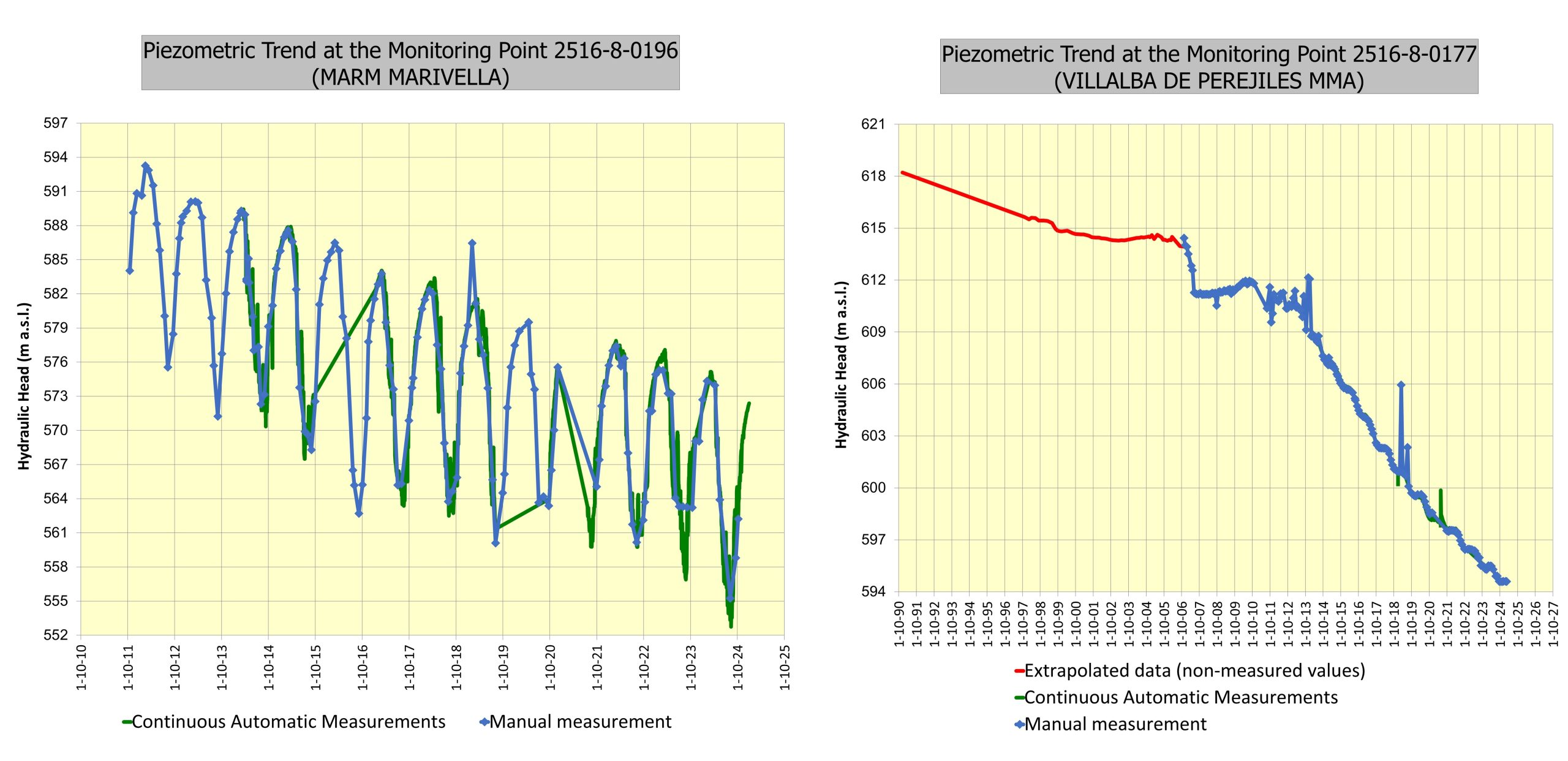
Figure 5: Piezometric trends at two points of the area affected by article 45 of Annex XII (Regulations of the Ebro Hydrological Plan 2022-2027 [24]). The graphs show a clear and sustained decrease in the piezometric level over time.
During the public consultation stage of the hydrological plan, dissemination of this article was reinforced through a dedicated video workshop on regulatory provisions and meetings with local stakeholders.
Additional thematic workshops held across the Ebro Basin further supported dialogue and facilitated discussion on the key regulatory innovations proposed.
Additionally, instead of applying a blanket prohibition across groundwater bodies subject to the highest extraction pressures, an analysis was undertaken of abstraction density—covering both authorised and pending permits—as well as the volume allocated per municipality within each body.
This approach allowed restrictions on new concessions and expansions to be geographically targeted, limiting them to the areas experiencing the most intensive levels of exploitation. (Figure 6).

Figure 6: Areas with water resource problems affected by article 45.2 of Annex XII (Regulations of the Ebro Hydrological Plan 2022-2027 [24]).
Furthermore, Article 45.4 was amended to replace the initially proposed 500-metre separation with a minimum distance of 400 m between abstraction points under concession applications and 200 m for abstractions registered pursuant to article 54.2 of the TRLA. This separation distance must be maintained for any new abstractions, provided they do not form part of the same water-use system. (Figure 7).

Figure 7: Areas with conditional distance between underground water intakes affected by article 45.4 of Annex XII (Regulations of the Ebro Hydrological Plan 2022-2027 [24]).
B. Mandatory internal regulation is required for water use under article 24.2 of Annex XII [24]. Accordingly, the allocation of new private water use rights, as well as the extension of existing rights, is contingent upon the implementation of storage infrastructure to guarantee resource availability for a period of 10 to 70 days during the peak demand month, depending on the degree of aquifer exploitation and the density of wells and abstractions in the area.
This requirement applies to abstractions within the designated river reaches and their tributaries, as well as to wells drawing from the associated alluvial aquifers.
Despite the 25 submissions received, no amendments were made to the regulation. The Hydrological Planning Office clarified that internal regulation is necessary to ensure the autonomous functioning of abstractions during periods when the ecological flow regime mandates the suspension of water withdrawals at the abstraction point, whether from surface waters or from alluvial aquifers exerting significant influence on associated surface water bodies.
Consequently, the requirement for internal regulation for the granting of new consumptive water rights or the modification of existing ones, as established in the 2016 plan, is retained. In the 2023 plan, however, the internal regulation has been strengthened by extending the required number of days of regulated operation. Accordingly, areas experiencing the most severe scarcity have increased from 40 days under the 2016 plan to 70 days under the 2023 plan.
Additionally, for groundwater, the same internal regulation criterion is applied to all wells situated in alluvial aquifers directly linked to the corresponding surface water body, as depicted on a dedicated layer derived from the geological mapping of GEODE from the Geological and Mining Institute of Spain (IGME). The area subject to this requirement covers 12% of the Ebro basin (Figure 8). The current Plan also allows for the submission of a specific justification to waive the internal regulation requirement.
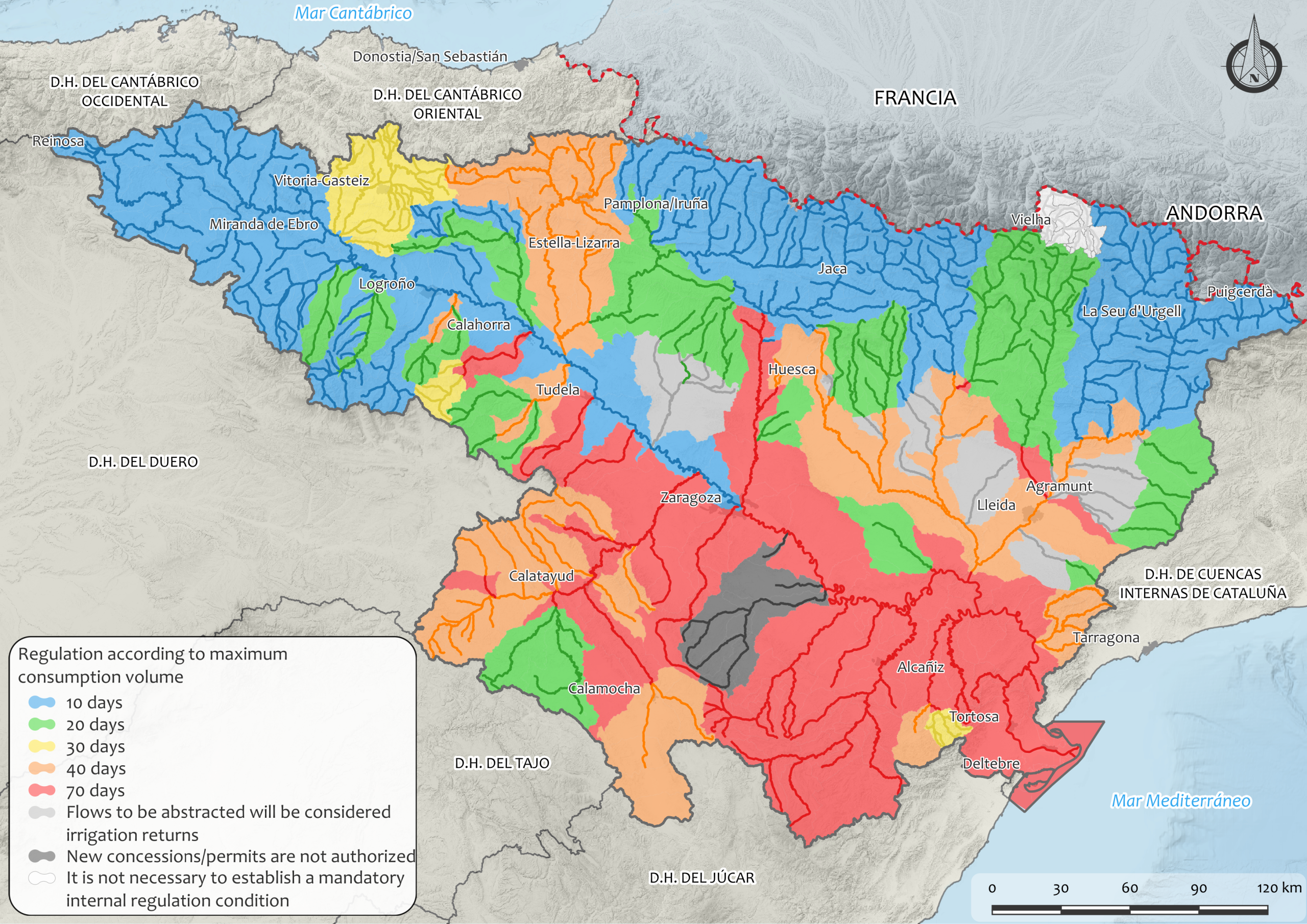
Figure 8: Zones with mandatory internal regulation according to article 24.2 of Annex XII (Regulations of the Ebro Hydrological Plan 2022-2027 [24]). Five types of zones are differentiated according to the number of days of supply guaranteed by the internal regulation according to the month of maximum consumption.
C. The restriction on the establishment of livestock facilities within a 100-metre buffer zone on both banks of watercourses located in nitrate-vulnerable zones (article 44 of the Ebro River Basin Management Plan, 2022–2027 [24]) received both supporting and opposing submissions during the public consultation process. The River Basin Planning Office (PHO) maintained that this measure is essential to safeguard water quality in vulnerable areas, where immediate action is required to prevent further deterioration of chemical and ecological status.
Moreover, Royal Decree 47/2022 of 18 January [11], on the protection of waters against diffuse pollution from agricultural nitrate sources, reinforces the legal authority of the River Basin Management Plan to impose such spatial restrictions. Article 8.4 of the Royal Decree explicitly recognises the competence of River Basin Authorities to adopt stricter measures where necessary to protect or restore the status of water bodies:
“4. Para reforzar la protección (…) los Organismos de cuenca y las Administraciones hidráulicas establecerán limitaciones a nuevas concesiones y a otras actividades sujetas a su autorización. (…)”
[“4. To reinforce protection, the River Basin Authorities and Water Administrations shall establish limitations on new water rights concessions and on other activities subject to their authorisation. (…)”]
Consequently, in the final version of the River Basin Management Plan, this measure remained unchanged.
From a broader perspective, the reinforcement of water use restrictions within the Ebro River Basin, as established in the 2023 Hydrological Plan, has contributed to raising public awareness regarding the need to moderate water demands. This shift supports the transition towards a sustainability-oriented management model, aligned with the objectives defined under the current legislative framework.
Similarly, in the consolidated version of the third-cycle Hydrological Plan (Royal Decree 35/2023 [13]), following the incorporation of the relevant amendments, a clear regulatory advancement is evident, strengthening the provisions designed to ensure the rational and sustainable management of water resources.
4. Implementation of the new regulatory framework following the adoption of the 2023 River Basin Management Plan
Requests pending at the time of the publication of the 2023 Hydrological Plan were reassessed in light of the newly approved regulations. Consequently, in some cases, the outcome of the ratification report indicated non-compatibility with the updated Plan. The most numerous and contentious incompatibilities arose from the prohibition of new water abstractions or of the extension of existing rights throughout the Aguas Vivas exploitation system. In addition, pending requests were subjected to the revised internal regulation criteria, which are more stringent than previous ones, to ensure the protection of the water environment.
The stricter provisions of the current regulatory framework present several challenges in reconciling the sustainable management of water resources with the protection of pre-existing rights. This is particularly evident in the case of contract modifications (novations). Currently, requests for novation in the Ebro River Basin must remain pending, as there is no established guidance outlining the criteria for their assessment, while the current Plan remains valid. The processing and evaluation of novation requests submitted during the current Plan’s period of validity, as well as those received by the Ebro River Basin Authority (CHE) in the future, will be processed following the approval of the next River Basin Management Plan.
Likewise, numerous complaints have been received from small-scale farmers and other users who, either due to limited available land or constrained financial resources, are unable to comply with the internal regulation requirements imposed by the Hydrological Planning Office (PHO) for the approval of the requested water abstraction rights.
Another recurring challenge under the current Plan regulatory framework is the limited number of possible crops with legally assigned irrigation allocations. Consequently, many assessments rely on the allocations attributed to crops most analogous to those grown in the target agricultural district, or, where necessary, on data from neighbouring districts to estimate appropriate irrigation requirements.
In the same way, this situation applies to various industrial sectors for which no regulatory cap on annual water abstraction has been established.
On this basis, the new planning cycle places greater emphasis on improving the sustainability of water use, aiming to achieve a balanced relationship between resource management and socio‑economic development within the river basin.
5. Fourth-Cycle Hydrological Plan
Currently, the Hydrological Plan scheduled for approval in 2027 is under development [25]. The cyclical review process of Hydrological Plans entails a systematic assessment and update of the regulatory measures implemented in the preceding plan. Accordingly, for the 2028–2033 planning period, priority action lines are already being defined through the preparation of the Provisional Outline of Significant Water Management Issues (POSWM) [25].
As highlighted in the preceding section, the novation of groundwater concessions in areas subject to restrictions on new abstractions, represents a key challenge for sustainable water management. The provisional inventory of irrigation water rights scheduled to expire across the Ebro Basin by 2033 includes a total of 459 concessions set to lapse by 2027 and 261 between 2028 and 2033. Among these, 154 are situated within the zones defined in Articles 24.1, 45.2, and 45.4. These figures and the associated listings remain provisional and are currently undergoing systematic verification and completion, and should therefore be interpreted as an initial approximation.
An analysis of the 154 cases identified as potentially incompatible within the novation process indicates that they correspond to 5,546 ha. In the absence of any novation of irrigation rights in these areas, water use would decrease by 16 hm³/year, yielding a positive effect on the recovery of zones subject to regulatory limitations, albeit with significant socio-economic repercussions. Should a threshold allocation be allowed in the novation procedure, the volume of water not utilized would decrease as depicted in Figure 9 [25].

Figure 9: Variation of the total volume of water that would cease to be used for irrigation, susceptible to novation between 2022 and 2033, in the areas of application of articles 24.1, 45.2 and 45.4, according to the maximum value of the allocation after the preliminary novation.
Concerning the prohibition of new groundwater abstractions and the expansion of existing rights in areas experiencing higher extraction pressure, a preliminary study for the fourth planning cycle review was conducted, entitled “Assessment of the Quantitative Status of the Water Bodies of the Ebro River Basin.” The aim was to obtain its findings in advance, allowing their incorporation from the early stages of the fourth cycle review.
Three general criteria of water use — namely the WEI+ index, the served guarantee, and the unallocated contribution projected for 2039 — have been analysed, serving as the basis for classifying the exploitation systems. Figure 10 [25].

Figure 10: Volumetric reliability under current conditions by water‐resources exploitation system.
The overall risk level resulting from the three general water use criteria is presented in the following table (Table 1 [25]):
Table 1: Quantitative Risk Level Assessment of the Water Resource Systems.
These findings enable the formulation of a preliminary proposal for the extension of areas where new water rights may be granted and existing rights may not be expanded. This assessment should be finalised during the preparation of the fourth-cycle Hydrological Plan.
Furthermore, while the criteria for mandatory internal regulation will need to be revised in light of the updated balances of the fourth-cycle Hydrological Plan, significant modifications are not expected. However, the potential impact of the 2023 drought on these revised criteria will require careful evaluation.
As noted above, the third-cycle Hydrological Plan allows applicants to submit a special justification for exemption from the internal regulation requirement. Since the regulations did not provide clear criteria for accepting such justifications, they have been granted in very few instances. Nevertheless, during the implementation of the third-cycle Hydrological Plan, it has been considered appropriate to permit exemptions in specific cases, such as minor concessions, small-scale public-interest uses, and non-consumptive abstractions. Aligned with this approach, it is also deemed appropriate to reduce the stringency of internal regulation for groundwater abstractions associated with alluvial aquifers.
Following the implementation experience of article 45.4 of the current regulations, which established minimum spacing requirements between abstractions, the most strongly supported proposal is to harmonise distances between new concessions and abstractions under article 54.2 (privative use rights by legal provision) [24], establishing a 300-metre buffer for both. Moreover, provision is made for applicants to submit a technical justification demonstrating that the requested abstraction does not interfere with pre-existing ones, in accordance with article 184.6 of the Public Hydraulic Domain Regulations [26].
The 2023 drought in the Ebro River Basin underscored the critical importance of enforcing a restrictive water-use management strategy as a necessary measure to maintain the balance between resource availability and existing demands. Effective institutional coordination, combined with the active engagement of irrigators and other stakeholders, enabled the situation to be managed successfully, demonstrating that the implementation of planned and consensual restrictions constitutes an effective instrument for managing scarcity events without jeopardising the sustainability of the system.
6. Conclusions
Sustainable water management in the Ebro River Basin represents a complex challenge requiring coordinated efforts from both society and governing authorities, as it entails constraints and trade-offs designed to safeguard long-term resource availability. Within this framework, river basin planning constitutes a fundamental instrument, and its periodic updates are essential for assessing the effectiveness of implemented measures and for refining management strategies in response to evolving demands and operational conditions.
The regulatory provisions established under the Ebro River Basin Hydrological Plan play a pivotal role, providing the overarching framework that directs water resource management and allocation across the entire basin. Active participation of relevant stakeholders in the plan’s development is essential, as it enables the incorporation of a comprehensive and nuanced understanding of the socio-economic and environmental implications of the proposed measures. Such participatory processes also facilitate the identification of potential exceptions or local specificities that require careful consideration during regulatory drafting, thereby enhancing the Plan’s effectiveness, coherence, and societal acceptance.
The principle of basin-wide unity should underpin the decisions of competent authorities, ensuring the consistent application of criteria that strengthen both the coherence and equity of water resource allocation. Nevertheless, these decisions attain full legitimacy and effectiveness only when adopted within a framework of active public participation that integrates contributions from various user sectors as well as the broader public.
Ultimately, the future of water management in the basin hinges on establishing a model in which authorities and users progress in a coordinated and collaborative manner. Only through such a shared approach can the necessary restrictions for sustainability be reconciled with balanced socio-economic development, where the rational use of water is acknowledged as a strategic and cross-cutting factor for society.
Acknowledgments: The authors wish to convey their sincere appreciation to all individuals and institutions that, throughout each planning cycle, facilitate the Hydrological Planning process. Special recognition is given to the Collegiate Bodies for their pivotal role in promoting participatory and balanced planning; to water users, whose feedback and submissions enhance the quality and effectiveness of the Hydrological Plans; and to the professionals at the Ebro Hydrographic Confederation for their unwavering dedication and commitment to advancing water management across the basin.
References
- European Parliament; Council of the European Union. (2000). Directive 2000/60/EC establishing a framework for Community action in the field of water policy. Official Journal of the European Communities, L 327, 1–73. Available online: https://eur-lex.europa.eu/legal-content/EN/TXT/?uri=CELEX:32000L0060 (accessed on 4 August 2025).
- Confederación Hidrográfica del Ebro. (2022a). Hydrological Plan of the Ebro River Basin District 2022–2027. Available online: https://www.chebro.es (accessed on 4 August 2025).
- Boletín Oficial del Estado. (2023). Royal Decree 35/2023, of 24 January, approving the Hydrological Plan for the Spanish portion of the Ebro River Basin District. BOE No. 20, 24 January 2023, 8939–8943. Available online: https://www.boe.es/buscar/doc.php?id=BOE-A-2023-1837 (accessed on 4 August 2025).
- Ministry for the Ecological Transition and the Demographic Challenge. (2023a). Water Planning. Available online. Available online: https://www.miteco.gob.es/es/agua/temas/sistema-espaniol-gestion-agua/planificacion_hidrologica.html (accessed on 7 August 2025).
- Confederación Hidrográfica del Ebro. (2022b). Provisional Outline of Significant Issues for the Ebro River Basin District. Available online: https://www.chebro.es (accessed on 7 August 2025).
- Confederación Hidrográfica del Ebro. (2024). Preparatory Documents for the Fourth Hydrological Planning Cycle 2027–2033. Available online: https://www.chebro.es (accessed on 11 December 2025).
- Ministry for the Ecological Transition and the Demographic Challenge. (2023b). Groundwater: Water Bodies. Available online: https://www.miteco.gob.es/es/agua/temas/estado-y-calidad-de-las-aguas/aguas-subterraneas/masas-agua.html (accessed on 8 August 2025).
- Boletín Oficial del Estado. (2001). Royal Legislative Decree 1/2001, of 20 July, approving the Consolidated Text of the Water Act. BOE 176, 24 July 2001. Available online: https://www.boe.es/buscar/doc.php?id=BOE-A-2001-14276 (accessed on 8 August 2025).
- Boletín Oficial del Estado. (2007). Royal Decree 907/2007, of 6 July, approving the Regulation of Hydrological Planning. BOE 162, 7 July 2007. Available online: https://www.boe.es/buscar/doc.php?id=BOE-A-2007-13182 (accessed on 8 August 2025).
- Council of the European Communities. (1991). Directive 91/676/EEC concerning the protection of waters against pollution caused by nitrates from agricultural sources. Official Journal of the European Communities, L 375/1. Available online: https://eur-lex.europa.eu/legal-content/EN/TXT/?uri=CELEX:31991L0676 (accessed on 13 August 2025).
- Boletín Oficial del Estado. (2022). Royal Decree 47/2022, of 18 January, establishing rules for the protection of waters against pollution caused by nitrates from agricultural sources. BOE 15, 1–41. Available online: https://www.boe.es/buscar/doc.php?id=BOE-A-2022-1192 (accessed on 13 August 2025).
- Boletín Oficial del Estado. (2009). Royal Decree 1514/2009, of 2 October, regulating the protection of groundwater against pollution and deterioration. BOE 239, 1–21. Available online: https://www.boe.es/buscar/doc.php?id=BOE-A-2009-15506 (accessed on 13 August 2025).
- Boletín Oficial del Estado. (2023). Royal Decree 35/2023, of 24 January, approving the revision of the hydrological plans of the river basin districts of Western Cantabrian, Guadalquivir, Ceuta, Melilla, Segura and Júcar, and of the Spanish part of the river basin districts of Eastern Cantabrian, Miño-Sil, Duero, Tagus, Guadiana and Ebro. BOE 22, 1–… Available online: https://www.boe.es (accessed on 13 August 2025).
- Confederación Hidrográfica del Ebro. (1998). Ebro River Basin Hydrological Plan 1998. Available online: https://portal.chebro.es/en-GB/web/guest/plan-hidrologico-1998 (accessed on 15 August 2025).
- Boletín Oficial del Estado. (2014). Royal Decree 129/2014, of 28 February, approving the Hydrological Plan for the Spanish part of the Ebro River Basin District: Increase of restrictions on the use of groundwater. BOE 49, 18918–18935. Available online: https://www.boe.es
- Boletín Oficial del Estado. (2016). Royal Decree 1/2016, of 8 January, approving the revision of the hydrological plans of the river basin districts of Western Cantabrian, Guadalquivir, Ceuta, Melilla, Segura and Júcar, and of the Spanish part of the river basin districts of Eastern Cantabrian, Miño-Sil, Duero, Tajo, Guadiana and Ebro. BOE 9, 8 January 2016. Available online: https://www.boe.es (accessed on 15 August 2025).
- Ministry for the Ecological Transition and the Demographic Challenge (MITECO). (2023). Outline of Significant Water Management Issues for the Ebro River Basin District 2022–2027. Madrid: MITECO. Available online: https://www.miteco.gob.es (accessed on 18 August 2025).
- Confederación Hidrográfica del Ebro. (2023). Report — Hydrological Plan for the Spanish Part of the Ebro River Basin District, Third Cycle Revision 2022–2027: Technical Report (Memoria). Available online: https://www.chebro.es/documents/20121/1027081/00_PH3c_091_2023-01_Memoria_v01.pdf/f3036ada-67bf-9294-23ae-c627760a89cc?t=1675946692886 (accessed on 22 August 2025).
- Confederación Hidrográfica del Ebro (CHE). (2019). Initial Documents: Report on Contributions, Comments and Suggestions Submitted to the Initial Documents of the Hydrological Planning Process (Third Cycle Revision) for the Spanish Part of the Ebro River Basin District (Ebro Hydrological Plan 2021–2027). June 2019. Available online: https://www.chebro.es/web/guest/documentos-iniciales (accessed on 22 August 2025).
- Confederación Hidrográfica del Ebro. (2022). Report on the Proposals, Comments and Suggestions Submitted to the Draft Hydrological Plan for the Ebro River Basin District, Third Planning Cycle. March 2022. Available online: https://www.chebro.es/documents/20121/1027081/PH3c_091_2022-03_InformePOS_PH_v83.pdf/ac770e8d-559f-fc9f-1b2b-b655deb28144?t=1675947373785 (accessed on 25 August 2025).
- Confederación Hidrográfica del Ebro (CHE). (2021). Draft Hydrological Plan: Public Consultation Documents (23 June–22 December 2021). Available online: https://www.chebro.es/web/guest/proyecto-de-plan-hidrológico-de-tercer-ciclo (accessed on 1 Setember 2025).
- Boletín Oficial del Estado. (2021). Notice from the Directorate-General for Water announcing the commencement of the public consultation period for the Proposed Draft River Basin Management Plan, Proposed Draft Flood Risk Management Plan, and Joint Strategic Environmental Assessment. BOE B-2021-30631, 22 June 2021. Available online: https://www.boe.es/buscar/act.php?id=BOE-B-2021-30631 (accessed on 1 Setember 2025).
- Confederación Hidrográfica del Ebro (CHE). (2021). Statutory Provisions of the Hydrological Plan for the Spanish Part of the Ebro River Basin District: Public Consultation Version. Available online: https://chebro.es/documents/20121/287514/NORMATIVA.pdf (accessed on 2 Setember 2025).
- Confederación Hidrográfica del Ebro (CHE). (2022). Annex XII: Statutory Provisions of the Hydrological Plan for the Spanish Part of the Ebro River Basin District, Hydrological Plan 2022–2027. Available online: https://www.chebro.es (accessed on 5 Setember 2025).
- Confederación Hidrográfica del Ebro (CHE). (2024). Fourth Cycle Plan (2028–2033): Outline of Significant Water Management Issues. Available online: https://www.chebro.es/web/guest/plan-de-cuarto-ciclo (accessed on 5 Setember 2025).
- Boletín Oficial del Estado. (1986). Royal Decree 849/1986, of 11 April, approving the Regulation of the Public Hydraulic Domain, implementing Preliminary Title, Titles I, IV, V, VI, and VII of Law 29/1985, of 2 August, on Water. BOE 87, 12 April 1986. Available online: https://www.boe.es/buscar/doc.php?id=BOE-A-1986-10405
This article has been published in European Geologist journal 61 – 5th IPGC Special Edition 2
