
European Geologist Journal 51
Policy trends and business opportunities for sustainability in geotechnics
by Isabel Fernández Fuentes (1*) and José Estaire (2)
1 European Federation of Geologists – Rue Jenner 13, 1000 Brussels, Belgium
2 Laboratorio de Geotecnia – CEDEX, Madrid, Spain
Contact: Isabel.fernandez@eurogeologists.eu
Abstract
European Green Deal, the EU growth policy to become the first climate-neutral continent by 2050, opens huge opportunities to geotechnics related activities, mainly focused in four of its nine policy areas: Clean energy, Sustainable industry, Building and renovating, and Climate action. This paper explains firstly the legal and regulation framework in which European Green Deal policies will be developed. As a second step, for each of these policy areas, topics related to geotechnics and its studies and projects will be presented, including related European EN standards, regulations and examples.
Cite as: Fernández Fuentes, Isabel, & Estaire, José. (2021). Policy trends and business opportunities for sustainability in geotechnics. European Geologist, 51. http://doi.org/10.5281/zenodo.4948890

This work is licensed under a Creative Commons Attribution 4.0 International License.
Introduction
Global overview of the European Green Deal
In December 2019, the European Union presented its new European Green Deal as its main growth policy. In September 2020, the Commission president, Ursula von der Leyen, proposed to the European Parliament that Europe’s policy lead it to become “the first climate-neutral continent by 2050”. In that line, the Commission proposed to increase the 2030 target for emissions reduction from 32% to at least 55%. Figure 1 illustrates the key initiatives within the European Green Deal.
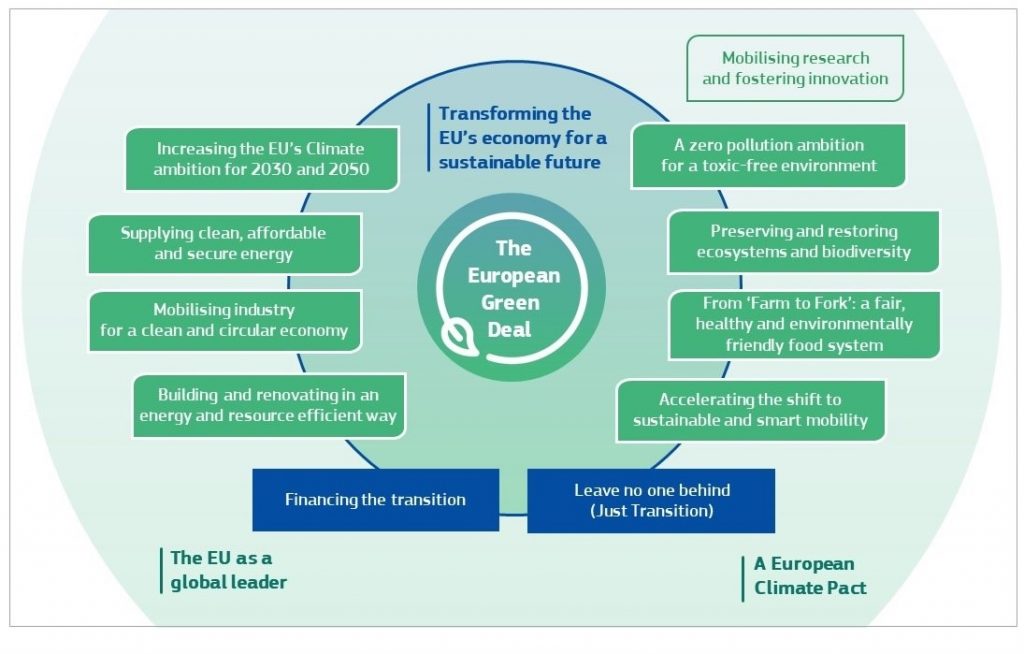
Figure 1: Key initiatives within Green Deal (COM(2019) 640).
The EU aims to be climate neutral in 2050 and, to reach this target, it calls for action in all sectors of the economy, including mainly:
- investing in environmentally-friendly technologies,
- supporting industry to innovate,
- rolling out cleaner, cheaper and healthier forms of private and public transport,
- decarbonising the energy sector,
- ensuring buildings are more energy efficient, and
- working with international partners to improve global environmental standards.
The EU will also provide financial support and technical assistance to help those countries and regions which are most affected by the move towards the Green Economy. EU investment in the recovery to a green and digital economy and society amounts to € 1.81 trillion over the next seven years (Recovery Plan for Europe, 2021), which is ten times greater than the Marshall Plan to reconstruct Europe after WW II (European Budget, 2021-2027)
This comprehensive policy of regulations, investment and reforms affects almost all industrial sectors, i.e. energy, manufacturing and circular economy, transport, agricultural/food industries, and real estate and construction. EU focuses its industrial policy for SMEs (small and medium-sized enterprises) on creating business opportunities from the current green and digital transition. This includes new legal instruments to build European relevant value chains linking EU-wide firms to local SMEs in strategic sectors (e.g. batteries, hydrogen, circular economy, and bioeconomy). This package also includes a new European skills agenda.
The European Green Deal centres on nine policy areas: biodiversity, from farm to fork, sustainable agriculture, clean energy, sustainable industry, building and renovating, sustainable mobility, eliminating pollution, and climate action. Among these policy areas, geotechnics has a relevant role in four areas: clean energy, sustainable industry, building and renovating, and climate action.
This article will examine the objectives for these policy areas and will establish the relevant contribution of geotechnical studies to obtain such goals. Figure 2 illustrates, in more detail, the four main Green Deal policy areas and regulations relevant for geotechnics.

Figure 2: Green Deal policy areas and regulations relevant for geotechnical studies.
Besides the regulatory instruments, the EU is also launching a new mission-oriented innovation policy with a clear focus on sustainability. Five EU missions are under elaboration, expected to be fully operational at the end of 2021. Four of these five missions are linked to the European Green Deal: Clean soil, Clean oceans and inland water, Climate adaptation, and 100 Climate-neutral cities, as seen in Figure 3. These missions will open up new funding for technological development, innovations and deployment across EU. Two of these missions are particularly relevant for the geotechnical studies. The mission on “100 climate-neutral cities” will accelerate sustainable construction and energy systems in these cities, while the mission on Climate adaptation will stimulate technological innovation and deployment of new solutions to resilience and climate-stress such as flooding or landslide prevention in 200 regions and communities across EU. Industry will be directly involved in the missions as well as public actors such as regulators, planners and policy administrators of investment projects in innovation and new infrastructures.
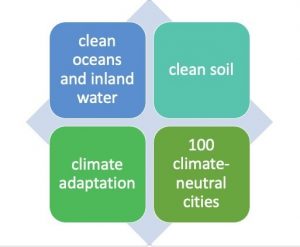
Figure 3: Mission-oriented innovation policy centred on the European Green Deal.
Green Deal policy areas relevant for geotechnics
For each of the selected political areas, the article presents topics of relevance to geotechnics, as shown in Figure 4. The list of selected topics is not exhaustive, but it does emphasise relevant topics in our days and has great capacity for employment, innovation and research.
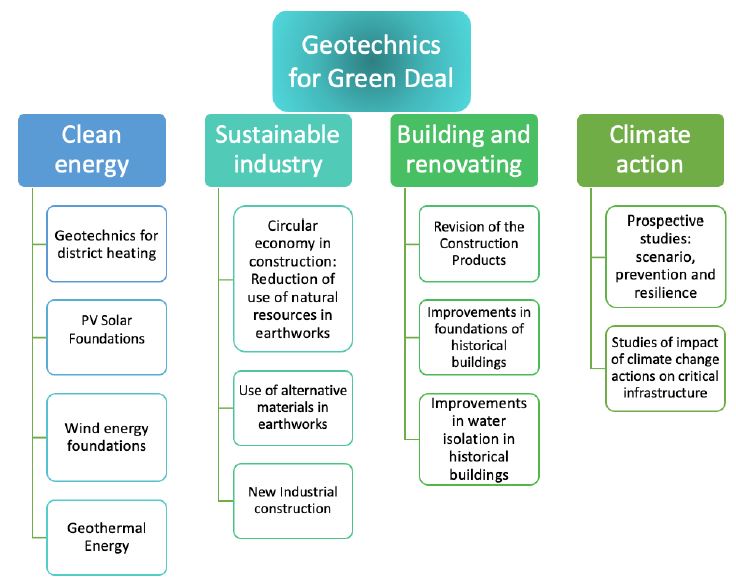
Figure 4: Relevant topics for geotechnics in each Green Deal policy area.
Additionally, Table 1 summarises the ground properties needed in geotechnics activities related to the selected topics. The ground properties selected are based on the classification used in the second generation Eurocode 7 (to be delivered around 2025). The Green Deal topics and the ground properties are presented in a matrix connected for four levels of needs, from compulsory to low relevance. The objective of this matrix is not intended to be exhaustive, and exclusive of other relevant issues, but it does help to visualise the important role of geotechnics in the implementation of the Green Deal.
Table 1: Summary of the ground properties needed in geotechnics activities related to the different policy areas defined in the European Green Deal.

Professionals in geotechnics studies and their contribution to the Green Deal
It will be necessary to ensure high quality in the geotechnics studies that will contribute to the Green Deal. Second generation Eurocode 7, EC7 (to be delivered around 2025) establishes, in its draft Annex D, one possible way for verifying the assumption that the design and collection of information is performed by competent persons. This document provides guidelines on requirements for competence of persons responsible for either geotechnical design or ground investigation process.
Based on this document, the persons responsible for ground investigation and geotechnical design should have appropriate qualifications and experience within their respective field that includes:
- A diploma demonstrating successful completion of tertiary studies in a relevant field;
- Professional experience in ground engineering;
- Continuous Professional Development (CPD) in ground engineering;
- Membership of a relevant Professional Register, if available or required in individual countries.
These elements plus the Code of Ethics are the pillars for the European Geologist title, (Fernández-Fuentes, 2015). The applicants for the title of European Geologist must demonstrate their professional experience through the application form, supporting documentation, a professional practice report and a professional interview. They must demonstrate that they have obtained sufficient knowledge and experience, over a combined minimum total of nine years (education and professional practice combined), to be able to work independently and to be capable of supervising others. An applicant who is only able to undertake routine activities or who requires extensive supervision would not meet the requirements for the award of the title of European Geologist. The mobility of geologists enabled by the EurGeol title is now boosted by a web platform launched in 2019. It allows companies and organisations to search for EurGeols active in one specific country and/or one specific professional geology domain (Fernández-Fuentes et al., 2021). This instrument could be a great support to guarantee qualified and competent people in the future context of specialised geotechnics jobs to support the Green Deal.
Geotechnics and clean energy
Specific regulations
Decarbonising the energy system is critical to reach EU’s climate objectives. The European Commission proposed to increase the 2030 target for emission reduction to at least 55%. Relevant energy legislation will be reviewed and where necessary revised by June 2021. EU Member States will subsequently update their national energy and climate plans in 2023, to reflect the new climate ambition. The “Fit for 55 Package” will review three European Directives: the Renewable Energy Directive; Energy Efficiency Directive; and Energy Performance and Building Directive, in line with the increased 2030 target for emission reduction.
EU’s ambition is to develop a power sector based largely on renewable sources. The revision of the Renewable Energy Directive in the European Green Deal states that the targets and measures set in the directive should be ambitious enough to reduce greenhouse gas emissions by at least 55% by 2030. This policy is backed by a more energy efficient and circular energy system. It facilitates renewables-based electrification, and promotes the use of renewable and low-carbon fuels including clean hydrogen in those sectors where electrification is not yet a viable option, such as transport. The Commission planned to adopt the revised Renewable Energy Directive in the second quarter of 2021. EU countries are required to draft National Energy and Climate Plans (NECPs) for the period 2021–2030, outlining how they will meet the new 2030 targets for renewable energy and for energy efficiency.
Geotechnical studies have an important role to ensure good quality in the development of some crucial renewal sources. From the different clean energy supplies we have selected four areas relevant for geotechnical studies: district heating; solar energy; wind energy; and geothermal energy.
Geotechnics for district heating
District heating (DH) has been for many decades a well-established industry for supplying heat in several countries. Surplus heat from power plants and industrial processes is used as well as renewable heat sources such as solar thermal, geothermal and heat from biomass combustion. The success of heating distribution to the final users depends significantly on the pipeline network (Villalobos et al., 2018). The interaction between underground district heating pipelines and the surrounding soil is fundamental to avoid problems of ruptures, leaks, and as a consequence a decrease in the effectiveness of the DH system. There are different conditions being tested such as thickness of insulation materials, temperature ranges and bedding soil type. Details of the piping and instrumentation arrangements as well as soil geotechnical characteristics are very important for an efficient DH system (Villalobos et al., 2019b). For example, it was found that when temperature increased from ambient conditions up to 90 °C, pipes were moving all along their length. Moreover, after a temperature drop from 90 to 20 °C during 20 days and subsequent increase to 90 °C again, axial displacements did not return to the same values as before (Villalobos et al., 2019a).
DH plays an important role in the implementation of future sustainable energy systems. However, the present district heating system must be transformed into low-temperature district heating networks, interacting with low-energy buildings as well as becoming an integrated part of smart energy systems (Mathiesen et al., 2015). According to Mathiesen et al. we are looking now at the fourth generation of DH, whose different phases of development were the following:
- First generation, 1880–1930 – steam
- Second generation, 1930-1970 – hot water > 100 °C
- Third generation, 1970–present – Hot water < 100 °C
- Fourth generation, < 70 °C
Denmark is aiming for a 100% fossil-free heating sector for buildings by 2035 where DH with a supply temperature of 55–50 °C is central to the solution (Brand & Svendsen, 2013). Sweden is betting on the new generation of DH that will allow integrated smart energy systems (Klemetz, 2019)
Until now, the effect of seismic loading has not been contemplated in the design standards of District Heating and Cooling (DHC) networks, since this technology was originally adopted in northern Europe, which I characterised by low earthquake vulnerability. Nevertheless, an increasing number of countries, including those in seismic areas, are using DHC solutions due to the higher energy efficiency compared to individual heating systems. Seismic regions are one of the most hostile environments for buried pipelines due to the effects of transient ground deformation (TGD) caused by seismic wave propagation, and permanent ground deformation (PGD) like faulting, landsliding, lateral spreading and buoyancy due to liquefaction (Banushi et al., 2018). Geotechnical studies will support the prevention of this kind of risk.
A very important ground property to take into consideration in DH projects is ground thermal conductivity. In an enhanced study in the Ljubljana DH system, which includes 245 km of highly diversified pipelines, the effect of the soil thermal conductivity coefficient (λs) on the heat loss from pre-insulated pipes during operation was demonstrated (Perpar et al., 2012). In this respect, it is interesting to highlight that the DH second generation, Eurocode 7, includes a table with the test standards to be used to measure both thermal conductivity and thermal diffusivity, two of the main geothermal properties of the ground, as a signal of the importance of these ground properties in geotechnics coming in the near future.
Geotechnics for solar energy
Foundation selection is critical for the cost-effective installation of photovoltaic (PV) solar panel support structures. The installation of large areas of solar PV has led to the development of geotechnical companies specialised in surveys for solar PV. In Europe the capacity is expected to triple before 2030 (Figure 5).
Europe’s solar PV grew 104% in 2019, according to statistics published in December 2019 by SolarPower Europe, (Simon, 2019) an industry association. The increase in solar PV capacity in Europe is expected to create new job opportunities. Geotechnics professionals will be required for the energy transition working with solar PV.
Lack of proper investigation of subsurface conditions can lead to selection of inappropriate foundation types and can result in costly change orders and delays to the job completion date (Perez, 2019).
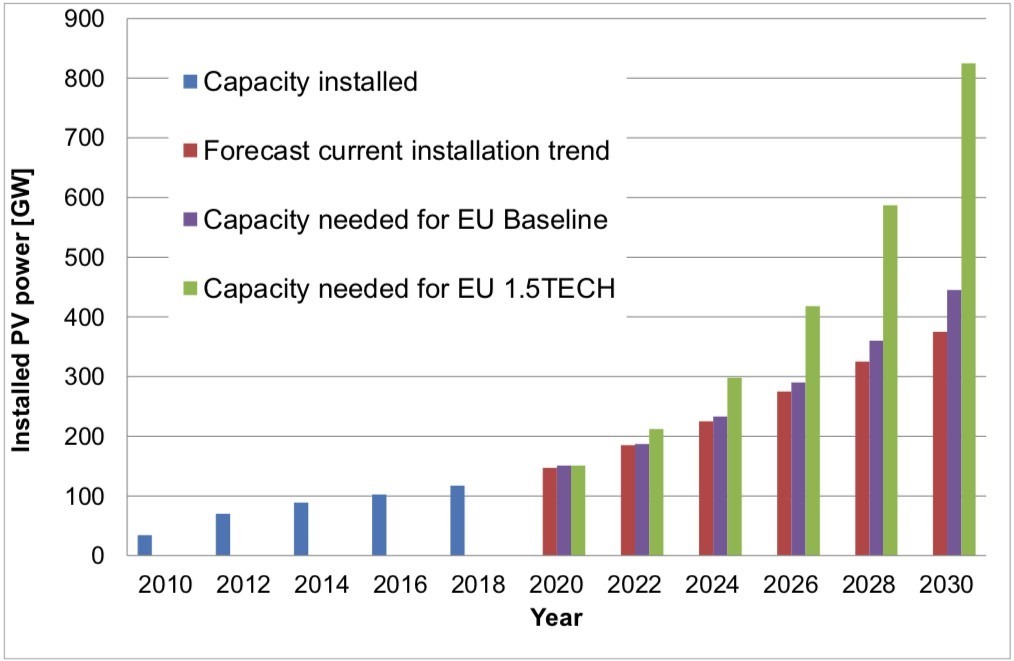
Figure 5: Actual and projected photovoltaic installations from 2010 to 2030 (EC JRC, PV status report 2019).
Each PV solar site is unique in its geological complexity. A solar PV site should first be checked by digging test pits at approximately 5 to 10 locations for each megawatt of installation. Enough test pits should be dug so that the number is statistically relevant.
A complete geotechnical study will include a limited number of test bores noting soil type, refusal, and water table. Also the geotechnical report will note corrosive factors to help in selecting the correct type of corrosion protection needed for the foundations.
Geotechnical reports often tend to be conservative in their embedment depth recommendation, so some pull tests should be conducted before beginning foundation construction in order to attempt to minimise embedment depth and thus the length and cost of screwed or driven foundations. A pull test uses a strain gauge to measure vertical and lateral resistance up to the forces required by the PV support structure engineer’s calculations for wind and snow load requirements.
There are four principal types of foundations commonly utilised in this kind of application: driven piles, helical piles, earth screws, and ballasted foundations. The site’s geotechnical properties will determine the most appropriate type of foundation (Bushong, 2014).
Geotechnics for wind energy
The wind energy sector is given a very important role in order to meet some very ambitious targets with respect to usage of renewable energy by 2020 and 2030. According to Wind Europe’s Central Scenario, 323 GW of cumulative wind energy capacity will be installed in EU by 2030, 253 GW onshore and 70 GW offshore. That would be more than double the capacity installed at the end of 2016 (160 GW). With this capacity, wind energy would produce 888 TWh of electricity, equivalent to 30% of EU’s power demand (Wind Europe, 2017). This prediction of 2030 is based on the previous European challenge of 32% decarbonisation. The current decarbonisation increase of the Green Deal to 55% will substantially increase the energy capacity of wind energy.
It is worth noting that both onshore and offshore wind farms require extensive foundations and consequently specific geotechnical studies.
Onshore Wind Energy projects require geotechnical exploration. Wind energy projects are often fast-paced and cover large terrains. Such conditions result in increased geotechnical risks and require specially adapted geotechnical exploration and data analysis techniques that are designed to manage risks at different stages of project development. Ben-Hassine & Griffiths (2013) mention some general geotechnical studies according to the different wind energy project phases:
- Development Phase: the initial environmental permitting process presents an opportunity to identify geotechnical conditions that carry cost implications, as most environmental permitting applications include an evaluation of geo-environmental conditions.
- Design Phase: a full ground investigation must be carried out to finalise the design. The full investigation should confirm and refine the assessment of the risks identified during the preliminary investigation and should assess any additional risks that may be uncovered, such as: groundwater level; flooding conditions; bedrock depth; slope stability and landslide; mine subsidence; karst subsidence; expansive soils; frost heave; permafrost; collapsible soils; corrosion (high sulphates, high salinity); seismicity/liquefaction; and the soil’s electrical and thermal conductivity.
- Construction Phase: geotechnical activity is typically limited to quality assurance testing which serves to confirm and ensure that the design assumptions remain valid.
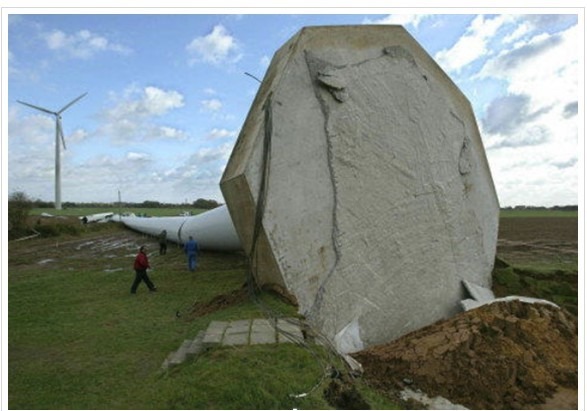
Figure 6: Example of a toppled wind turbine (Nova Scotia Power’s Nuttby Mountain) Source: https://ontario-wind-resistance.org/2011/02/03/nearly-all-22-turbine-foundations-cracked/.
On the other hand, Offshore Wind Energy has a special focus in the cost-reduction of the overall process from planning to design and maintenance phases. In terms of efficiency, during the design phase, the wind turbine foundation faces different geotechnical challenges. In order to determine and provide an accurate characterisation of the subsurface soils, an extensive site investigation must be performed. The anticipated geology and the overall background description of the area play an important role in the pre-assessment of the ground conditions (Kellezi, 2015).
Geothermal foundations
The “Fit for 55% package” in 2030 will overhaul Europe’s energy sector, especially the heating and cooling market, which is poised to deliver the needed additional carbon emission reductions. In a heating and cooling sector that locks out fossil fuel consumption and is focused on mainstreaming renewable heating and cooling, it is essential to have a robust framework to allow the market uptake of renewable heating and cooling technologies.
Geothermal energy provides renewable heating, cooling and electricity for sustainable building, agriculture and industry. Geothermal energy can be produced anywhere. The average temperature at shallow depth is constant at around 10–15 °C. The various shallow geothermal methods to transfer heat out of or into the ground are horizontal ground heat exchangers; borehole heat exchangers; energy piles; and groundwater wells (Geotrainet, 2011). The use of geothermal methods in foundations is related to the shallow geothermal energy supported by heat pumps.
Geothermal heat pumps provide the most efficient and cheapest energy in Europe, because they operate using constant underground temperature. The geothermal heat pump or ground source heat pump (GSHP) market has hit the milestone of 2 million heat pumps installed in Europe; the undeniable success of Sweden is a powerful example that geothermal heat pumps can be a mainstream solution for heating and cooling. It is also a testimony of how policies can shift the heating and cooling market away from fossil fuels towards renewable sources such as geothermal heat pumps (EGEC, 2019).
GSHP is already a well-known technology in some European countries like Sweden, Germany or Switzerland, but still emerging in many others, as shown in Figure 7. To support the Renovation Wave Initiative (see the following section), shallow geothermal based heating systems can also be part of a stable and efficient catalogue of heating and cooling solutions.
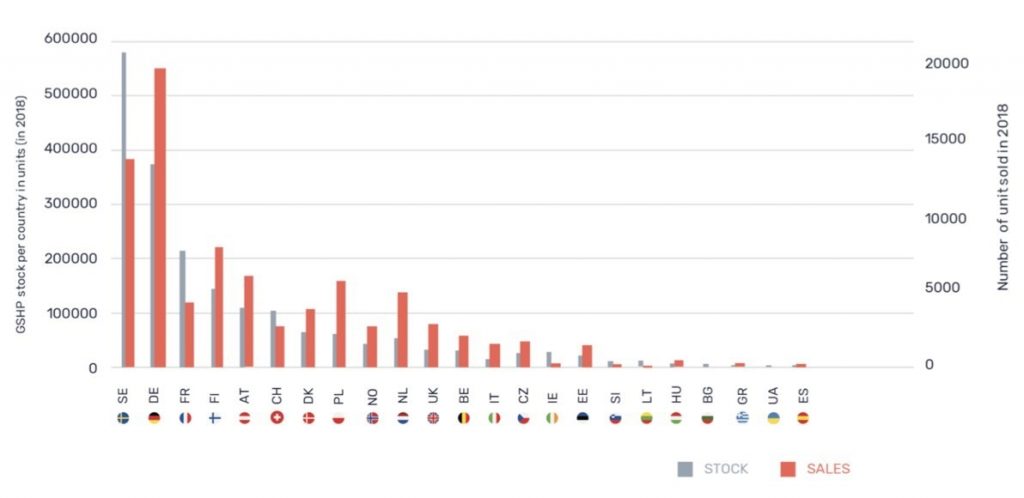
Figure 7: Number of GSHP units sold in 2018 (EGEC, 2019).
One of the strategies for designing geotechnical structures for enhanced sustainability should include geothermal elements in the geotechnical structure. The structures linked to the reinforcement of building construction are being used for GSHP. The principle of a GSHP integrated in the geotechnical structure is to transfer heat to and from the ground. In cool weather, the ground natural heat is collected through the loops and carried by heat transfer fluid to a heat pump in the building. In warm weather, the process is reversed in order to cool the building.
One of the best-known geothermal foundation structures is the so-called “geothermal pile”. Piles used in foundations are long, slender, columnar elements that are installed into the ground to transfer structural loads to competent grounds. They are typically made from steel or reinforced concrete or less often timber. Geothermal piles consist of pile foundations combined with closed-loop ground source heat pump systems. Structural piles are turned into heat exchangers by adding one or more loops of plastic pipes down their length.
In the field of standardisation, it is worth highlighting the efforts done by CEN through its technical committee CEN/TC 451 “Water wells and borehole heat exchangers” to deliver the standard EN17522, 2020Design and construction of borehole heat exchangers. This document covers standardisation in the field of geological and environmental aspects, design, drilling, construction, completion, operation, monitoring, maintenance, rehabilitation and decommissioning of borehole heat exchangers for uses of geothermal energy. Other CEN committee documents related to this topic is the committee CEN/TC 341 “Geotechnical Investigation and Testing” that in collaboration with ISO, in 2015 delivered the standard EN-ISO 17628:2015- “Geotechnical investigation and testing – Geothermal testing – Determination of thermal conductivity of soil and rock using a borehole heat exchanger”.
Geotechnics and sustainable industry
Specific programmes
One of the aims included in the European Green Deal action plans is to boost the efficient use of resources by moving to a clean and circular economy. The paths to obtain these objectives are diverse and among others, a sustainable industry based on the circular economy and focused on the use of recycled materials must be highlighted.
From the point of view of the construction sector, the reduction of non-renewable natural resource extraction has encouraged the increase in waste valorisation, taking into account that this sector is responsible for 50% of the consumption of natural resources (European Commission, 2001). Another issue is the concentration of waste from industrial activities and urban expansion, which are concerning from an environmental point of view.
The EU has set itself the objective of becoming sustainable, and this is tackled by Environment Action Programmes (EAP). The 8th EAP will guide European environmental policy until 2030. The list of policy areas of this programme includes “Waste and recycling”, which aims to contribute to the circular economy by extracting high-quality resources from waste, as much as possible.
The circular economy in construction
All these factors make it necessary to propose alternatives to the use of natural resources, and the valorisation of wastes, even, it is possible to mix these two goals by using the wastes as construction materials. A good example of this kind of measures is the rate for recovering Construction and Demolition Wastes (CDW), which reached 89% in 2016 (Eurostat 39/2019).
Despite these high recycling rates, on average only 12% of material resources used in the EU in 2016 came from recycled products and recovered materials, thus saving extraction of primary raw materials (Eurostat 39/2019). The high amounts of material consumption needed in the construction field seem to be a good opportunity to increase recycling rates, as has already been achieved for CDW.
Use of alternative materials in earthworks
Nowadays, inside the European Committee for Standardization (CEN), the Committee CEN/TC396/WG7 is formed by a group of experts who are developing a Technical Report on “Alternative materials in earthworks”. The main goal of this document is to list the recycled materials resulting from the processing of inorganic mineral material previously used in construction, that are used in earthworks across Europe. The report will also include the most relevant geotechnical properties, examples of applications and environmental issues. Although this document is not available yet, it is a liaison with another CEN group, CEN/TC154/WG12 “Aggregates for secondary sources”. The Technical Committee CEN/TC154 has prepared the document CEN/TS 17438:2020 (E) “Source materials considered in the development of the Aggregate standards of TC 154” (CEN/TS 17438). It includes an inventory list with source materials for aggregates that is almost the same as that to be included in the Technical Report elaborated by CEN/TC396/WG7. Table 2 shows some of the sources and specific materials that will be included in the Alternative Material list for their use in earthworks.
Table 2: Examples of some alternative materials to use in earthworks and their sources.
| Source | Specific materials |
| Construction and demolition recycling industries | Reclaimed concrete |
| Reclaimed bricks, masonry | |
| Mix of reclaimed concrete, masonry, asphalt, and hydraulically bound materials | |
| Municipal solid waste incineration industry | Municipal incinerator bottom ash |
| Municipal incinerator fly ash | |
| Coal power generation industry | Coal fly ash |
| Coal bottom ash | |
| Iron and steel industry | Granulated blast furnace slag |
| Electric arc furnace slag | |
| Non-ferrous industry | Copper slag |
| Zinc slag | |
| Mining and quarry industry | Red coal shale |
| Black coal shale | |
| Excavated natural materials | Tunnel arisings |
| Dredge spoil | |
| Other combustion residues | Biomass ash |
| Oil shale ash | |
| Other | Shredded tyres |
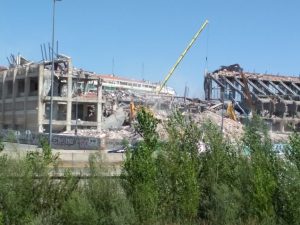
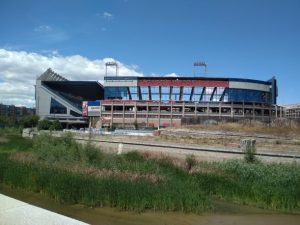
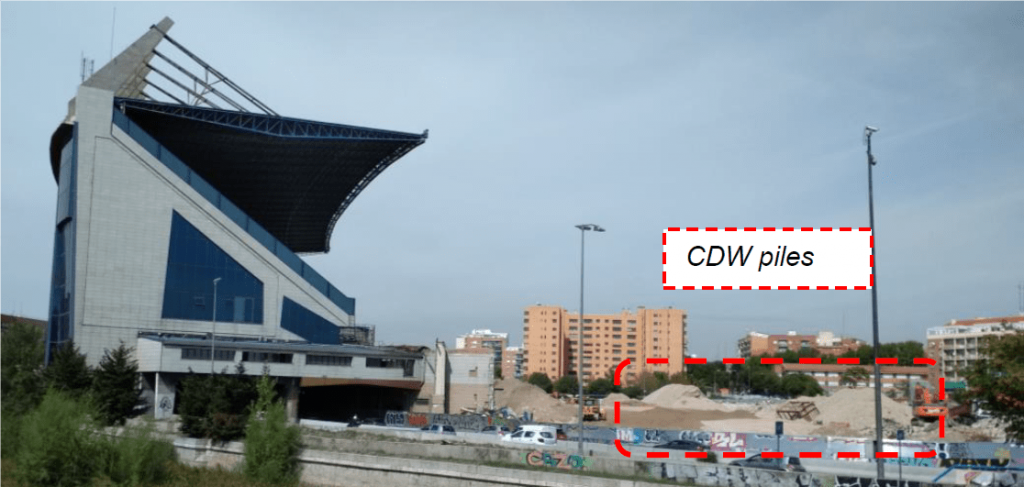
Figure 8: Demolition of Atletico de Madrid Stadium and CDW pile waiting to be re-used.
New industrial construction
EU new industrial policy focuses on two drivers which will transform European industry: the Green Transition, supported by the European Green Deal, and the Digital Transition, supported by EU’s digital strategy and global competitiveness leveraging the single market to set global standards ((COM(2020) 102 final). Within this policy frame, EU is launching several concrete initiatives in the period 2020- 2022. Here are some examples:
A relevant example is related to modernising and decarbonising energy-intensive industries. The European Green Deal sets the objective of creating new markets for climate neutral and circular products, such as steel, cement and basic chemicals. The EU Emissions Trading System Innovation Fund will help deploy other large-scale innovative projects to support clean products in all energy-intensive sectors.
Geotechnics in building and renovating
The construction, use and renovation of buildings require significant amounts of energy and natural resources, such as sand, gravel and cement. The Green Deal policy action “Building and Renovating” aims to double the current rates of renovation of public and private buildings in the next decade.
To reduce the resources for construction, the design of buildings should be in line with the circular economy. The European Commission will review the Construction Products Regulation (Regulation (EU) No 305/2011). The use of alternative materials and the circular economy approach mentioned in the precedent item should be implemented in order to achieve this objective. Geotechnical studies will evaluate the behaviour of these materials to achieve the sustainable construction objectives.
In October 2020, the Commission presented its Renovation Wave strategy as part of the European Green Deal. The strategy contains an action plan with specific regulatory, financing and enabling measures to boost building renovation. Its objective is to at least double the annual energy renovation rate of buildings by 2030 and to foster so-called “deep renovation”, which combines energy efficiency with more sustainable heating and cooling, and when relevant digital applications.
The revision of the Energy Performance of Buildings Directive 2010/31/EU (EPBD) is therefore an essential part of the renovation wave strategy, as it focuses on the central aims while also contributing to the decarbonisation of buildings, in line with the enhanced climate ambition of the European Green Deal, “Fit for 55 Package”. Nowadays, following the introduction of energy performance rules in national building codes, buildings today consume on average only half as much energy as typical buildings from the 1980s. The building sector is crucial for achieving the EU’s energy and environmental goals. At the same time, better and more energy efficient buildings improve the quality of citizens’ lives while bringing additional benefits to the economy and the society.
A refurbished and improved building stock in the EU will help pave the way for a decarbonised and clean energy system, as the building sector is one of the largest energy consumers in Europe and is responsible for 40% of the EU’s emissions. But only 1% of buildings undergo energy efficient renovation every year, so effective action is crucial to making Europe climate-neutral by 2050. Currently, roughly 75% of the building stock is energy inefficient, yet almost 85–95% of today’s buildings will still be in use in 2050. Renovation of both public and private buildings is an essential measure in this context.
Given the labour-intensive nature of the building sector, which is largely dominated by local businesses, renovation of buildings also plays a crucial role in the European recovery from the COVID-19 pandemic. To kick-start the recovery, the Commission has identified doubling the renovation rate in its dedicated recovery plan (Renovation Wave, 2020).
Geotechnical studies relevant for the Renovation Wave could be:
- Climate resilience standards for buildings
- Sustainable remediation technologies: Considering the depth and volume of renovation Europe needs, this task ultimately requires a strong and competitive construction sector, embracing innovation and sustainability to increase quality and reduce costs.
- Study of geotechnical problems in historical buildings, mainly focused on:
- Improvements in foundations.
- Improvements in water isolation
In this context, it is worth noting the current activity to develop a new Eurocode focused on the Assessment and Retrofitting of Existing Structures, in which geotechnics should be part of the main core of the document, given its key role in solving many of the problems faced by existing structures. Furthermore, the activities of the Technical Committee TC 301 “Preservation of Historic sites” of the International Society of Soil Mechanics and Geotechnical Engineering must be also highlighted.
Geotechnics and climate action
Climate action is at the heart of the European Green Deal – an ambitious package of measures ranging from ambitiously cutting greenhouse gas emissions through investing in cutting-edge research and innovation to preserving Europe’s natural environment.
First climate action initiatives under the Green Deal include: European Climate Law 2020, to enshrine the 2050 climate-neutrality objective into EU law; European Climate Pact, to engage citizens and all parts of society in climate action; 2030 Climate Target Plan, to further reduce net greenhouse gas emissions by at least 55% by 2030; and the new EU Adaptation Strategy to Climate Change, 2021.
The European Commission adopted its new EU Strategy on Adaptation to Climate Change on 24th February 2021. The new strategy sets out how the European Union can adapt to the unavoidable impacts of climate change and become climate resilient by 2050.
The Strategy has four principal objectives:
- Data and risk assessment tools: Adaptation actions must be available to all, from families building homes, businesses in coastal regions and farmers planning their crops. To achieve this, the strategy proposes actions that push the frontiers of knowledge on adaptation so that we can gather more and better data on climate-related risks and losses.
- Faster adaptation: The effects of climate change are already being felt, and so we must adapt more quickly and comprehensively. The strategy therefore focuses on developing and rolling out adaptation solutions to help reduce climate-related risk, increase climate protection and safeguard the availability of fresh water.
- More systematic adaptation: Climate change will have impacts at all levels of society and across all sectors of the economy, so adaptation actions must also be systemic. The Commission will continue to actively mainstream climate resilience considerations in all relevant policy fields.
- Stepping up international action for climate resilience: The EU will increase support for international climate resilience and preparedness through the provision of resources, by prioritising action and increasing effectiveness, through the scaling up of international finance and through stronger global engagement and exchanges on adaptation.
Geotechnical studies are relevant for data and risk assessment (prospective studies, scenarios, prevention and resilience), and faster adaptation, (adaptation solutions to help reduce climate-related risk). Natural risks such as flooding, coast erosion and landslides have an important impact on society and the economy, as shown in the example of Figure 9. The prevention and mitigation of projects in collaboration with other natural science disciplines will allow the economic burden of potential climate scenarios to be more accurately assessed.
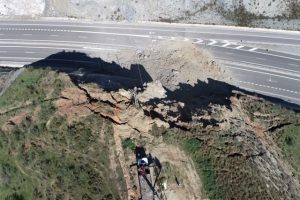
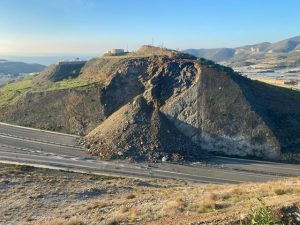
Figure 9: Landslide in Castell de Ferro, A7, Spain, 13/3/2021 (EU Riskcoast _Sudoe project).
Climate change and the concomitant increase in extreme weather and geo-hazards events are placing additional pressures on the existing Critical Infrastructure (CI) of Europe in the water, energy, urban and transport sector, as seen in Figure 10. These are systems that are often already weakened by aging.
In an increasingly interconnected, globalised world, society heavily relies on CI for safety, quality life and economic success. Strengthening and enhancing CI resilience to meet present and future challenges and demands should therefore be at the forefront of societal goals.
One example of EU interest in this kind of actions is the project GEOLAB funded by H2020: The main objective of the INFRAIA project is to create a net among 11 unique installations in Europe aimed to study ground behaviour and the interaction with structural CI elements and the environment. These installations represent the best of the state-of-the-art available today in Europe.
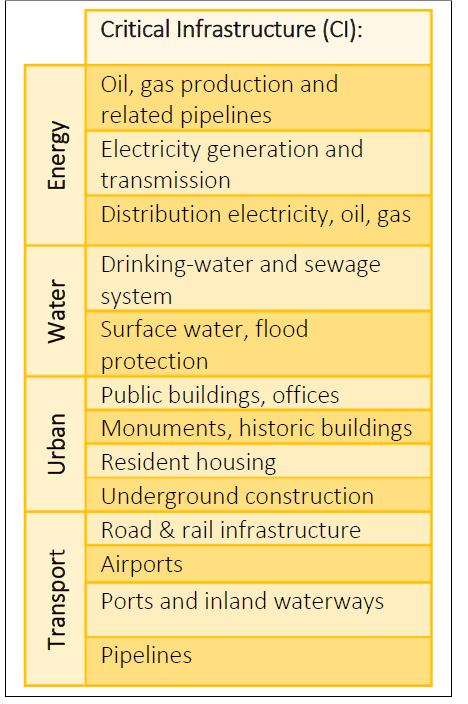
Figure 10: Different types of Critical Infrastructures (GEOLAB project, 2020).
An additional signal of the importance of geotechnics in Climate action is the fact that Critical Infrastructures formed by geotechnical structures will be considered as CC4 Consequence Class (the top class) in the future Eurocode 7, as a signal of their importance in EU society. As examples of these CI, levees must be highlighted as they play a key role in land protection under heavy floods. The International Levee Handbook (CIRIA Report C731, 2013) is a very useful document for designing such structures based on theoretical and practical geotechnics principles that should be considered an example of state-of-the-art documents that need to be produced in the near future to face these climate challenges.
Conclusions
Geotechnical studies have an important role to ensure good quality in the development of some crucial policies areas of the European Green Deal. The EU will provide financial support and technical assistance to help those that are most affected by the move towards the Green Economy. The creation of jobs and business related to the Green Deal will be an important engine of transformation in Europe in the coming years. The identification of the relevant areas for geotechnics can shed light on employment and business in this sector in the coming years.
To ensure high quality in the contribution of geotechnical studies to the European Green Deal, it will be necessary to certify professional competence. The second-generation Eurocode 7 is working in a frame, at European level, to certify appropriate qualifications and experience within their respective fields. The applicants for the title of European Geologist must demonstrate their professional experience, knowledge and experience, over a combined minimum total of nine years. In this context the European Geologist title could be a great support in guaranteeing qualified and competent people in the future context of specialised geotechnics jobs to support the Green Deal.
References
Banushi, G. & Weidlich, I. 2018. Seismic analysis of a district heating pipeline. Energy Procedia, 149. 216–225. DOI: 10.1016/J.EGYPRO.2018.08.186
Ben-Hassine J. & Griffiths D.V. 2013. Proceedings of the 18th International Conference on Soil Mechanics and Geotechnical Engineering, Paris, 2319-2322
Brand, M., & Svendsen, S. 2013. Renewable-based low-temperature district heating for existing buildings in various stages of refurbishment, Energy, Volume 62, 1 December 2013, Pages 311-31 Bushong, S, 2014, White Paper: Foundation Selection For Ground Mounted Solar PV Systemshttps://www.solarpowerworldonline.com/2014/07/white-paper-foundation-selection-ground-mounted-pv-solar-systems/
COM(2019) 640 final. Communication from the Commission to the European Parliament, the European Council, the Council, the European Economic and Social Committee and the Committee of the Regions, The European Green Deal. https://eur-lex.europa.eu/resource.html?uri=cellar:b828d165-1c22-11ea-8c1f-01aa75ed71a1.0002.02/DOC_1&format=PDF
Directive 2008/98/EC of the European Parliament and of the Council of 19 November 2008 on waste and repealing certain Directives
CEN/TS 17438. 2020. European Committee for Standardization (CEN): Source materials considered in the development of the Aggregate standards of TC 154. June 2020.
Clean Energy, the European Green Deal: https://ec.europa.eu/commission/presscorner/detail/en/fs_19_6723
CIRIA C731. 2013. The International Levee Handbook. CIRIA, Ministère de l’Ecologie, du Développement Durable et de l’Energie, and the US Army Corps of Engineers. CIRIA, London.
Commission Decision 2000/532/EC. 2000. European List of Waste.
EC7 (Eurocode 7), CEN-TC250-SC7_N1436_M515_SC7PT6_1997-1- Geotechnical design, M515 SC7.PT6 1997-1 Geotechnical design – General rules (PT6) Oct-2020.
EN17522. 2020. Design and construction of borehole heat exchangers.
EN-ISO 17628:2015. Geotechnical investigation and testing. Geothermal testing. Determination of thermal conductivity of soil and rock using a borehole heat exchanger. https://www.en-standard.eu/bs-en-iso-17628-2015-geotechnical-investigation-and-testing.-geothermal-testing.-determination-of-thermal-conductivity-of-soil-and-rock-using-a-borehole-heat-exchanger/
Energy Performance of Buildings Directive 2010/31/EU (EPBD). https://ec.europa.eu/energy/topics/energy-efficiency/energy-efficient-buildings/energy-performance-buildings-directive_en
European Climate Law, 2020. https://ec.europa.eu/info/sites/info/files/commission-proposal-regulation-european-climate-law-march-2020_en.pdf
EU Adaptation Strategy to climate change, 2021. https://ec.europa.eu/clima/policies/adaptation/what_en
European Commission, 2001. Competitiveness of the Construction Industry, A Report Drawn up by the Working Group for Sustainable Construction with Participants from the European Commission, Member States and Industry. European Commission
European Green Deal: https://ec.europa.eu/info/strategy/priorities-2019-2024/european-green-deal_en#actions
EU Strategy on Climate Adaptation, 2021, https://ec.europa.eu/clima/policies/adaptation/what_en
EGEC. 2019. Geothermal market report, Key Findings, European Geothermal Energy Council, Brussels. https://www.egec.org/wp-content/uploads/2020/06/MR19_KeyFindings_new-cover.pdf
European Budget, 2021-2027. https://ec.europa.eu/info/strategy/eu-budget/long-term-eu-budget/2021-2027_en
Eurostat 39/2019. Circular economy in the EU. Record recycling rates and use of recycled materials in the EU. https://eeas.europa.eu/delegations/china_en/59123/Circular%20economy%20in%20the%20EU:%20Record%20recycling%20rates%20and%20use%20of%20recycled%20materials%20in%20the%20EU
EC JRC, PV status report 2019, PV status report 2019, JRC118058 https://ec.europa.eu/jrc/sites/jrcsh/files/kjna29938enn_1.pdf
Fernández Fuentes, I., Correia, V., & Neumann, M. 2021. The importance of professional regulation of geoscientists and their role in a fast-changing world. Geological Society, London, Special Publication
Fernández Fuentes, I. 2015. EurGeol as Competent Person. European Geologists, 39. 8-13
GEOLAB project: Science for enhancing Europe’s Critical Infrastructure. IMPLEMENTATION PLAN GEOLAB contract # 101006512. Call: H2020-INFRAIA-02-2020.
Geotrainet Training Manual for Designers of Shallow Geothermal Systems, GEOTRAINET, EFG, BRUSSELS, 2011, http://geotrainet.eu/wp-content/uploads/2015/10/Geotrainet-Manual-for-Designers-on-Shallow-Geothemal.compressed.pdf
Kellezi, L. 2015. Offshore wind energy & geotechnical engineering design of foundations for different wind farm structures. Keynote lecture, European Conference in Geo-Environment and Construction, Copenhagen Denmark. https://www.geo.dk/media/1790/offshore-wind-energy-geotechnical-engineering-design-of-foundations-for-different-wind-farm-structures_lkellezi.pdf
Klemetz, D. 2019. Subsurface Energy Storage and Buffering (ATES and Shallow Geothermal Plants). Euroworkshop: Geology and the energy transition, Delft, Netherlands. https://eurogeologists.eu/wp-content/uploads/2019/06/10_david_klemetz_delft-20190523.pdf
New Industrial Strategy for Europe (COM(2020) 102 final. https://knowledge4policy.ec.europa.eu/publication/communication-com2020102-new-industrial-strategy-europe_en
Mathiesen, B.V., Lund, H., Connolly, D., Wenzel, H., Østergaard, P.A., Möllerd, B., Nielsen, S., Ridjan, I., Karnøe, K., Sperling, K. & Hvelplund, F.K. 2015. Smart energy systems for coherent 100% renewable energy and transport solutions. Applied Energy 145, pp139-154. DOI: 10.1016/j.apenergy.2015.01.075
Perez, R. 2019. Geotechnical surveying and soil testing for solar projects. EuroWorkshop Geology and Energy Transition, Delft, Netherlands, https://eurogeologists.eu/wp-content/uploads/2019/06/12_Perez_Ramon_TecsolGeo_Delft.pdf
Perpar, M., Rek, Z., Bajric, S. & Zun, I. 2012. Soil thermal conductivity prediction for district heating pre-insulated pipeline in operation. Energy, 44(1), 197-210. DOI: 10.1016/j.energy.2012.06.037.
Recovery Plan for Europe, 2021: https://ec.europa.eu/info/strategy/recovery-plan-europe_en
Regulation (EU) No 305/2011 – construction products, https://osha.europa.eu/en/legislation/directives/regulation-eu-no-305-2011-construction-products
Renovation Wave, 2020, https://ec.europa.eu/energy/topics/energy-efficiency/energy-efficient-buildings/renovation-wave_en
Renewable energy in the European Green Deal: https://ec.europa.eu/energy/topics/renewable-energy/renewable-energy-directive/overview_en#renewable-energy-in-the-european-green-deal
Simon, F., 2019, Europe’s solar PV sector reports 104% growth in 2019, EurActiv, https://www.euractiv.com/section/energy/news/europes-solar-pv-sector-reports-104-growth-in-2019/
Villalobos F., Hay S. & Weidlich I. 2019a. Monitoring in a District Heating Pipeline System. In: Ferrari A., Laloui L. (eds.) Energy Geotechnics. SEG 2018. (pp. 132-139). Springer Series in Geomechanics and Geoengineering. Springer, Cham. DOI: 10.1007/978-3-319-99670-7_17
Villalobos, F., Hay, S., Weidlich, I. & Wolf, I. 2019b. Design, Construction, and Operation of a Monitored District Heating Pipeline System. Journal of Pipeline Systems Engineering and Practice, 10(3). DOI: 10.1061/(ASCE)PS.1949-1204.0000388
Wind Europe report. 2017. Wind Energy in Europe, Scenarios for 2030 https://windeurope.org/about-wind/reports/wind-energy-in-europe-scenarios-for-2030/
This article has been published in European Geologist Journal 51 – Geotechnics – Building sustainable foundations
Read here the full issue:
