
European Geologist Journal 59
Reduced Reservoir Quality in the Triassic Lower Volpriehausen Sandstone of the Southern Netherlands: Insights from a new Offshore Well
by Husnain Yousaf 1, Hannes Claes 1, Gert Jan Weltje 1, Ruddy Swennen 1
1 Department of Earth and Environmental Science, KU Leuven, Belgium.
Contact: Husnain.yousaf@kuleuven.be
Abstract
The Lower Volpriehausen Sandstone (LVS) in the southern Netherlands, part of the Main Buntsandstein Subgroup, has been a reservoir targeted for hydrocarbon exploration for decades. However, recently it has also been considered for potential deep geothermal energy and/or underground gas storage. The enigmatic distribution in reservoir quality requires site-specific evaluation. In order to get an understanding of the controlling processes, and ultimately to predict point of reservoir quality, the newly acquired offshore core section (Well-X) with reduced reservoir quality was evaluated in light of published data from nearby LVS wells.
This study reveals a strong control of primary depositional features (grain size and sorting) with a complex interplay of secondary diagenetic processes (e.g. recrystallisation, cementation, and dissolution). Despite early diagenetic carbonate cementation, which helped preserve initial porosity by stabilising the primary rock framework during compaction, cementation significantly occluded porosity and reduced reservoir quality. The reduced reservoir quality of Well-X is caused by a combination of local and regional controls, whereby reduced reservoir properties of finer-grained sediments are related to their (local) relative position within the braided river depositional setting. Diagenetic occlusion of porosity and associated reservoir quality reduction was mainly controlled at a regional scale by the palaeo-evolution of the Triassic coastline associated with the deposition of Middle to Late Triassic sabkha deposits and related reflux dolomitisation. These new insights from Well-X are crucial in predicting reservoir properties in the Buntsandstein reservoirs of relevance for future sustainable subsurface applications, such as geothermal exploration, as well as CO2/H2 storage.
Cite as: Yousaf, H., Claes, H., Weltje, G. J., & Swennen, R. (2025). Reduced Reservoir Quality in the Triassic Lower Volpriehausen Sandstone of the Southern Netherlands: Insights from a new Offshore Well. European Geologist, 59. https://doi.org/10.5281/zenodo.16443349
 This work is licensed under a Creative Commons Attribution 4.0 International License.
1. Introduction
The Lower Volpriehausen Sandstone (LVS) in the southern Netherlands is one of the important clastic, lithified hydrocarbon reservoirs in the North Sea, a potential gas storage reservoir, and is considered as a candidate for deep geothermal energy production [1–8]. The area of interest in this study is part of the Southern Permian Basin, which is known for its complex geological history, including episodes of continental deposition, marine transgressions, and significant tectonic activity [5,9,10,11]. In continental sandstones, identifying potential reservoirs is quite challenging due to their vertical and horizontal heterogeneity. Equally important is understanding reservoir heterogeneities and the causes of reduced reservoir quality. Previous studies have highlighted diagenetic features that can explain some of the reduced reservoir quality in the North Sea Basin [10]. However, extrapolation between different well locations within the basin is not always possible and several uncertainties remain.
This emphasises the importance of an integrated analysis of the newly cored 49.09 m section of LVS in Well-X (development well). The latter was drilled in the Q-offshore block in the Broad Fourteens Basin (BFB). Lower-quality reservoir rocks were encountered which hampered hydrocarbon production. In this study we evaluate the petrographic and petrophysical data of Well-X, in light of published well data from neighbouring wells, L-blocks wells L02-02, L02-05, L02-06, L09-06 located north of Well-X, Gaag-02 (GAG-02), Haastrecht-02 (HST-02), Keldonk-01 (KDK-01), Noordwijk-02 (NWK-02), Valkenburg-01 (VAL-01) and Werkendam-03 (WED-03), located in the West Netherlands Basin and KB-64, KB-98, KB-169, KB-172, KB-201 wells from the northeast of the Campine Basin [10,12,13,14,15,16], to understand the controls on LVS reservoir quality in the southern Netherlands, both at local and regional scales. Understanding these reservoir heterogeneities is vital for making at least partially predictive assessments regarding reservoir quality, in order to estimate risks and optimise reservoir development strategies for subsurface applications, such as hydrocarbon and geothermal exploration, as well as CO2/H2 storage.
2. Geological Settings
The studied Well-X is located in the offshore area of the Broad Fourteens Basin (BFB). The NW-SE striking BFB merges into the West Netherlands Basin (WNB) in the south and the Central Netherlands Basin (CNB) in the northeast. To the north, the Noord-Holland Platform and Cleaver Bank Highs are located (Fig. 1A) [5,17]. During the Early Triassic, the BFB was situated between 20° and 30°N (Fig. 1B) [3,11]. Semi-arid to arid climatic conditions prevailed in the completely landlocked area [5,7,10,18,19].
The Early Triassic was characterised by active tectonics [3,5,11,20,21,22] and fluvial-aeolian sedimentation occurred under ongoing local thermal uplift and/or subsidence, resulting in variations in lithofacies and lithostratigraphic unit thicknesses. The Main Buntsandstein Subgroup consists of three formations: Volpriehausen, Detfurth and Hardegsen, which are further subdivided into tectono-stratigraphic units based on cyclic alternation of sandstones and clay-siltstone (Fig. 2) [5,11]. The layers of interest for this study are the Lower Volpriehausen sandstones. The LVS predominantly consists of fluvial deposits with minor intercalations of aeolian sediments, and its thickness varies throughout the basin and reaches up to 200 metres [1,5,7,9,20,21]. In the studied well, the Volpriehausen Formation (Lower Volpriehausen Sandstone Member [LVS] and Upper Volpriehausen Clay-Siltstone Member [UVCS] has an unconformable contact with the overlying Solling Formation reflecting non-deposition and/or erosion of the Detfurth and Hardegsen Formation. The latter relates to the major extensional tectonic phase of late Olenekian age, known as Hardegsen Unconformity [5,7,11], affected the thickness and spatial distribution of the Main Buntsandstein Subgroup. This Hardegsen uplift, with subsequent erosion, removed a significant part of the early Triassic successions on a regional scale in the Southern Permian Basins [5,7,9,19,20,21]. These Olenekian deposits are overlain by the marginal marine evaporitic Rot Formation, consisting of the Main Rot Evaporite Member [11].
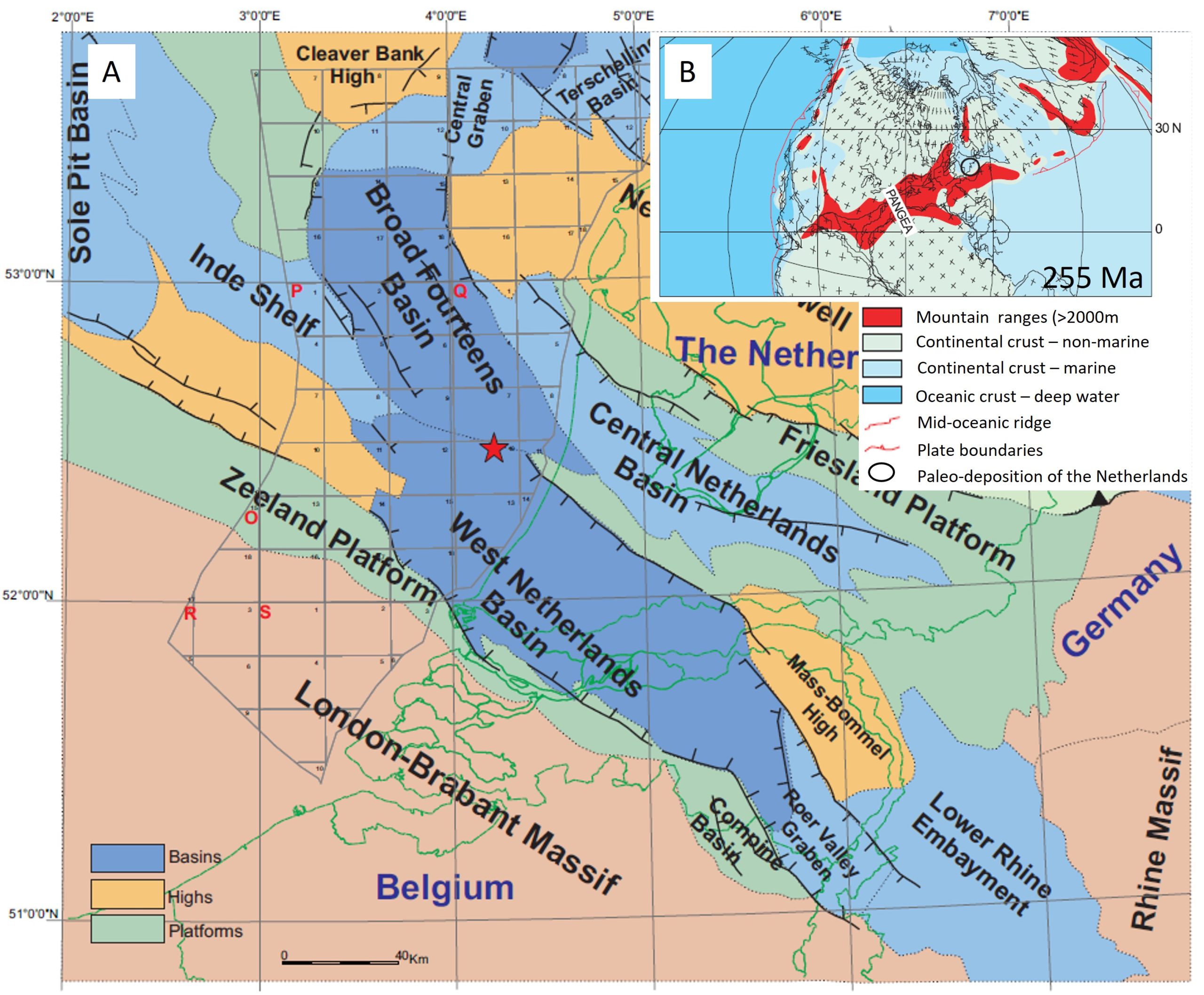
Figure 1: A) Structural framework of southern part of the Netherlands showing the basins, highs, platforms, and position of the studied well (red star), modified from [5,11]. B) Palaeogeographical and tectonic map of Late Permian (255 Ma) showing that the Netherlands was located between 20° and 30° North (Black circle; modified from Global plate reconstruction (courtesy Shell) [3].
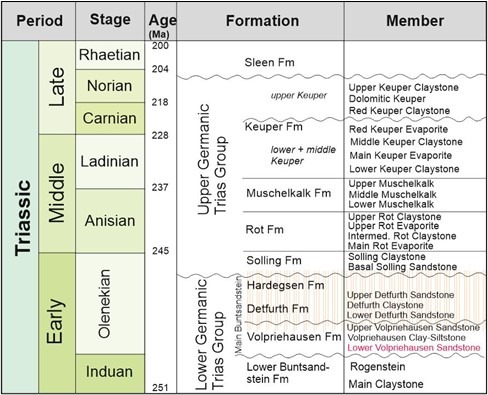
Figure 2: Stratigraphic column displaying the position of the Lower Volpriehausen Sandstone (red colour) unconformably overlying the Rogenstein Member (Lower Buntsandstein) modified from [5,11]. Vertical brown lines represent the missing Buntsandstein successions in Well-X.
3. Materials and Methods
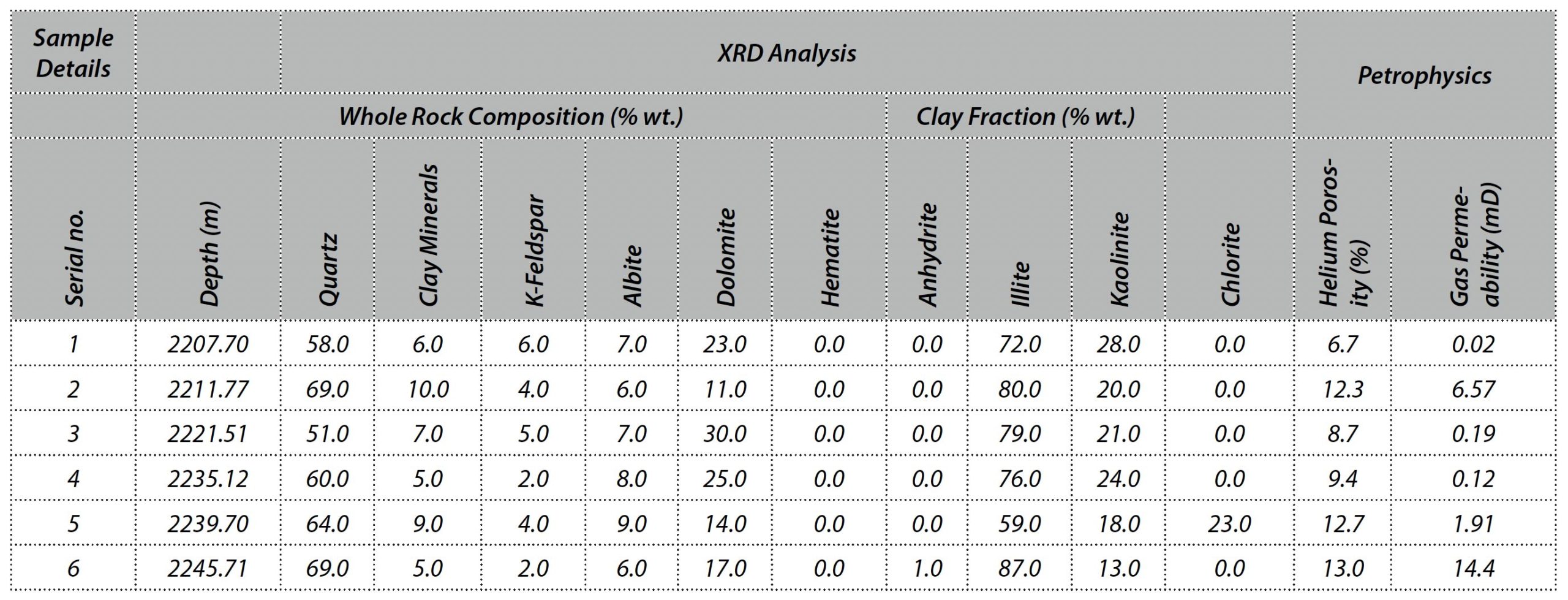
Sedimentological and diagenetic characterisation of the 49.09 m cored Well-X section was carried out by examining the lithology and main sedimentary features (Fig. 3). Twenty plug samples (2.54 cm in diameter) were drilled and analysed to evaluate their mineralogical, petrographical, petrophysical and isotopic characteristics. Thin sections (perpendicular to bedding plane) were prepared from all samples. Six representative samples were selected for complementary analysis, including X-ray diffraction (XRD), helium porosity, and nitrogen gas permeability measurements (Table 1).
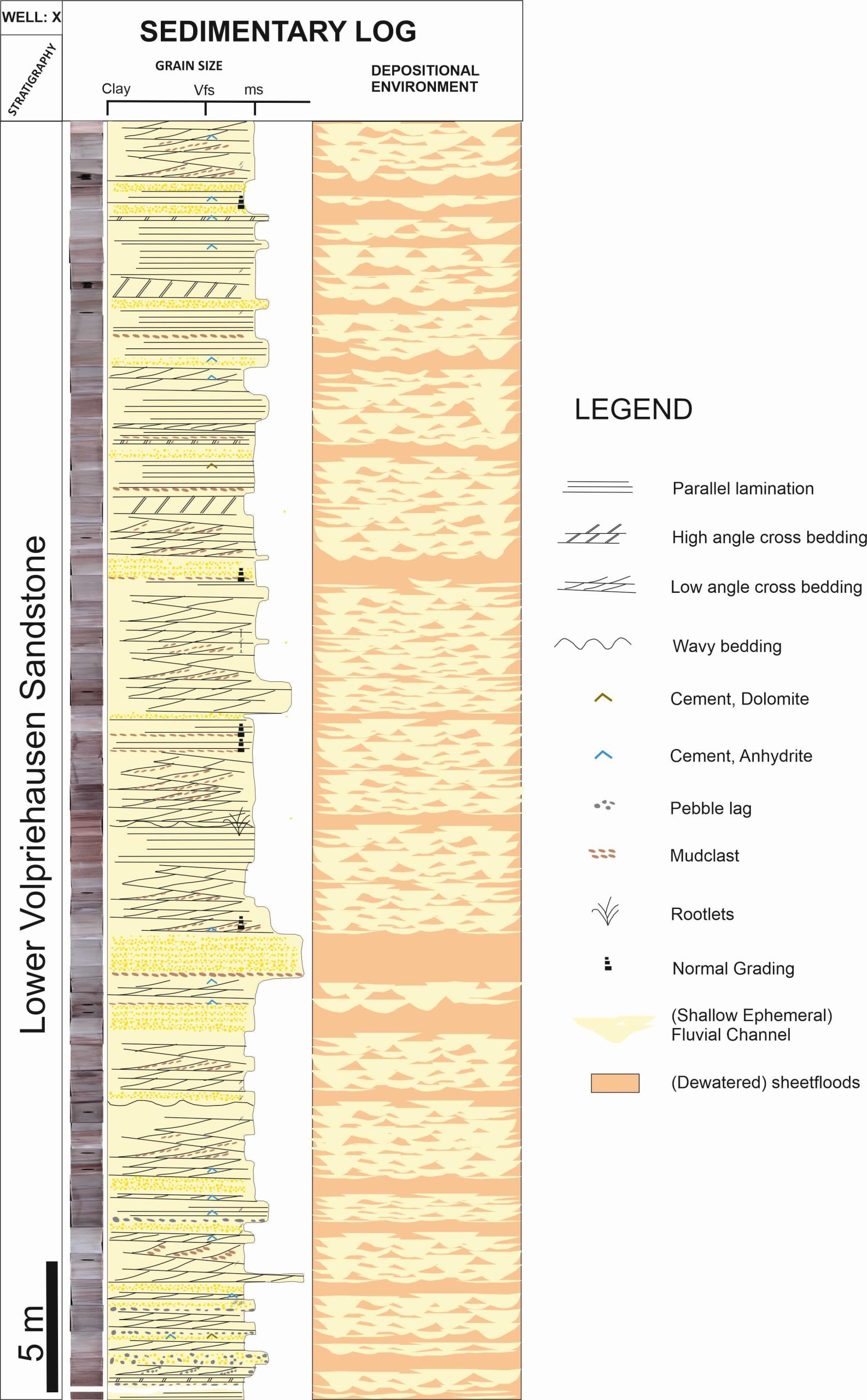
Figure 3: Sedimentary log of Well-X (prepared in CorelDRAW).
For XRD analysis, the outer edges of each rock sample were trimmed and ground manually using a porcelain mortar and pestle to avoid destruction of the mineral crystals. Approximately 1.8 g of each sample was then ground in a McCrone Micronizing Mill with the addition of an internal standard, ZnO (0.2 g) and ethanol (4 ml) for 5 min to obtain a uniformly sized powder. Ethanol was used to prevent dissolution of water-soluble minerals and minimise strain damage during grinding. After drying and sieving, the powdered sample was loaded into a metal holder with random orientation and analysed using an X-ray diffractometer. Diffractograms were interpreted using Quanta and X-ray Viewer software. For clay fraction analysis, oriented clay mounts were prepared from the <2 µm fraction using standard sedimentation techniques. X-ray diffraction (XRD) was conducted on air-dried, ethylene glycol-solvated, and heated (550 °C) samples to distinguish between clay mineral species. Semi-quantitative estimates of clay mineral abundances were calculated using peak area measurements corrected with mineral-specific weighting factors.
The samples were vacuum-impregnated with blue-dyed epoxy resin to aid in porosity determination. Polished thin sections were analysed using optical microscopy (Olympus BX60) equipped with a Zeiss Axiocam 305 colour digital microscope camera to determine the detrital and authigenic components and characterise the pore types. High-resolution backscattered electron (BSE) imaging scanning electron microscopy (SEM; TESCAN MIRA Field Emission Microscope) was used to examine textural features. For electron microscopy, polished thin sections were coated with carbon using a Quorum Q150T ES Plus. Additionally, thin sections were stained with Alizarin Red S and potassium ferricyanide to distinguish carbonates [23]. Cathodoluminescence (CL) was used to identify distinct phases of carbonate cement and to assess detrital quartz and feldspars.
Mineral constituents and optical porosity were quantified (Table 2) based on 500 points per thin section [24] using JMicroVision software [25]. Detrital compositions were plotted using the QFR classification diagram [26]. Average grain sizes were measured following [27]. Intergranular volume (IGV) defined as the sum of intergranular pore space, intergranular cement volumes and depositional matrix, was calculated according to [28]. Further parameters, such as porosity loss due to compaction (COPL) and porosity loss due to cementation (CEPL) were derived based on the IGV [29]. An initial porosity of 45% for unconsolidated sand was assumed [30].
Helium porosity and nitrogen gas permeability were measured by conventional core analysis at Panterra Geoconsultants B.V., Leiderdorp, the Netherlands. Mercury injection capillary pressure (MICP) analyses were performed on four selected subsamples to quantify pore throat size distribution at Panterra Geoconsultants B.V., Leiderdorp, the Netherlands. Carbon and oxygen isotope analysis of seven bulk samples, primarily containing (non-)ferroan dolomite cements, was carried out at the GeoZentrum Nordbayern laboratory, Friedrich-Alexander University, Germany. Sample powders were reacted with 100% phosphoric acid at a temperature of 70 °C using a Gasbench II connected to a Thermo Fisher Delta V Plus mass spectrometer. All values were reported in the delta notation (δ) per mil (‰) relative to the deviation from the Vienna Pee Dee Belemnite (VPDB) international standard and corrected for acid fractionation.
4. Results
4.1. Macroscopic Observations
The LVS predominantly exhibits moderate red-orange-pink colours. The cored section comprises sandstones with 2-7 m thick beds and range from (very) fine- to medium-grained, with characteristic high- to low-angle cross-bedding, horizontal lamination and/or being structureless. These sandstones often exhibit fining-upward sequences ranging from a few centimetres to meters in scale. Wavy bedding with root traces is locally observed. Pebbles and mud clasts are commonly present above erosive surfaces. Mud clasts are also abundant along other bedding planes throughout the cored section, and dolomite and anhydrite cements are locally recognised (Fig. 3).
Table 1: Summary of XRD and conventional core (petrophysical) analyses of the Lower Volpriehausen Sandstone cored section of Well-X.
4.2. Petrographical Analysis
LVS samples vary from very fine (62-125 μm) to fine (125-250 μm) and occasionally medium (250-500 μm) grained sandstone (Fig. 4A) with a subangular to rounded grain framework. They are moderately to well-sorted. Overall, the sandstones are classified as sublitharenite to litharenite (Fig. 4B). The LVS is predominantly composed of quartz grains (including mono- and polycrystalline quartz) making up on average 47.9% (min. 35.4%, max. 56.1%) (Fig. 5B). Quartz grains exhibit mostly light blue or dark-violet luminescence (Fig. 5B). Rock fragments are well represented with an average of 11.1% (min. 4.6%, max. 19.3%). These components predominantly consist of polycrystalline rock fragments of metamorphic origin (quartzite and schist) and sedimentary rock fragments. Feldspars (average 3.7%, min. 2.6%, max. 5.8%) predominantly consist of K-feldspar with blue to blotchy blue luminescence under CL (Fig. 5B). Plagioclase grains are less common (predominantly albite; Fig. 6E) and exhibit green luminescence under CL. Detrital dolomite grains locally are coated by iron-oxide/hydroxide-clay rims (Figs. 5A, B). These monocrystalline dolomite grains exhibit long to concave-convex contacts with quartz grains. Muscovite mica platelets are present in very low amounts (<1.0%). The modal mineralogical composition and average grain sizes of the studied samples are given in Table 2.
Non-ferroan dolomite (confirmed by Alizarin-K-ferricyanide staining) is the most abundant authigenic mineral and averaging 14.1% (min. 6.9%, max. 37.9%). The observed dolomite in the samples exhibits variable morphologies. Polycrystalline nodules (ooids) (~200 µm in diameter), often collapsed, with altered cores of (micro)porous dark micritic fabrics and iron-oxide/hydroxide-clay rims show concentric micritic to ghost laminations (Figs. 5C, D and 6A, B), surrounded by intergranular pore-filling dolomite overgrowths, which also occurs on other detrital grains (Figs. 5E, G). In addition, clusters of subhedral-euhedral crystal aggregates (Figs. 5A, B, E, F) and discrete rhombohedral crystals (Figs. 5F, H and 6C, D) are observed. Under CL both mono- to polycrystalline nodules and pore-filling dolomite exhibit a bright yellow-orange luminescence. Outer margins and, in some cases, internal crystal structures exhibit red luminescence (Figs. 5B, D, F). This dolomite crystal zonation is also confirmed by SEM observations (e.g. Fig. 5E). These nodules are particularly prevalent in the lower and middle parts of the studied cored interval.
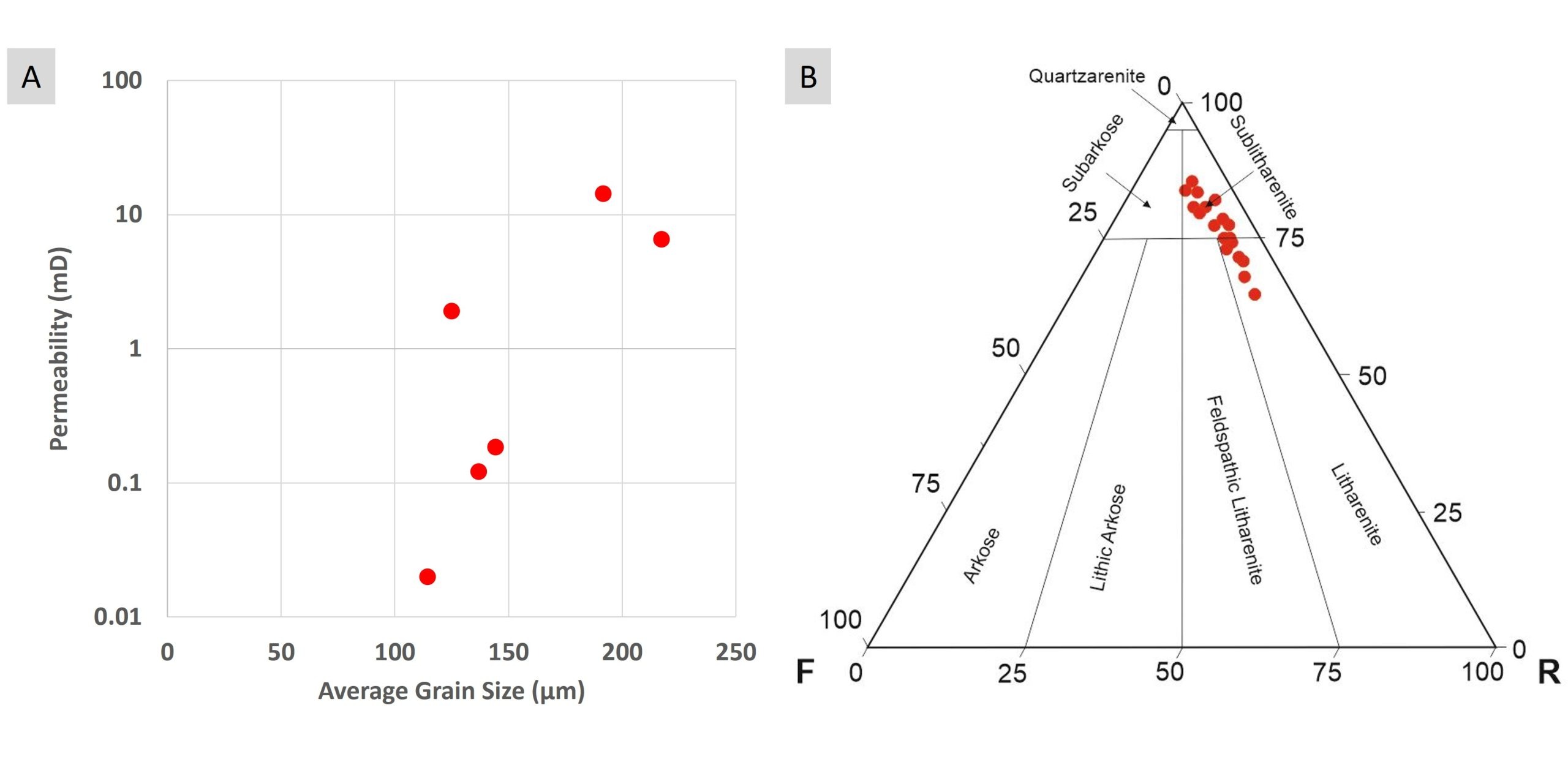
Figure 4: A) Core permeability versus average grain size of six LVS cored samples, showing the grain size range and their relationship with permeability. B) Ternary diagram after [26] showing the rock classification of the LVS studied samples in Well-X.
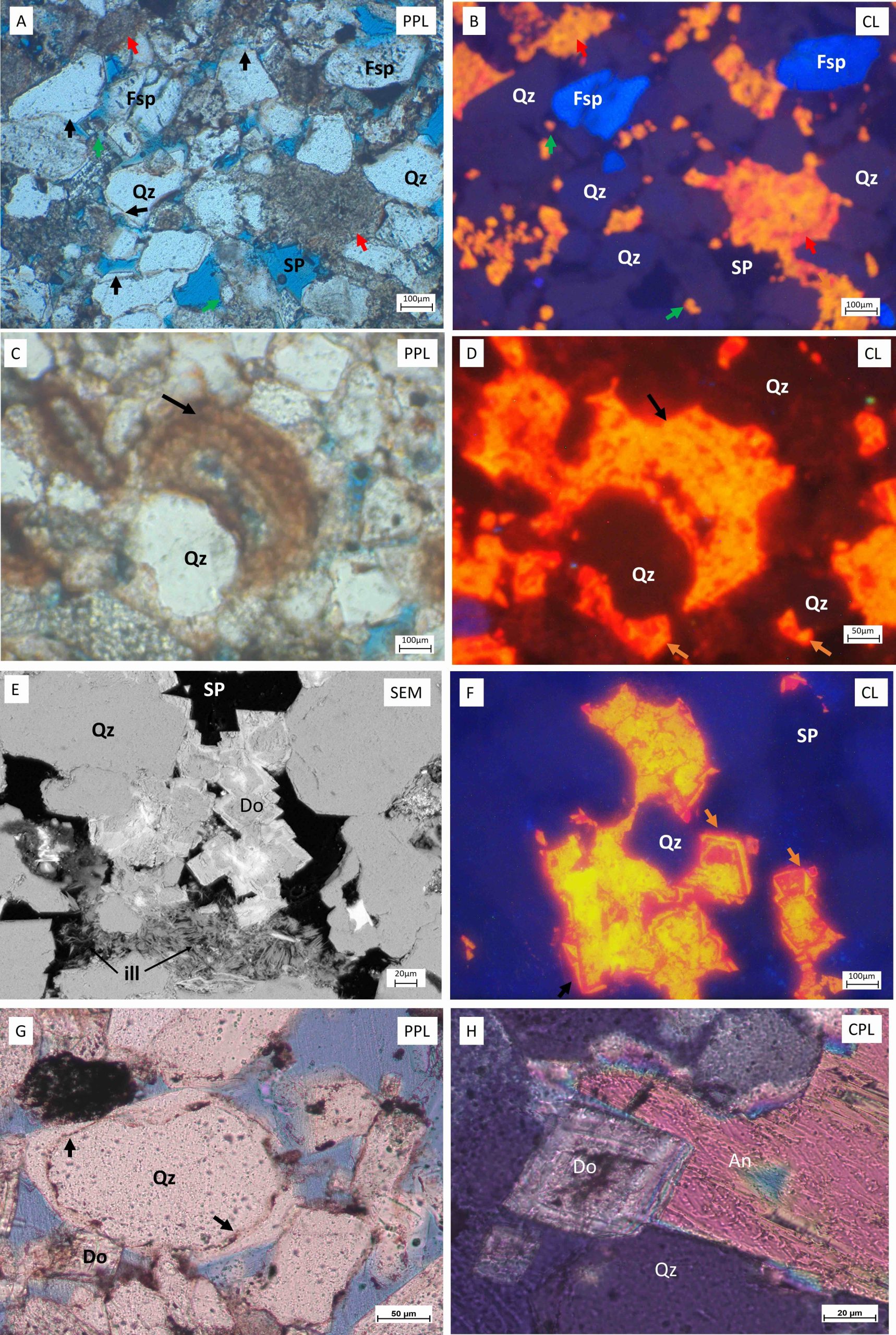
Figure 5: Photomicrographs of Lower Volpriehausen Sandstone (LVS) samples (blue = pore space/resin). PPL – plane-polarised light, CPL – cross-polarised light, CL – cathodoluminescence, SEM – scanning electron microscope.
A and B). A large portion of dolomite present as nodules (red arrows) and rhombohedral crystals (green arrows) and predominantly exhibiting bright yellow-orange luminescence. Quartz overgrowths (black arrows) can be identified with a well-developed brown rim between the quartz grains (Qz) and overgrowths. The CL image displays light-dark violet luminescence of quartz grains (Qz) while K-feldspar grains (Fsp) shows blue shades that have been slightly etched/altered. Oversized and grain-shaped pores are secondary in origin (SP). Grain-grain contacts range from long to concave-convex.
C and D). The partially preserved concentric structure of the ooid (black arrows) often exhibits dissolved or altered cores. Recrystallisation/replacement by dolomite is evidenced by their ghost (brown colour) fabrics. Expanded overgrowth fabrics can also be observed. The dolomite phases experienced a higher degree of compaction than the quartz grains and exhibit concave-convex to long contact with quartz grains. Concentric layers can be separated by dull CL and a dissolved nucleus forming mouldic pores.
E). Dolomite cements (Do) and illite (ill) occlude the porosity and block the pore throats. The bright appearance around the rhombic crystal shows the recrystallisation and overgrowths. These bright lines and spots are relatively rich in iron content. Dolomite precipitation also occurred on the detrital grains. Oversized and grain-shaped pores are secondary in origin (SP).
F). A cluster of subhedral – euhedral dolomite crystals (orange arrows) in the pore space exhibits bright yellow-orange to red CL, suggesting recrystallisation and overgrowth. Presence of secondary porosity (SP) due to partial and/or complete dissolution of detrital grains.
G) Brownish Fe-oxide/hydroxide coatings are present around detrital quartz grains (Qz). Quartz overgrowths (black arrows) can be observed. Dolomite cement (Do) appears to obstruct the quartz overgrowths. Uncompacted framework (floating–point) grain-grain contacts indicate that early cementation hampered mechanical compaction and preserved the primary grain framework.
H) Pore space filled by dolomite (Do) and anhydrite (An) cements.
Table 2: Summary of point count analysis of the Lower Volpriehausen Sandstone cored section of Well-X. M = moderate; MG = moderately good; A = angular; SA = subangular; SR = subrounded; R = rounded; intergranular volume = IGV; compactional porosity loss = COPL; cementation porosity loss = CEPL.
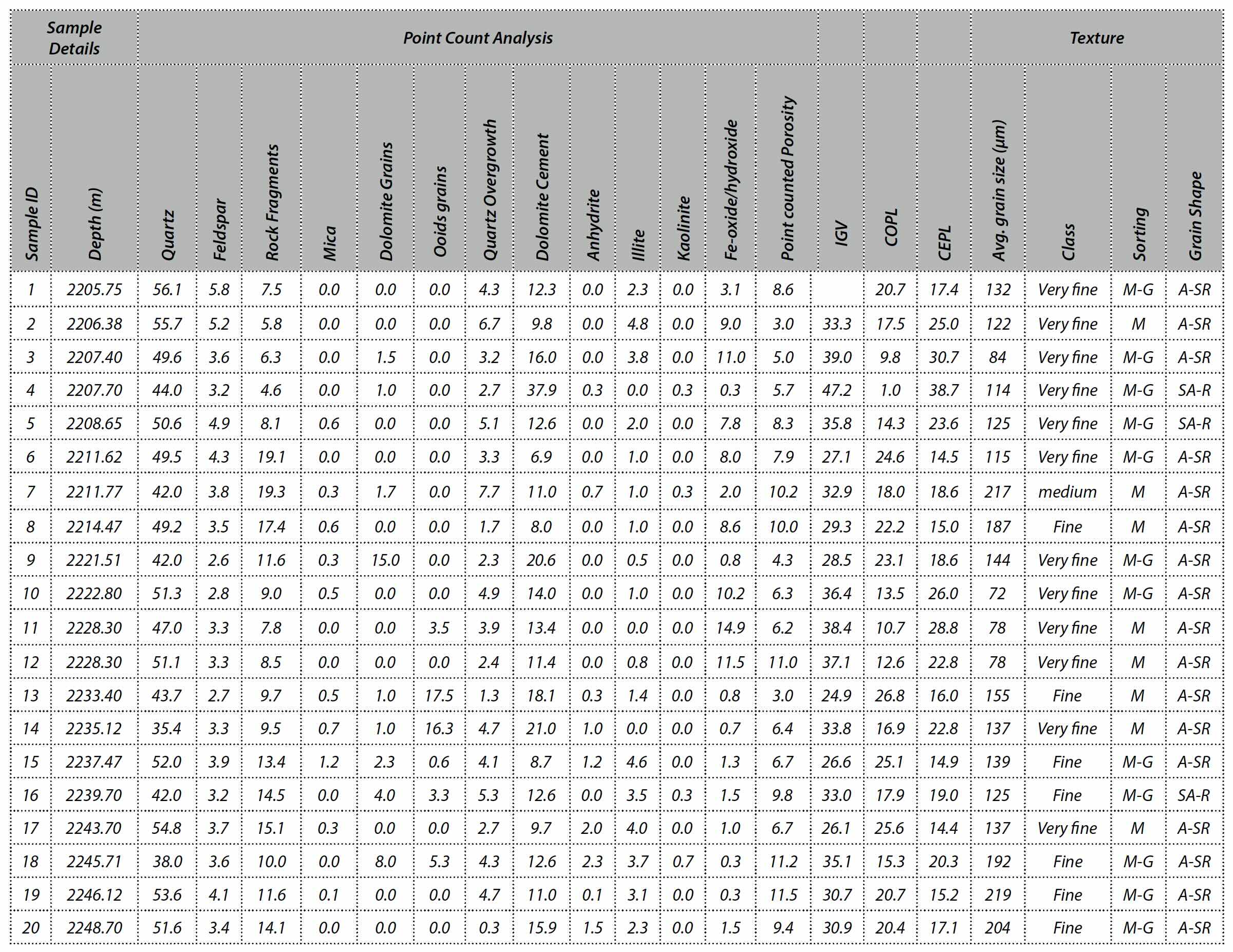
Quartz overgrowths, averaging 3.7% (min. 0.3%, max. 7.7%), can be distinguished by the presence of Fe-oxide/hydroxide coatings between the detrital quartz and quartz overgrowth (e.g. Figs. 5A, G). Fe-oxides/hydroxides averaging 4.8% (min. 0.0%, max. 15.6%) are present primarily as brownish grain coatings (Figs. 5G, 6D). Authigenic clays occur only in minor proportion. Illite forms pore-lining tangential and pore-filling fibrous morphologies and ranges from 0.0% to 4.8% (Figs. 5E, 6F). Kaolinite (<1%) is less common and is rarely observed in SEM images. Due to its fine grain size and low birefringence, it is generally not identifiable by polarised light microscopy. Anhydrite (max. 2.3%) is observed as pore-filling cement in a few sandstone horizons (Fig. 5H; Table 2).
Overall, sandstones with rigid grains exhibit mostly floating to point-grain-to-grain contacts, while those with ductile grains show predominantly long to concavo-convex grain-to-grain contacts. The intergranular volume (IGV) of all examined sandstones averages 32.8% (min. 24.9%, max. 47.2%). The compactional porosity loss and cementation porosity loss (COPL-CEPL) plot indicates porosity loss predominantly due to cementation (Fig. 7).
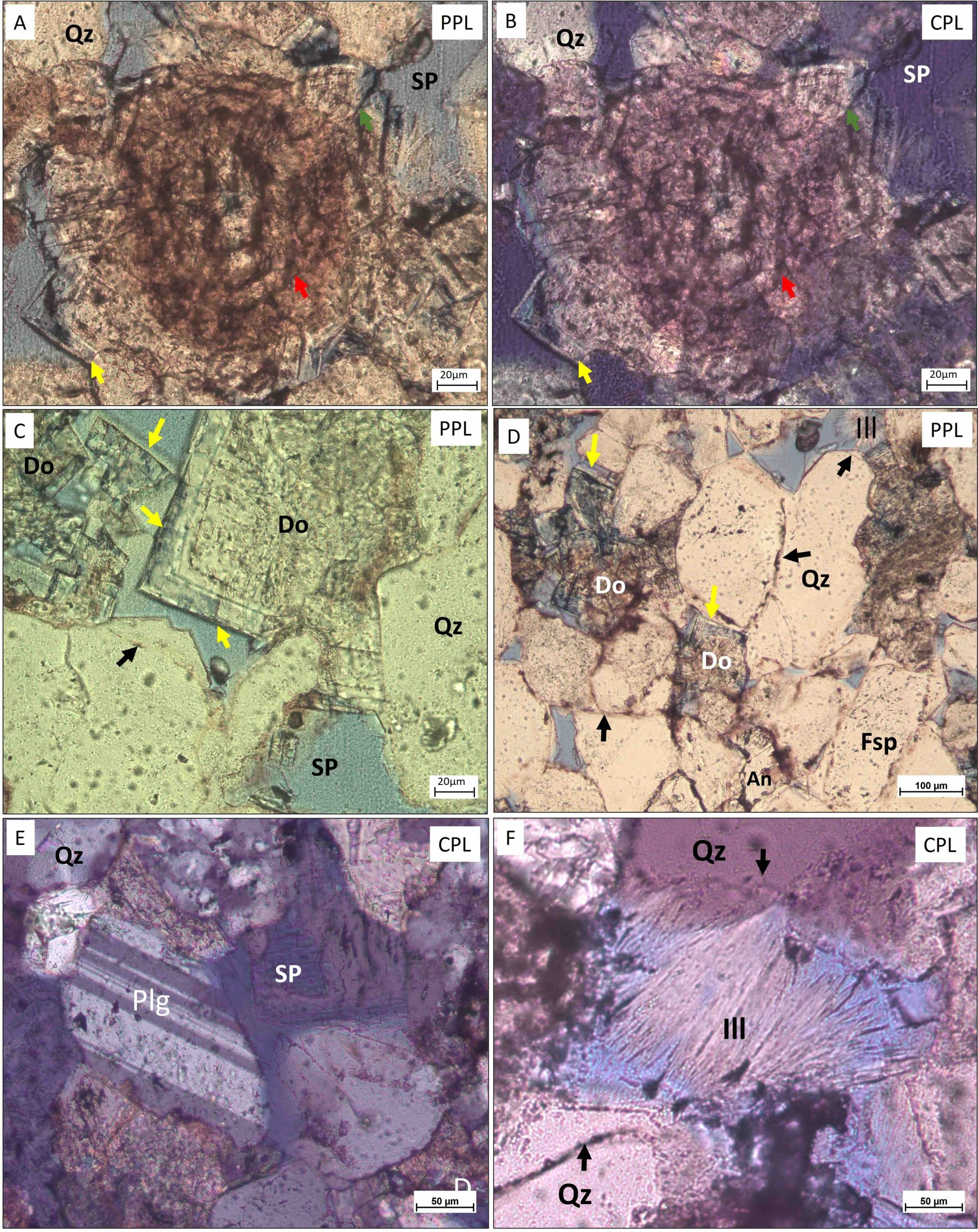
Figure 6: A and B). The spherical grains (ooids) with altered cores of (micro)porous dark micrite and surrounding micritic to ghost lamination (red arrow) are recrystallised and overgrown (green arrow). Overgrowth of dolomite (yellow arrows) is apparent around the rhombic crystals.
C and D). Some of the euhedral dolomite crystal (Do) show evidence of partial dissolution that preferentially develops in overgrowth zones (yellow arrows). Dolomite crystals (Do) also hinder the development of quartz overgrowth. Notice the dark coloured Fe-oxide/hydroxide coatings preserved between the grain contacts (black arrows) as well as a faded Fe-oxide/hydroxide clay coating present between quartz (Qz) and quartz overgrowth.
E). Plagioclase (plg) fragment showing albite twinning. These are less common in the studied sandstones. Secondary porosity has developed due to grain dissolution (SP).
F). Intergranular or mouldic pores containing pore-filling and grain replacive illite crystals (ill). Black arrows show the presence of dark coloured Fe-oxide/hydroxide clay coating between the grain contacts and faded or dissolved relicts around pore spaces. PPL – plane polarised light, CPL- cross polarised light.
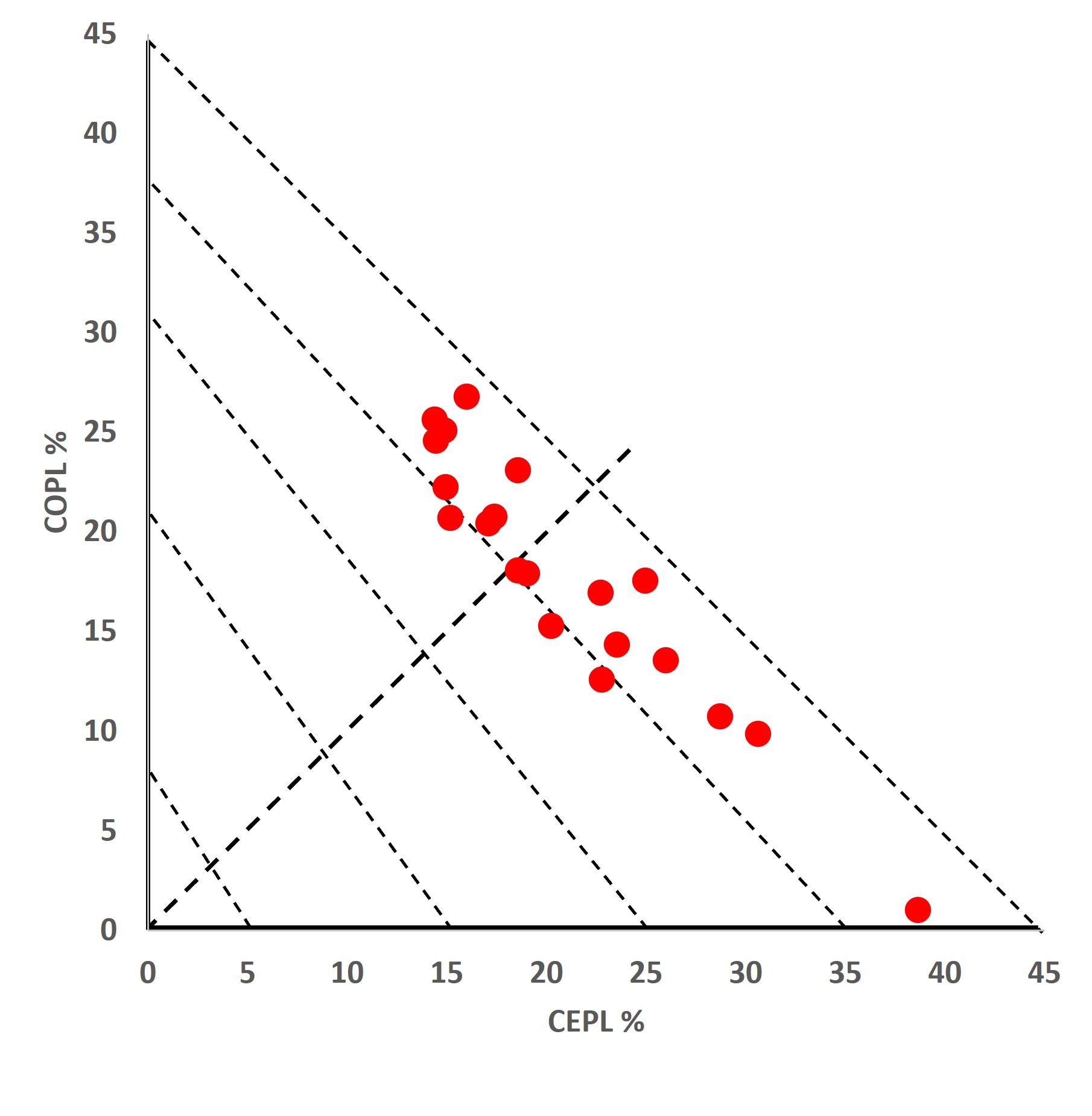
Figure 7: Compactional loss (COPL) plotted against cementation loss (CEPL) after [29] for the Lower Volpriehausen Sandstone cored section in Well-X. The diagonal line is the line of equal porosity loss by compaction and cementation. The diagram assumes an initial porosity of 45% [30].
4.3. Stable Isotopes
The stable isotope data of bulk samples containing dolomite cement from Well-X are plotted alongside published data from wells in the surrounding areas (Fig. 8). The dolomites from the LVS in this study show a narrow range in both δ18O (-4.54 to -2.97 ‰ VPDB) and δ13C (+1.95 to +0.59 ‰ VPDB) values (Fig. 8).
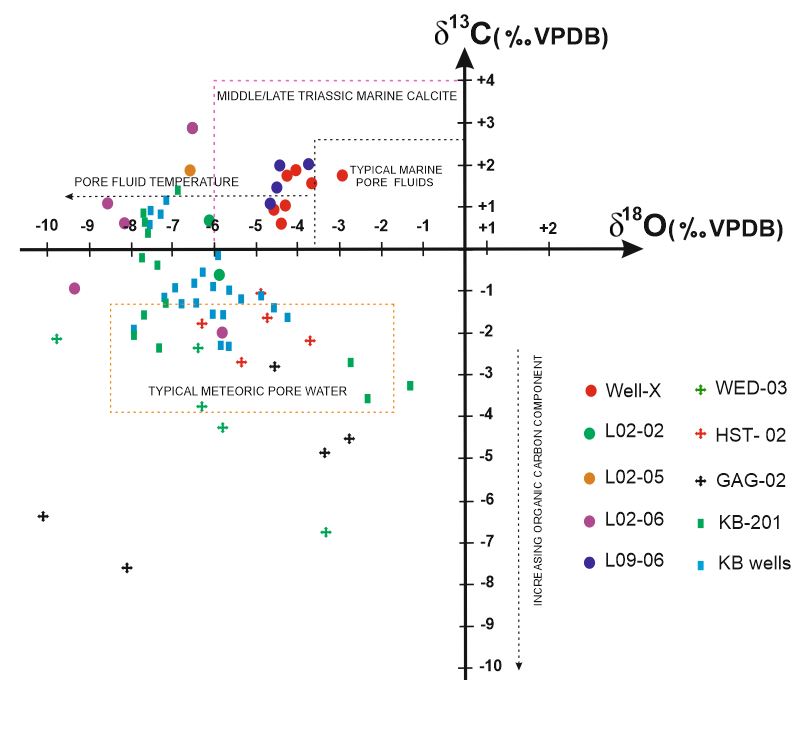
Figure 8: Cross-plot of δ13C and δ18O data from bulk samples containing dolomite cement from the Lower Volpriehausen Sandstones in Well-X plotted together with published data [12,10,14,16]. The dotted purple box shows the Middle/Late Triassic marine calcite signature [49], typical marine pore fluid (dotted black box) and typical meteoric pore water signatures, dotted brown box from [14]. L-blocks wells L02-02, L02-05, L02-06, L09-06 are located north of Well-X [10]; wells Gaag-02 (GAG-02), Werkendam-03 (WED-03), and Haastrecht-02 (HST-02) from [14] are located on the southern margin of the West Netherlands Basin; and wells KB-201 from [12] and KB-64, KB-98, KB-169, KB-172, KB-201 wells from [16] are in the northeast of the Campine Basin.
4.4. Petrophysical Analysis
Optical porosity of the twenty thin sections ranges from 3.0 to 11.5%, comprising both primary (intergranular) and secondary (intragranular) pore types. The total helium porosity, measured from six selected core plugs, ranges from 6.7 to 12.9%. Results from optical and helium porosity are positively correlated (R² > 0.8). Nitrogen gas permeability from the same plugs ranges from 0.02 to 14.36 mD. Porosity and permeability data are plotted on a graph from [31] (Fig. 9). MICP pore size distribution ranges from 1 to 15 µm (Fig. 10). The pore throat size decreases with an increasing grain fineness as well as greater amounts of authigenic cements.
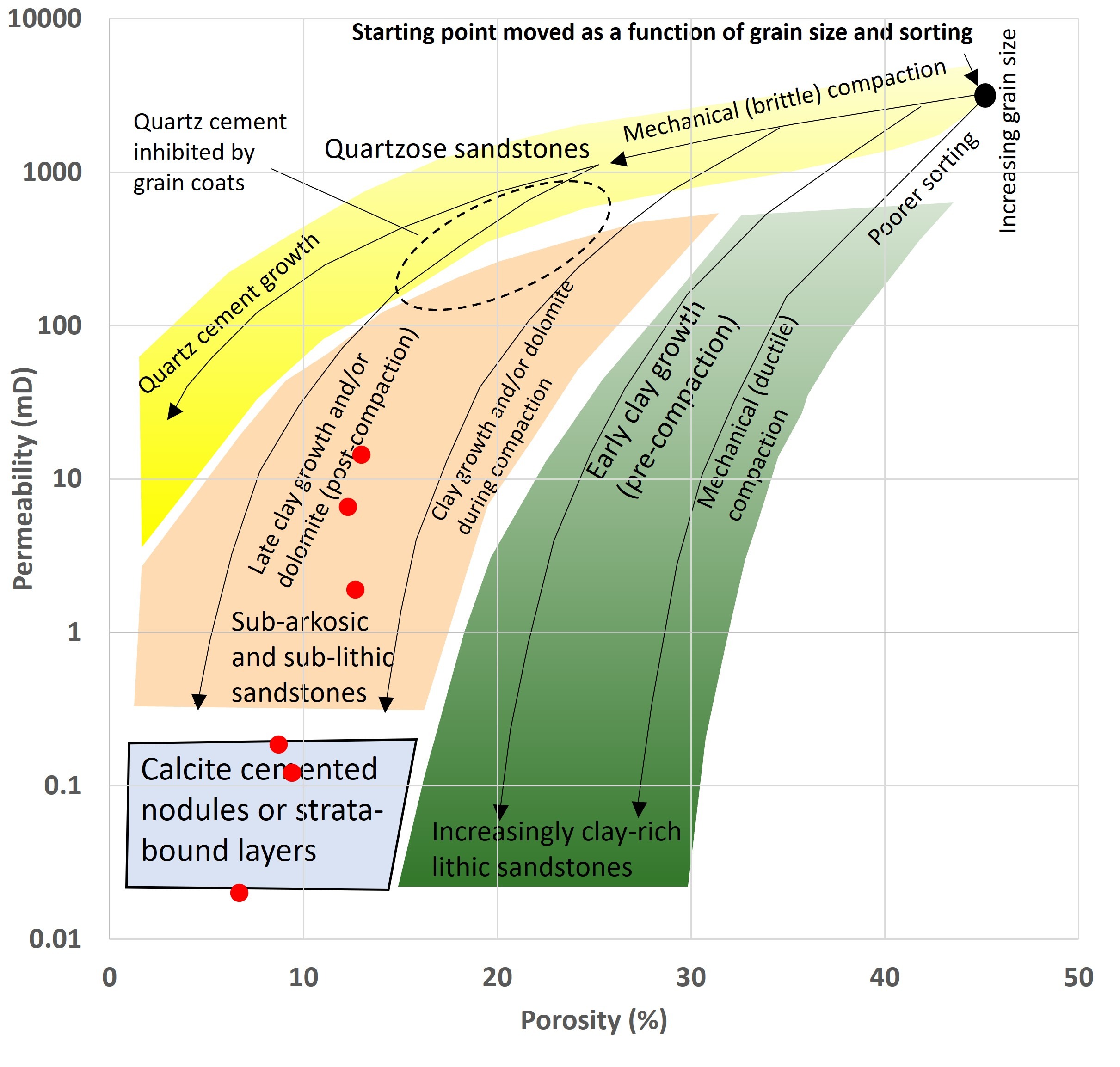
Figure 9: Core permeability versus core porosity plotted on a graph from [31].
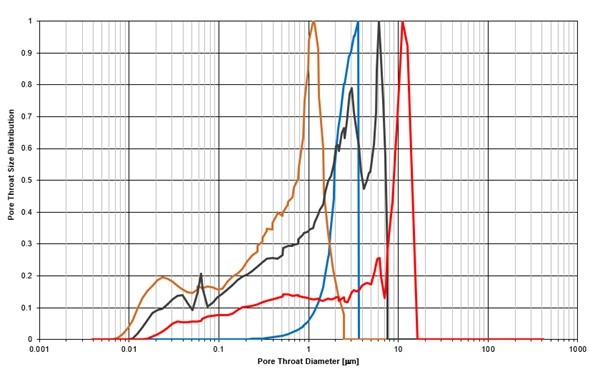
Figure 10: MICP pore size distribution of four Lower Volpriehausen Sandstone samples, with pore throat sizes from 0.01 to 15 µm. The red curve corresponds to a sample with a 192 µm average grain size and lowest percentage of authigenic cements (18%), with a higher pore throat size dominance. The black curve represents a sample with an average grain size of 125 µm and 19% authigenic cement content. The blue curve corresponds to a sample with a 144 µm average grain size and 23% authigenic cements. The brown curve represents a sample with a finer average grain size of 137 µm and the highest cement content of 27 %, with significantly smaller dominant pore throat sizes.
5. Discussion
5.1. Depositional Environment
In continental deposits, particularly in cored sections, distinguishing individual depositional settings is quite challenging. Our observations of sublitharenite to litharenite sandstones with the combination of sedimentary features such as cross-bedding, subangular to rounded grains and fining upward sequences are strong evidence for a palaeo-fluvial environment. The dominance of very fine (62-125 μm) to fine (125-250 μm) and occasionally medium (250-500 μm) grained sandstones with low-angle cross-bedding, horizontal and wavy laminations, with occasional rootlets (Fig. 3), reflect a dominance of low energy deposits. Their alternation with structureless to high-angle cross bedded sandstones and the occurrence of erosive surfaces with pebbles and mud clasts (Fig. 3), reflect changes in energy within the system. These changes in energy are typical for braided river systems both in space and time. On the one hand, this variation relates to their relative position with regard to the main fluvial channel (space); on the other hand, it can be related to variations in channel discharge, caused by alternating wet and dry conditions. The studied sandstones of Well-X were predominantly deposited as ephemeral fluvial channels or sheet floods, laterally from the higher energy main braided fluvial channel(s), as illustrated in Figure 11, in line with [1,5,7,11,20,21].
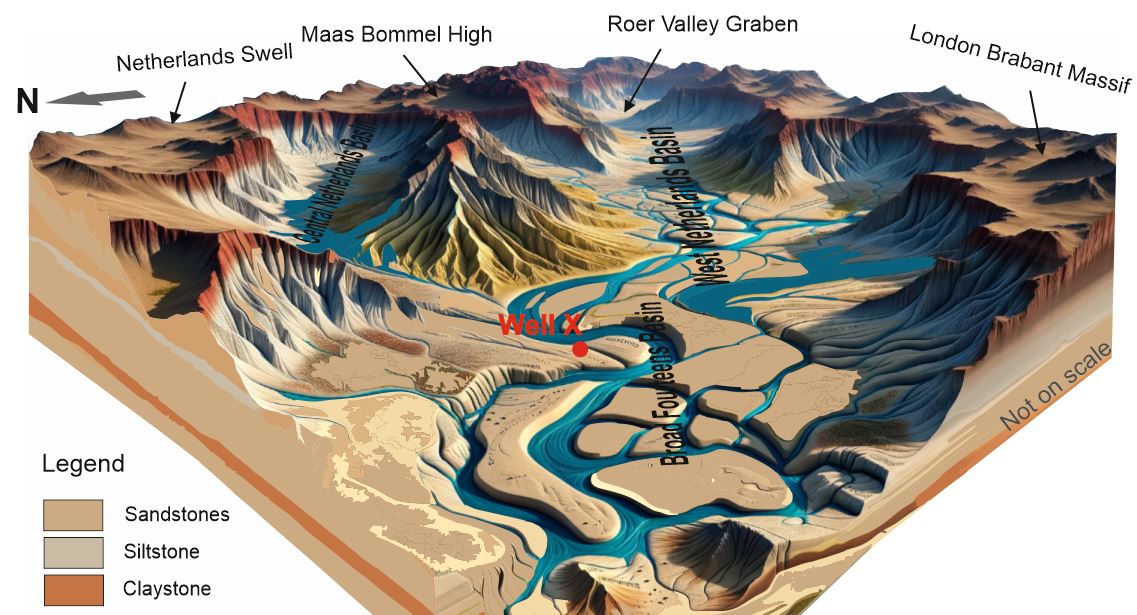
Figure 11: Conceptual depositional model showing the idealised palaeogeographic location of the studied wells (produced by AI engine and modified in CorelDRAW).
5.2. Diagenesis
Sandstone reddening
The precipitation of iron oxides/hydroxides present as grain coatings (Figs. 5A, G and 6D), which are responsible for the macro-scale red-orange-pink colour, is typically syn-depositional to eodiagenetic as observed even in present-day sediments in hot deserts or semi-arid environments [32]. Similar red-bed eodiagenetic features from the Permo-Triassic basins in the North Sea region have been described and interpreted accordingly [12,16,33-39]. The fact that the iron oxide/hydroxide coatings are present in nearly all of the examined samples indicates that no significant bleaching by reducing (mesodiagenetic) fluids occurred. This contrasts with LVS cored sections Q11-01, VAL-01, NWK-02, KDK-01, where only remnants of these coatings are present, and where the sandstones instead exhibit green, grey, and white colours. Interpreted diagenetic processes in the LVS samples of well-X are summarised in Figure 12.
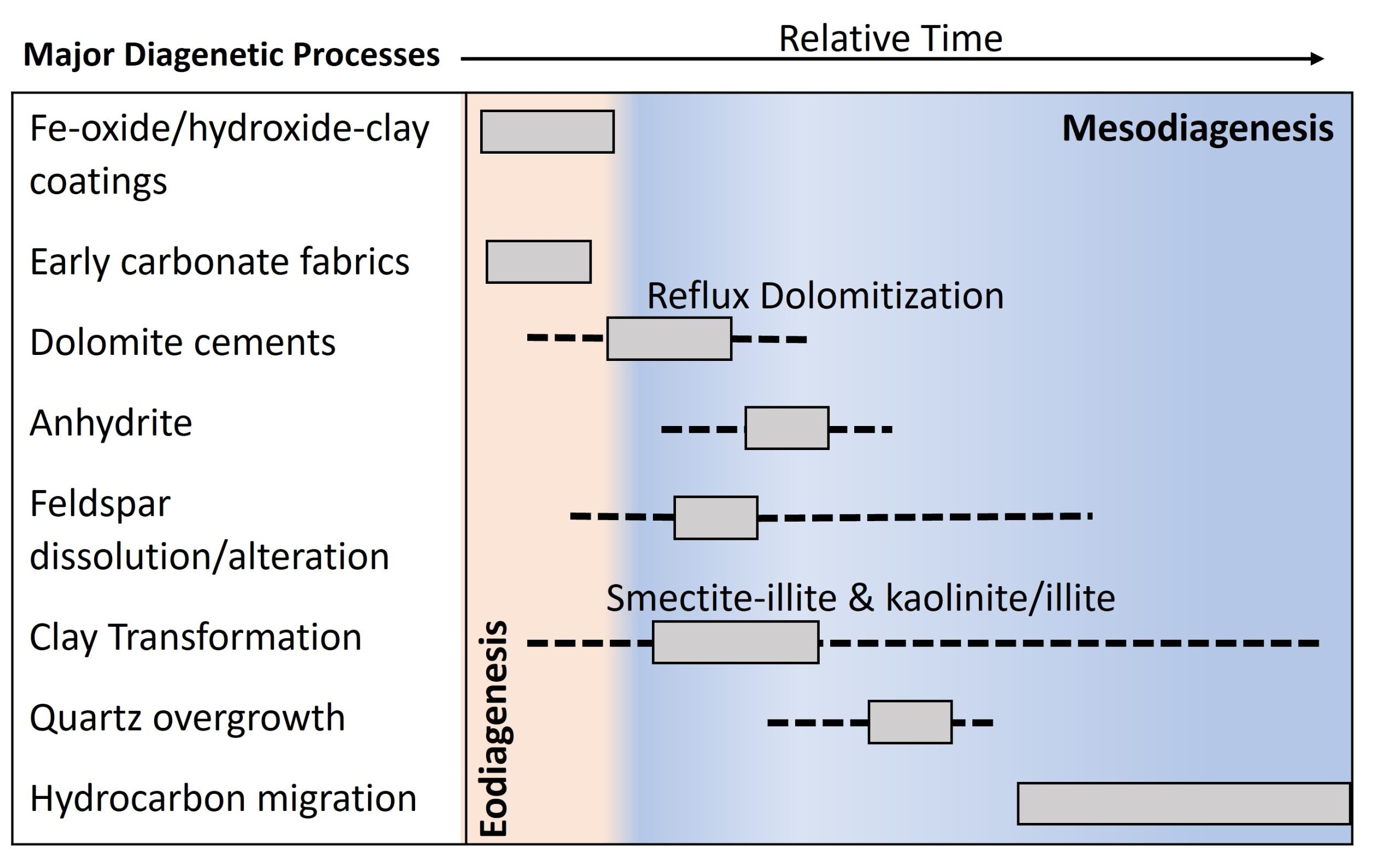
Figure 12: Summary of interpreted major diagenetic processes of the Lower Volpriehausen Sandstone of Well-X.
Coated grain versus nodular carbonates
In the literature, there has been considerable discussion on the origin of spherical carbonates found in the Buntsandstein sandstones. On the one hand, the spherical carbonates are described as glaebules and nodules, i.e., early diagenetic chemically grown carbonate spherules, that often coalesce and merge forming calcretes or dolocretes, depending on the carbonate’s mineralogy [12,40,41,42,43]. On the other hand, the internal concentric lamination around a nucleus suggests a transport and/or reworking component in their formation and support their classification as coated grains. Depending on their morphology, they can be classified as ooids [10,44], with a distinct spheroidal morphology and undulose extinction over the radial crystal, as spheroids or oncoids, which display irregular thickness of the laminae attributed to preferential growth directions by a biological component in their formation [16]. Their classification is therefore directly related to their formation process and timing.
Based on our observations for Well-X and similar carbonate features in the LVS cored sections of the VAL-01 and NWK-02 wells, a large part of the confusion and discussion in the literature can be related to their mixed origin. The ~200 µm spherical grains with altered cores of (micro)porous dark micrite and surrounding micritic to ghost lamination (Figs. 5C, D and 6A, B) are textbook examples of (often collapsed) ooids. They frequently display concavo-convex contacts with other grains (Fig. 5C) due to their susceptibility to compaction. They are overgrown, however, by radial sparite cements which can also be found on other detrital grains. The latter are associated with undercompacted fabrics characterised by floating to point grain contacts (Fig. 5G) related to displacive (i.e. nodular growth) (Fig. 6A, B). The latter is typical for formation under minimal overburden [45] and in soils, with nodules forming as an earlier stage of calcretes or dolocretes [12,40,41,42,43]. Carbonate precipitation occurs at the water table or within the soil’s illuviated horizon, which tends to concentrate around a nucleus. Most likely the ooids acted as preferential precipitation sites. Other typical pedogenic fabrics, such as possible rhizocretions, meniscus, and pendant cements, biologically induced structures (burrows, root traces), etc. could not unequivocally be recognised. In addition, it is difficult to identify typical pedogenic and phreatic features due to post-depositional alteration.
Considering the formation of ooids, which are often interpreted in the literature as typical marine deposits, [16] interpreted their formation in fluvial channels and bottom lags of ponds [46]. While these settings likely occurred in the braided fluvial setting, other origins are possible including soil, travertine, cave, and lake systems [47]. In addition, according to [48], such coatings may form on slopes, particularly on low-angle pediments, where grains are transported downslope by gravity and become evenly coated during transit, especially in warm, semi-arid climates. Depending on the formation processes and the conditions during formation, spheroid or ooid fabrics and/or their organisation will differ [47]. However, the faint preservation of micritic lamination in the larger dolomite spars of the coated grains as ghost structures testifies to some recrystallisation. Similar ghost outlines and recrystallisation features have also been described by [45]. The original fabrics are thus only minimally preserved, and therefore their chemical signature will most likely no longer be representative of their original depositional environment.
Dolomitisation
Whole-rock stable isotope data for the LVS sandstone samples, which primarily contain (non-)ferroan dolomite cements, but also the recrystallised ooids, form a tight cluster (δ18O = -4.54 to -2.97 ‰ VPDB, δ13C = +1.95 to +0.59 ‰ VPDB; Fig. 8). This indicates that the same or very similar fluids were responsible for both the recrystallisation as well as the overgrowth and pore-reducing cementation. This contrasts to the stable δ18O-δ13C isotope signature of Buntsandstein lithologies of other studies in the southern Netherlands [12,14,16] with exception of well L02-06 [10] (Fig. 8). The signature for Well-X is close to the Middle/Late Triassic marine signature (dotted purple box in Fig. 6) [49]. Typical meteoric signatures, as expected for continental settings, are more depleted both in δ18O and δ13C values, typically sourced from meteoric waters containing atmospheric or soil-derived CO2 (dotted brown box in Fig. 6). Other studies explain their signature’s deviation from a typical meteoric signature by strongly evaporative conditions [16]. At 25°C, δ18O of -8.5 to -6 ‰ VPDB are expected for carbonates in equilibrium with typical Triassic meteoric water (-6 ‰ VSMOW) and strongly evaporated waters (+3‰ VSMOW), respectively [50]. The well-X signatures are significantly higher than this range (Fig. 8). In addition, while a marine signature in a continental deposit might initially seem controversial, based on the stratigraphy of the study area, the partially enclosed marine to evaporitic deposits of the Rot Formation, related to Middle/Late Triassic marine incursions [11], directly overlie the Solling Formation which lies on top of the Volpriehausen Formation in Well-X (Fig. 2).
The dolomite, in combination with its marine isotopic signature can be explained by different seawater dolomitisation models. Seawater dolomitisation by slope convection would require an atoll or elevated structure [51]. Mixing zone (Dorag) dolomitisation occurs when fresh groundwater mixes with brine in deep burial settings leading to supersaturation and carbonate precipitation [52]. This process would result in varying isotopic signatures in combination with textures with varying cathodoluminescence. In contrast, the overgrowths and/or recrystallisation of the observed dolomite are relatively uniform and range from bright yellow-orange to red luminescence (Figs. 5B, D, F). The bright yellow-orange luminescence suggests Mn²⁺ as the luminescent activator, as proposed by [53]. Detailed SEM-EDS analysis reveals that red luminescent zones are related to a relatively higher Fe2+ concentrations, suggesting that iron was incorporated into the carbonate matrix. These zones are commonly formed as syntaxial overgrowths on eodiagenetic cements and have low iron content in the outer rims of the rhombic crystals (Figs. 5E and 6C, D). The spatial association of these red luminescent dolomite zones with remnants of Fe-oxide/hydroxide coatings implies that these coatings likely served as a significant Fe²⁺ source. These petrographic observations in combination with the presence of the overlying marine to sabkha Rot deposits, points to a reflux dolomitisation model driven by evaporative pumping. This model suggests that density-driven brine migration and the influx of Mg-rich saline water during evaporation was the most plausible dolomite formation mechanism in such settings [51,54,55]. The presence of calcite cements in the neighbouring wells (e.g. NWK-02) and those reported by [45] support the reflux dolomitisation model, in which often stratiform or tongue-like bodies of dolomitising fluids follow preferential vertical and lateral flow paths (Fig. 14).
In terms of timing, the direct superposition of the dolomite crystals on the iron oxide/hydroxide rims, preventing quartz overgrowth (Fig. 5E, G), supports dolomite formation prior to quartz overgrowths. Furthermore, scattered isolated rhombic crystals locally filling framework grain dissolution sites, commonly related to the alteration of detrital feldspar grains, show that these dolomites formed during relatively early mesodiagenesis. The reported Broad Fourteens Basin burial history (with e.g., thermal subsidence and uplift) [5,7,11] suggests that dolomitisation occurred during the Middle/Late Triassic marine incursion, following significant erosion of overlying strata related to the Hardegsen unconformity, at shallow burial depths (<100 metres based on the overlying strata; Fig. 2). The expanded fabrics of the dolomites are also indicative of minimal overburden. Displacive growth of carbonates can occur at depths of up to several tens or possibly hundreds of meters [56,57,58].
Anhydrite and quartz overgrowth
Anhydrite predominantly occurs as a poikilotopic intergranular pore-filling cement in specific horizons. The anhydrites postdate dolomitisation since they locally enclose dolomite cements (Figs. 5H, 6D) and when present, inhibit the otherwise omnipresent quartz overgrowth. In addition, the absence of hydrocarbon inclusions within these anhydrite crystals supports their formation prior to hydrocarbon migration. [10] reported that anhydrite was recycled from the underlying Zechstein in the L-blocks, but a Zechstein succession is absent in our study area. Although gypcretes are common features in arid and semi-arid environments [59], they were not observed in the analysed core samples. Given that significant portions of early diagenetic gypsum cements may dissolve during burial, early-formed gypsum remains a plausible source for later anhydrite cementation during deeper diagenesis.
Syntaxial quartz overgrowths can be distinguished by preserved Fe-oxide/hydroxide–clay coatings between the detrital grains and the overgrowths (Figs. 5A, G). Locally, overgrowths interlock to form a rigid grain framework. The development of quartz overgrowths depends on the pore space present around the detrital grains. These overgrowths are discontinuous and anhedral, having formed in competitive environments where dolomite and, locally, anhydrite had already precipitated.
Processes for illite formation and hydrocarbon charging
Smectite-to-illite transformation is a well-known reaction process in the Buntsandstein. It occurs generally at shallow depths due to intense dissolution by meteoric water or increased acidity [16,60] and leads to a steady increase in illite. In addition, the paucity of kaolinite in contrast with the hairy, whiskery, and platy illites in the pores (Figs. 5E, 6F), indicates that feldspar alteration directly resulted in increased illite formation (related to the K+/H+ activity ratio) [61]. Illitisation of kaolinite would have required high temperatures, corresponding to burial depths >4000 meters [60], which significantly exceeds the maximum depth (~3000m) attained during burial of the studied sandstones [3,5]. The exact timing of illitisation is difficult to establish, however, its presence in secondary pores suggests it developed after hydrocarbon migration. Fibrous and meshwork type illite precipitation in the pore space likely obstructed pore throats (Fig. 5E) and prevented efficient fluid migration. According to [3,5,11,62], hydrocarbon charging in the Buntsandstein reservoirs probably occurred during Early Cretaceous.
While hydrocarbons are known as reducing agents that cause dissolution and bleaching of iron-rich sandstones [35,63,64,65,66], the overall preservation of Fe-oxide/hydroxide coatings (Figs. 5A, C, G and 6D) and only partial dissolution of some of the euhedral dolomite crystals (Figs. 6C, D) testifies to overall low reactivity. Furthermore, lack of pyrite and absence of significantly depleted δ13C values (e.g., < -25 ‰ VPDB) [67], show that hydrocarbons did not induce strongly altering chemical processes in these sandstones. Most likely, since Well-X is a dry gas well with very low water production, the gas in the sandstones prevented penetration of reactive fluids.
5.3. Reservoir Quality
The Buntsandstein is known in many locations as a good to very good reservoir. To a large extent this is governed by early diagenetic framework-stabilising cements. While these initially reduce porosity significantly, they hinder mechanical compaction during burial, ultimately resulting in relatively higher porosities (Fig. 13). In addition, subsequent dissolution, often associated with bleaching, can further increase porosity and permeability. However, the LVS sandstones of Well-X show a different behaviour (Fig. 9).
The positive correlation between porosity, permeability, and grain size is confirmed for the present dataset, implying that the dominance of (very) fine-grained lithologies can be directly associated with reduced reservoir properties. Samples with relatively higher grain sizes with lower content of fine sediments and diagenetic cements (18%), exhibit larger pore throat sizes (5-15 µm). In contrast, samples with higher content of finer sediments and diagenetic cements (27 %), show significantly smaller dominant pore throat sizes (<2 µm). In addition, the lowest porosity (<10%) and permeability (0.02mD) values are related to carbonate fabrics (max. 38% by point counting; Table 2). Quartz overgrowths (max. 8% by point counting; Table 2) and fibrous to meshwork-type illite precipitation in the pore space, further obstruct pore throats (Figs. 5E, 6F), decreasing permeability and preventing efficient fluid flow. These observations align with petrophysical results of LVS cored sections from the VAL-01, NWK-02, KDK-01 wells, where significant concentration of various diagenetic cements correlated with reduced reservoir quality due to pore-occluding and pore-throat-blocking cements [13].
In comparison to other sandstones, diagenetic processes thus affected porosity differently in Well-X (Fig. 13). Although stabilising cements were also observed in Well-X, the significant decrease in porosity was even more apparent due to further cementation and dolomitisation. Secondary porosity generated by partial and complete dissolution of detrital grains such as feldspars or rock fragments, as evidenced by remaining grain coatings and the presence of oversized pores (Figs. 5A, E, G), is only locally observed and therefore generally limited.
The reduced reservoir quality observed in the studied LVS cored section is primarily controlled by both the depositional system and subsequent diagenetic processes. Understanding these factors provides insight into the spatial variability of porosity and permeability, which is crucial for reservoir prediction.
The depositional setting exerts a significant control over the initial porosity and permeability distribution, thereby influencing reservoir potential across different sections of the fluvial system. In braided fluvial systems, proximal channel sands or confined channel sections typically exhibit the highest reservoir quality due to moderate to well sorting and relatively larger grain size distributions (Figure 14A-I). In contrast, distal parts of the fluvial river system, such as floodplain sections, are often dominated by finer-grained sediments, resulting in reduced reservoir quality in Well-X (Figure 14A-II). Local depositional controls, including changes in sediment supply, flow regime, and accommodation space, further modulate porosity and permeability patterns within these depositional environments.
Diagenetic alterations, particularly cementation and compaction, have a profound impact on the reduced reservoir quality of these sandstones. In the studied sections, dolomite cements formed through an evaporative or tidal pumping mechanism, driven by density-induced flow. The reflux dolomitisation model involves the downward migration of magnesium-rich brines through the sediment layers, resulting in dolomite precipitation in tongue-like or stratiform bodies within the reservoir [68] (Fig. 14A).
Generally, dolomitisation of calcite is associated with a reduction in crystal volume, and thus a slight increase in porosity and often improved permeability [51,68,69]. In Well-X, however, the reservoir quality contradicts the typical porosity benefits associated with dolomite formation due to the extensive recrystallisation and overgrowths that fill pore spaces (Fig. 14B-I and II). The dominance of porosity-reducing dolomite cementation in Well-X highlights the complexity of diagenetic controls and their potential to either enhance or reduce reservoir quality.
Predicting reservoir properties in Buntsandstein reservoirs thus requires an integrated reservoir model that accounts for both the depositional facies distribution and diagenetic geographic controls, with the latter proving to be perhaps most challenging. Based on the reconstructed location of the paleo-coastline and inferred sabkha environment (suggested by the Rot deposits), brine lobe or tongue infiltration can be reconstructed. The density-driven downward migration, however, will follow preferential flow paths, not only controlled by depositional conditions but also by earlier diagenetic alterations and tectonics. Areas lacking large-scale faults with an intact shielding clay layer (upper Volpriehausen clay/siltstone) or sandstones positioned deeper than several hundred metres at the moment of brine migration will not have been affected. On the other hand, where brine migration occurs, reservoir reduction would be catalysed by preferential precipitation on carbonate features (e.g. ooids) which act as nucleation sites. This model aligns with the contrasting reservoir quality of neighbouring fields.
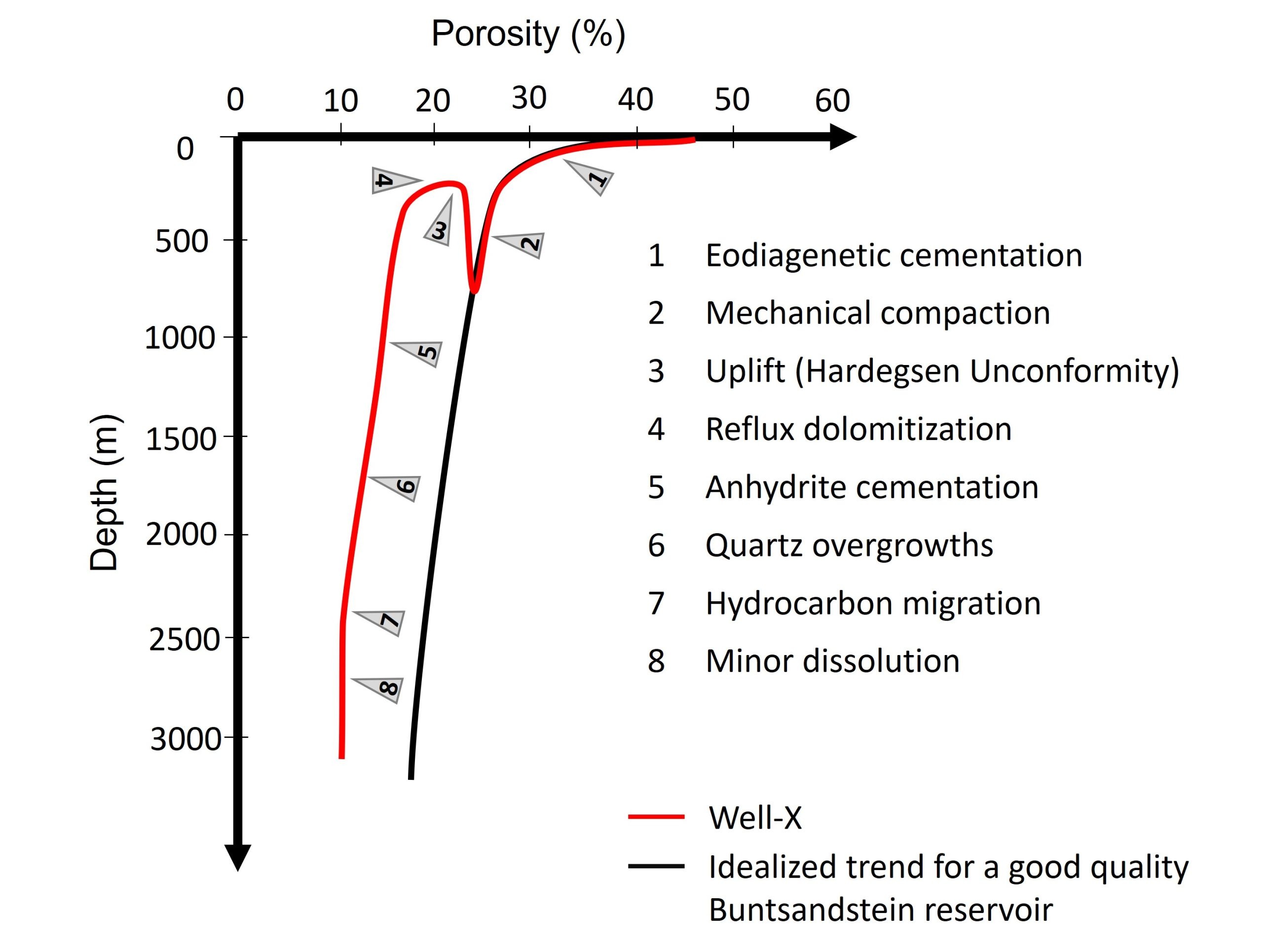
Figure 13: Porosity-depth diagram illustrating the porosity evolution during burial of the LVS of Well-X. Porosity at the time of deposition is a function of sorting and matrix, with clean, randomly packed sands having up to about 42% – 48% porosity [31]. Eodiagenetic cementation decreased initial porosity and stabilised the framework. The Hardegsen unconformity, with erosion related to an uplift and subsequent reflux dolomitisation at relatively shallow depth, further decreased the porosity. Further depth related diagenetic processes, such as anhydrite cementation and quartz overgrowth reduce porosity. Hydrocarbon migration may have led to some dissolution and relatively slight local increase in porosity in the sandstones.
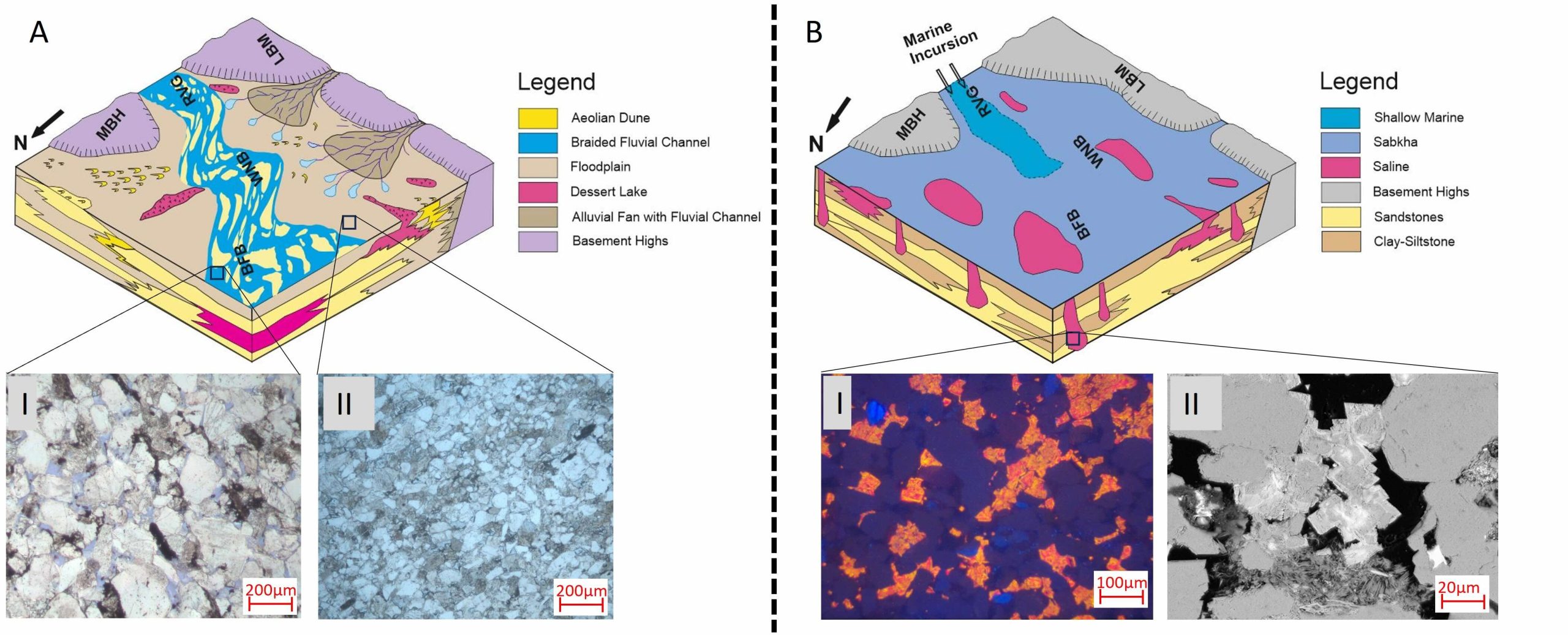
Figure 14: conceptual models illustrating the effect of depositional environments (A) and reflux dolomitisation (B) on porosity in the study area. Microscopic images, A-I shows moderate to well sorted grains with relatively larger grain sizes, characteristic of proximal channel deposits. A-II represents distal floodplain deposits dominated by finer-grained sediments. B-I and B-II highlight the predominance of dolomite cements due to reflux dolomitisation, influencing reservoir quality in the studied sections.
6. Conclusions
This study examined the impact of sedimentology and diagenesis that control reduced reservoir quality in a 49.09 m cored section of the Lower Volpriehausen Sandstone (LVS) from offshore Well-X (exact location kept confidential). To highlight both local and regional scale variations, the published data from surrounding wells were used. The key conclusions drawn from this study are as follows:
In Well-X, the LVS deposits mainly reflect deposition in a paleo-fluvial setting. The dominance of very fine (62-125 μm) to fine (125-250 μm) grains, along with typical sedimentary features, suggests deposition primarily in ephemeral fluvial channels or distal floodplain settings, associated with a braided river system. In contrast, LVS cored sections in the KDK-01 and VAL-01 wells, which show better reservoir properties, indicate deposition in confined channels and more proximal floodplain settings.
Ooids, which are common constituents of the LVS framework grains are recrystallised and overgrown by nodular radial sparite cements associated with under-compacted fabrics characterised by floating to point grain contacts. These features exhibit lower reservoir potential, making their identification crucial for predicting poor reservoir performance in subsurface activities.
Petrographic observations reveal a complex diagenetic evolution with multiphases of cementation that vary both in content and extent. Eodiagenetic carbonate fabrics in Well-X reduced initial porosity but played a crucial role in stabilising the grain framework by hindering mechanical compaction. Uncompacted framework, such as floating to point grain-to-grain contacts, provide indirect evidence of their former presence. A similar early diagenetic evolution, likely involving the preservation of the primary grain framework through early (calcite/dolomite/sulphate) cementation is reported from surrounding wells.
Stable isotope data of the carbonates in the sandstone samples, which primarily consist of (non-)ferroan dolomite cements, show a marine signature. Together with evidence for the Middle to Late Triassic marine transgression, preserved in the lithostratigraphic column as overlying marine and sabkha Rot deposits, and evidence of significant erosion of interlayered strata (Hardegsen uniformity), support reflux dolomitisation.
This highlights the role of marine fluids in the study area in shaping the diagenetic evolution and ultimately reducing reservoir quality of the LVS or Main Buntsandstein Subgroup. Moreover, this study highlights the need to develop a comprehensive model to more precisely delineate the extent and intensity of the sabkha-marine influence in order to better understand its impact on the reservoir quality of Buntsandstein reservoirs.
Author Contributions: Conceptualisation, Husnain Yousaf and Dr. Hannes Claes; methodology, Husnain Yousaf; software, Husnain Yousaf; validation, Husnain Yousaf, Dr. Hannes Claes and Prof. Dr. Rudy Swennen; formal analysis, Husnain Yousaf; investigation, Husnain Yousaf; resources, Husnain Yousaf; data curation, Husnain Yousaf; writing—original draft preparation, Husnain Yousaf; writing—review and editing, Dr. Hannes Claes and Prof. Dr. Rudy Swennen; visualisation, Husnain Yousaf; supervision, Prof. Dr. Rudy Swennen and Prof. Dr. Gert Jan Weltje; project administration, Husnain Yousaf; funding acquisition, Prof. Dr. Rudy Swennen. All authors have read and agreed to the published version of the manuscript.
Funding: This research received no external funding.
Acknowledgements: I would like to express my sincere gratitude to Prof. Dr. Rudy Swennen and Prof. Dr. Gert Jan Weltje for their exceptional supervision and insightful reviews throughout this research. I am also grateful to Kistos Holdings plc for providing the core material of Well-X and permission to publish this article. Special thanks are extended to Dr. Hannes Claes for his invaluable assistance in formal analysis and conceptualisation. I also appreciate the valuable advice and constructive feedback provided by all reviewers, which significantly improved the quality of this manuscript.
Conflicts of Interest: The authors declare no conflict of interest.
References
- Fontaine, J. M., Guastella, G., Jouault, P., De la Vega, P. (1993). F15-A: a Triassic gas field on the eastern limit of the Dutch Central Graben. In J. R. Parker (Ed.), Petroleum Geology of Northwest Europe, Proc. 4th Conf (583–593).
- Fisher, M. J., Mudge, D. C. (1998). Triassic. In K. W. Glennie (Ed.), Introduction to the Petroleum Geology of the North Sea (212–244). Blackwell Scientific Publication.
- de Jager, J. (2007). Geological development. In T. E. Wong, D. A. J. Batjes, J. de Jager (Eds.), Geology of the Netherlands (1), 5–26. Royal Netherlands Academy of Arts and Sciences.
- Verweij, J. (2003). Fluid flow systems analysis on geological timescales in onshore and offshore Netherlands – with special reference to the Broad Fourteens Basin (Ph.D. thesis). Netherlands Institute of Applied Geoscience TNO.
- Geluk, M. C. (2005). Stratigraphy and tectonics of Permo-Triassic basins in the Netherlands and surrounding areas. Ph.D. Thesis, Utrecht University.
- Gąsiewicz, A., Bos, C., Czapowski, G., Evans, D., Gorecki, W., Hajto, M., Holliday, D. W., Holloway, S., Jones, N. S., Kasiński, J. R., Kępińska, B., Kramers, L., Laenen, B., Lott, G. K., Lokhorst, A., Mathiesen, A., May, F., Rowley, W. J., Schmidt, S., Sedlacek, R., Seibt, P., Simmelink, E., Tarkowski, R., Uliasz-Misiak, B., Van Wees, J. D., Wildenborg, A., Wolfgramm, M., Wong, T. E. (2010). Applied geology. In: Doornenbal, J. C. and Stevenson, A. G. (editors): Petroleum Geological Atlas of the Southern Permian Basin Area. EAGE Publications b.v., Houten, 283-299.
- Matev, P. S. (2011). Comprehensive reservoir quality assessment of Buntsandstein sandstone reservoirs in the West Netherlands Basin for geothermal applications in Zuid Holland province area (Master’s thesis). TU Delft, The Netherlands.
- Hans, I., Holleman, E. (2011). Milieueffectenrapportage CCS Maasvlakte (ROAD-project).
- Ames, R., Farfan, P. F. (1996). The environment of deposition of the Triassic Main Buntsandstein Formation in the P and Q quadrants, offshore the Netherlands. In H. E. Rondeel, D. A. J. Batjes, W. H. Nieuwenhuijs (Eds.), Geology of gas and oil under the Netherlands (167-178).
- Purvis, K., Okkerman, J. A. (1996). Inversion of reservoir quality by early diagenesis: An example from the Triassic Buntsandstein, offshore the Netherlands. In H. E. Rondeel, D. A. J. Batjes, W. H. Nieuwenhuijs (Eds.), Geology of gas and oil under the Netherlands (179-189). Kluwer (Dordrecht).
- Bachmann, G. H., Geluk, M. C., Warrington, G., Becker-Roman, A., Beutler, G., Hagdorn, H., Hounslow, M. W., Nitsch, E., Röhling, H. G., Simon, T., Szulc, A. (2010). Triassic. In: Doornenbal, J.C., Stevenson, A.G. (Eds.), Petroleum Geological Atlas of the Southern Permian Basin Area. EAGE Publications b.v., Houten, 149-173.
- Muchez, P., Viaene, W., Dusar, M. (1992). Diagenetic control on secondary porosity in flood plain deposits: An example of the Lower Triassic of northeastern Belgium. Sedimentary Geology, 78, 285-298.
- A.P.S Nederland B.V. (1992). Sedimentology, petrology, and reservoir properties of cores 1, 2 and 3 from well Keldonk-1. Report no G59-2
- A.P.S Nederland B.V. (1994). Sedimentology, petrology, and reservoir properties of cores 1 from well Keldonk-1. Report no G59-2
- Conybeare, D.M., MacPherson, K. (1998). Sedimentology, petrography, and reservoir quality of the Carboniferous and the Triassic Buntsandstein. Report no ZSL-98-570.
- Bertier, P., Swennen, R., Kemps, R., Laenen, B., Dreesen, R. (2022). Effects of diagenesis on reservoir quality of red beds: An example from the Buntsandstein of the Campine Basin (NE-Belgium). Geologica Belgica, 25(3-4), 145-184.
- Ziegler, P. A. (1992). European Cenozoic rift system. Tectonophysics, 208(1-3), 91-111.
- Péron, S., Bourquin, S., Fluteau, F., Guillocheau, F. (2005). Paleoenvironment reconstructions and climate simulations of the Early Triassic: impact of the water and sediment supply on the preservation of fluvial system. Geodinamica Acta, 18(6), 431–446.
- Bourquin, S., Bercovici, A., Lopez-Gomez, J., Diez, J. B., Broutin, J., Ronchi, A., Durand, M., Arche, A., Linol, B., Amour, F. (2011). The Permian–Triassic transition and the onset of Mesozoic sedimentation at the northwestern peri-Tethyan domain scale: Palaeogeographic maps and geodynamic implications. Palaeogeography, Palaeoclimatology, Palaeoecology, 299(1-2), 265-280.
- Geluk, M. C., Röhling, H. G. (1997). High-resolution sequence stratigraphy of the Lower Triassic ‘Buntsandstein’ in the Netherlands and northwestern Germany. Netherlands Journal of Geosciences – Geologie en Mijnbouw, 76, 227-246.
- Geluk, M. C., Röhling, H. G. (1999). High-resolution sequence stratigraphy of the Lower Triassic Buntsandstein: A new tool for basin analysis. Zentrallblatt Für Geologie Und Paläontologie, Teil I, 7–8, 727-745.
- Pharaoh, T. C., Dusar, M., Geluk, M. C., Kockel, F., Krawczyk, C. M., Krzywiec, P., Scheck-Wenderoth, M., Thybo, H., Vejbæk, O. V., Van Wees, J. D. (2010). Tectonic evolution. In J. C. Doornenbal & A. G. Stevenson (Eds.), Petroleum Geological Atlas of the Southern Permian Basin Area, 25-57.
- Dickson, J.A.D. (1965). A modified staining technique for carbonates in thin section. Nature 205, 587.
- Dickinson, W.R. (1985). Interpreting provenance relations from detrital modes of sandstones. In: Zuffa, G.G. (ed.), Provenance of arenites. NATO-ASI Series, Reidel Publishing Company, Dordrecht, Netherlands, pp. 333-361.
- Roduit, N. (2017). JMicroVision: Image analysis toolbox for measuring and quantifying components of high-definition images. Version 1.3.1.
- Folk, R. L. (1980). Petrology of Sedimentary Rocks. Hemphill Publishing Company.
- Becker, I., Wüstefeld, P., Koehrer, B., Felder, M., Hilgers, C. (2017). Porosity and permeability variations in a tight gas sandstone reservoir analogue, Westphalian D, Lower Saxony Basin, NW Germany: influence of depositional setting and diagenesis. Journal of Petroleum Geology, 40 (4), 363–389. https://doi.org/10.1111/jpg.12685.
- Paxton, S. T., Szabo, J. O., Ajdukiewicz, J. M., Klimentidis, R. E. (2002). Construction of an intergranular volume compaction curve for evaluating and predicting compaction and porosity loss in rigid-grain sandstones. American Association of Petroleum Geologists Bulletin, 86(12), 2047-2067.
- Lundegard, P. D. (1992). Sandstone porosity loss: A “big picture” view of the importance of compaction. Journal of Sedimentary Research, 62(2), 250-260.
- Wilson, M. D., McBride, E. F. (1988). Diagenetic alterations in sandstones. In D. D. MacDonald (Ed.), Sandstone Diagenesis: Recent and Ancient (19-44). Blackwell Scientific Publications.
- Worden, R. H., Utley, J. E. (2022). Automated mineralogy (SEM-EDS) approach to sandstone reservoir quality and diagenesis. Frontiers in Earth Science, 10, 794266.
- Walker, T. R. (1967). Formation of red beds in modern and ancient deserts. Geological Society of America Bulletin, 78(3), 353.
- Ali, A. D., Tuner, P. (1982). Authigenic K-feldspar in the Bromsgrove sandstone Formation (Triassic) of central England. Journal of Sedimentary Research, 52(1), 187-197.
- Gaupp, R., Matter, A., Platt, J.D., Ramseyer, K., Walzebuck, J. (1993). Diagenesis and fluid evolution of deeply buried Permian (Rotliegend) gas reservoirs, northwest Germany. American Association of Petroleum Geologists Bulletin, 77(7), 1111–1128.
- Chan, M. A., Parry, W. T., Bowmann, J. R. (2000). Diagenetic hematite and manganese oxides and fault-related fluid flow in Jurassic sandstones, south-eastern Utah. Bulletin, 84, 1281-1310.
- Beyer, D., Kunkel, C., Hilse, U., Aehnelt, M., Pudlo, D., Voigt, T., Gaupp, R. (2011). Reservoir properties and fluid circulation in Buntsandstein aquifer sandstones of the Thuringian Basin in Central Germany. EGU, Vienna, Poster, 13819.
- Schmidt, C., Busch, B., Hilgers, C. (2020a). Compaction and cementation control on bleaching in Triassic fluvial red beds, S-Germany. Z. Dtsch. Ges. Geowiss., 172(4), 523-539.
- Aehnelt, M., Hilse, U., Pudlo, D., Heide, K., Gaupp, R. (2021). On the origin of bleaching phenomena in red bed sediments of Triassic Buntsandstein deposits in Central Germany. Geochemistry, 81(2), 125-736.
- Quandt, D., Busch, B., Schmidt, C., Hilgers, C. (2022). Diagenesis and controls on reservoir quality of Lower Triassic red bed sandstones (Buntsandstein) from a marginal basin facies, southwest Germany. Marine and Petroleum Geology, 142, 105-744.
- Walker, T.R., Waugh, B., Crone, A.J. (1978). Diagenesis in first-cycle desert alluvium of Cenozoic age, south-western United States and northeastern Mexico. Geol. Soc. America Bull. 89, 19–32.
- Wright, V.P., and Tucker, M.E. ( 1991). Calcretes. Blackwell Scientific Publications, Carlton, Australia. Pp. 352.
- Milnes, A. R., (1992). Calcrete. In Developments in Earth Surface Processes (Vol. 2, pp. 309-347). Elsevier.
- Morad, S., De Ros, L. F., Nystuen, J. P., Bergan, M. (1998). Carbonate diagenesis and porosity evolution in sheet‐flood sandstones: Evidence from the Middle and Lower Lunde members (Triassic) in the snorre field, Norwegian North Sea. Carbonate Cementation in Sandstones: Distribution Patterns and Geochemical Evolution, 53-85.
- Blackbourn, G.A, Robertson, L.F. (2014). Sedimentology, petrography and burial history of the cored Triassic section in the National Grid Carbon well 42/25d-3, UK North Sea. Blackbourn Geoconsulting. Available from the National data Repository, https://ndr.ogauthority.co.uk/.
- Rushton, J. C., Hannis, S., Pearce, J., Williams, J., Milodowski, A. E. (2024). Diagenetic evolution of the Bunter Sandstone Formation and its controls on reservoir quality: Implications for CO2 injectivity and storage. Geoenergy, geoenergy2024-023.
- Flügel, E. (2004). Microfacies of Carbonate Rocks: Analysis, Interpretation and Application. Springer, Berlin, 976 p. https://doi.org/10.1007/978-3-662-08726-8
- Claes, H., Miranda, T., Falcão, T.C., Soete, J., Mohammadi, Z., Zieger, L., Erthal, M.M., Aguillar, J., Schmatz, J., Busch, A. and Swennen, R. (2021). Model for calcite spherulite formation in organic, clay-rich, lacustrine carbonate shales (Barbalha Formation, Aptian, Araripe Basin, NE Brazil). Marine and Petroleum Geology, 128, p.104988.
- Goudie, A. S. (1983). Calerete. In: A.S. Goudie and K. Pye (Editors), Chemical Sediments and Geomorphology: precipitates and residua in the near-surface environment. Academic Press, London, pp. 93-131.
- Veizer, J., Prokoph, A. (2015). Temperatures and oxygen isotopic composition of Phanerozoic oceans. Earth-Science Reviews, 146, pp.92-104.
- Knox, R. O. B., Morton, A. C. (1988). The record of early Tertiary N Atlantic volcanism in sediments of the North Sea Basin. Geological Society, London, Special Publications, 39(1), 407-419.
- Machel, H. G. (2004). Concept and models of dolomitization. In: Braithwaite CJR, Rizzi G, Darke G (eds) The geometry and petrogenesis of dolomite hydrocarbon reservoirs. Geological Society of London Special Publication, 235, 7–63.
- Morse, J. W., Rolf, S. A. (2002). The dissolution kinetics of major sedimentary carbo-nate minerals, Earth-Science Reviews, 58(1-2), 51-84.
- Nickel, E. (1978). The present status of cathode luminescence as a tool in sedimentology: Minerals Science Engineering, v. 10.
- Jones, G.D., Rostron, B.J. (2000). Analysis of fluid flow constraints in regional-scale reflux dolomitization: constant versus variable-flux hydrogeological models. Bulletin of Canadian Petroleum Geology, 48(3), 230-245.
- Al–Aasm, I.S., Raymus, S. R. (2018). Reflux dolomitization and associated diagenesis of Devonian Upper Stettler formation and Crossfield Member, south central Alberta: Petrologic and isotopic evidence. Bulletin of Canadian Petroleum Geology 66(4):773–802
- Coniglio, M., Cameron, J. S. (1990). Early diagenesis in a potential oil shale: evidence from calcite concretions in the Upper Devonian Kettle Point Formation, southwestern Ontario. Bulletin of Canadian Petroleum Geology , 38 (1), 64-77.
- Selles-Martinez, J. (1994). New insights in the origin of cone-in-cone structures. Carbonates and evaporites, 9, 172-186.
- McBride, E. F., Picard, M. D., Milliken, K. L. (2003). Calcite-cemented concretions in Cretaceous sandstone, Wyoming and Utah, USA. Journal of Sedimentary Research, 73(3), 462-483.
- Watson, A., Watson, A. (1983). The origin, nature and distribution of gypsum crusts in deserts (Doctoral dissertation, University of Oxford).
- Lanson, B., Beaufort, D., Berger, G., Baradat, J., Lacharpagne, J-C. (1996). Illitization of diagenetic kaolinite-to-dickite conversion series: late-stage diagenesis of the lower Permian Rotliegend Sandstone reservoir, offshore of the Netherlands. Journal of Sedimentary Research 66(3), 501-518.
- McKinley, J. M., Worden, R. H., Ruffell, A. H. (2003). Smectite in sandstones: A review of the controls on occurrence and behaviour during diagenesis. In Worden, R. H., Morad, S. (Eds.), Clay Mineral Cements in Sandstones, Special Publication 34 of the International Association of Sedimentologists, Blackwell Publishing Ltd., 109-128.
- Schäfer, A., Utescher, T., Klett, M.,Valdivia-Manchego, M. (2005). The Cenozoic Lower Rhine Basin–rifting, sedimentation, and cyclic stratigraphy. International Journal of Earth Sciences, 94, 621-639.
- Beitler, B., Chan, M. A., Parry, W. T. (2003). Bleaching of Jurassic Navajo Sandstone on Colorado Plateau Laramide highs: Evidence of exhumed hydrocarbon supergiants? Geological Society of America Bulletin, 31(12), 1041-1044.
- Beitler, B., Parry, W. T., Chan, M. A. (2005). Fingerprints of fluid flow: Chemical diagenetic history of the Jurassic Navajo sandstone, Southern Utah, USA. Journal of Sedimentary Research, 75, 547-561.
- Parry, W. T., Chan, M. A., Beitler, B. (2004). Chemical bleaching indicates episodes of fluid flow in deformation bands in sandstone. American Association of Petroleum Geologists Bulletin, 88, 175-191.
- Parry, W. T., Chan, M. A., Nash, B. P. (2009). Diagenetic characteristics of the Jurassic Navajo Sandstone in the Covenant oil field, central Utah thrust belt. American Association of Petroleum Geologists Bulletin, 93(8), 1039-1061.
- Machel, H. G., Mountjoy, E. W. (1990). Coastal mixing zone dolomite, forward modeling, and massive dolomitization of platform-margin carbonates: Discussion. Journal of Sedimentary Research, 60(6).
- Land, L.S. (1985) The Origin of Massive Dolomite: Summary and Suggestion. Journal of Geological Education, 33, 112-125.
- Lucia, F. J., Major, R. P. (1994). Porosity evolution through hypersaline reflux dolomitization. In: Purser B. H., Tucker M. E., Zenger D. H., (eds) Dolomites, a volume in honor of Dolomieu. International Association of Sedimentologists Special Publication, 21, 325–341.
This article has been published in European Geologist Journal 59 – UN Sustainable Development Goals – where the geology lies
