
European Geologist Journal 52
A US Perspective on Soil Pollution: Observations, Conclusions, and Recommendations
by Barney Paul Popkin1
1 Environmental, Water and Waste Advisor
Contact: bppopkin@yahoo.com
Abstract
Soil is our gateway to civilization. We depend on our soil for vegetation, habitats, landscape, food, fiber, animal feed, wildlife, water and air quality, employment, cultural engagement, and our civilization’s construction and physical construction. However, our once natural soils have largely morphed into anthropogenic or man-altered soil due to agriculture or construction processes. We are heavily regulated by “command and control” legislation and regulation, “polluter pays” policies, and somewhat influenced by information, education, outreach, public opinion, media, and environmental initiatives and litigation. These focus more on runoff and underground waters than on soil, and are often spotty, inconsistent, unenforced, and neglected. Besides information on commonly used methods, with a focus on MONA, and regulation in the United States, I offer observations and recommendations from the perspective of an advisor working in the US context.
Cite as: Popkin, Barney Paul. (2021). A US Perspective on Soil Pollution: Observations, Conclusions, and Recommendations. European Geologist, 52. https://doi.org/10.5281/zenodo.5770174

This work is licensed under a Creative Commons Attribution 4.0 International License.
Introduction
On rocks and soils, we build, maintain, and assure our lives, culture, and civilization. Every town and city, farm and ranch, commercial and manufacturing plot, and physical infrastructure and facility modifies the soils which sustain us. Of all the earth’s cycles, perhaps the most important single one for our civilization is the lithologic/soil cycle. We can think of soil as the human gateway to civilization. We depend on it for vegetation, food, fiber, animal feed, wildlife, water and air quality, employment, and culture. The Food and Agricultural Organization (FAO) and The United Nations Environmental Programme (UNEP) (2021) summarize it this way in their joint report “Global Assessment of Soil Pollution” (FAO website, no date):
“Soil pollution is invisible to the human eye, but it compromises the quality of the food we eat, the water we drink, and the air we breathe and puts human and environmental health at risk. Most contaminants originate from human activities such as industrial processes and mining, poor waste management, unsustainable farming practices, accidents ranging from small chemical spills to accidents at nuclear power plants, [military facilities], and the many effects of armed conflicts. Pollution knows no borders: contaminants are spread throughout terrestrial and aquatic ecosystems and many are distributed globally by atmospheric transport. In addition, they are redistributed through the global economy by way of food and production chains.
Soil pollution has been internationally recognized as a major threat to soil health, and it affects the soil’s ability to provide ecosystem services, including the production of safe and sufficient food, compromising global food security. Soil pollution hinders the achievement of many of the United Nations Sustainable Development Goals (SDGs), including those related to poverty elimination (SDG 1), zero hunger (SDG 2), and good health and well-being (SDG 3). Soil pollution hits the most vulnerable hardest, especially children and women (SDG 5). The supply of safe drinking water is threatened by the leaching of contaminants into groundwater and runoff (SDG 6). CO2 and N2O emissions from unsustainably managed soils accelerate climate change (SDG 13). Soil pollution contributes to land degradation and loss of terrestrial (SDG 15) and aquatic (SDG 14) biodiversity, and decreased the security and resilience of cities (SDG 11), among others.“
If we look at the many ways in which soil is involved in the Sustainable Development Goals, the widespread and complex nature of soil (and soil contamination) is clear.
Soil and its degradation
Soils are the natural dynamic product of climate, vegetation, micro-organisms, water and gases, temperature, and sometimes human and animal activity working on weathered, eroded, transported, deposited or in-place parent material over time. In coastal areas, rising sea levels contribute to soil contamination through seawater intrusion. Soils may also be manufactured and heavily manipulated in commercial agriculture, military activities, and construction and foundation works. Our once natural soils have morphed into anthropogenic soil due to intensive and extensive agricultural, industrialization, manufacturing, commercialization, and urbanization.
As in many large countries spanning several time zones and climatic and geologic regions, the U.S. contains humid as well as arid, inland and coastal regions. Where rainfall exceeds evapotranspiration (ET) for much of the year, soil leaching occurs, leading to acidic soils with an agricultural lime requirement. On the other hand, salt-affected soils are common in arid to semiarid areas, where annual rainfall is insufficient to meet plant ET needs, resulting in salt accumulation or types harmful to plant growth. This is exacerbated by high sodium- and bicarbonate- containing irrigation water as well as other potentially toxic boron, lithium, and chloride ions.
Agricultural production in the U.S. has changed remarkably over the past several hundred years. The old Native American and colonial era agronomic practices of using human wastes as fertilizers and other organic practices like the “Three Sisters” (see Box 1) are now rare, except perhaps in niche farms. European settlers brought different practices to the continent. In colonial days, American farms were largely family owned and operated on small plots using only the knowledge farmers obtained from their families, each other, and neighbors. They typically tilled or overturned the farm plots, planted and harvested cash or subsistence crops, and constituted the majority of the population. Larger farms or plantations were more common in the South based on slave or sharecropper labor. Land fallowing, manuring, manual removal of weeds, and alternative cropping with clover or legumes to renew nitrogen was common.

After the American Civil War, President Abraham Lincoln established land-grant agricultural colleges to promote teaching, research, and outreach of modern, safe, and more productive agricultural practices. Over the past 150 years or so, farms have become larger, and more commercial, effective and efficient in producing food, feed, and fiber, including for export.
Today, fewer than five percent of Americans farm, generally very productively. California, whose economy is the sixth largest in the world, produces over 30 percent of America’s crops from less than three percent of its farming population. Improvements in cropping patterns (seeds), irrigation, drainage, pest and disease control (including integrated pest management where feasible), chemical fertilization, soil amendments and conditioners, automation, soil and plant scouting or monitoring and evaluation, harvesting, sorting, packaging, preservation, cold storage, marketing, and distribution account for this remarkable achievement. However, modern agriculture is not without its costs or negative impacts.
We have extensive soil pollution from pesticides, soil amendments and salts resulting from crop and plant pest and disease control and irrigated agriculture. These amendments may include not only fertilizers for organic matter and nutrients and compost for drainage, but lime and dolomite for decreasing soil acidity and sulfur and organic matter for decreasing soil alkalinity. In addition, we have a significant amount of hazardous waste pollution, such as organic solvents, from industrial and other sources.
Many of America’s agricultural soils have been further degraded by wind and water erosion, nutrient losses, and destroyed structures from deep tillage. The old practices of manuring, composting, fallowing, and crop rotations which replenish commercial agricultural soils have been largely ignored in modern intensive agriculture. More commonly, these now anthropogenic or highly human-altered agricultural soils are productive largely due to application of chemical fertilizers and pesticides.
In the US, all 50 states, territories, and also foreign facilities and military bases have agricultural, industrial and manufacturing, transportation, and human settlement activities which contaminate and pollute soils. Major sources of soil pollution in the US include agricultural practices degrading soil nutrients and accumulating soil amendments, pesticides and salts; wastewaters and leachate from landfills, cemeteries, pits, ponds and lagoons; oil spills and leaking oil tanks adding petroleum and products; and military, industrial, and commercial activities contributing “priority pollutants” and other regulated hazardous substances to otherwise soils in ambient or background conditions.
In the US, the four types of common soil contaminants and pollutants are: 1. Irrigation-induced metals and farm-induced fertilizers and pesticides; 2. Industrial metals; 3. Petroleum products and volatile organics; and 4. Municipal sewage. The fate and transport of contaminants and pollutants is a fascinating study. Because soil consists largely of sand, silt, clay, organic matter, and microorganisms, dissolved metallic constituents in soil water may be attracted to and attenuated by negatively charged silt and clay particles or digested by hungry microorganisms.
The commonest or most wide-spread contaminants to soil are composed of petroleum contaminants, mainly BTEX (benzene, toluene, ethyl benzene, xylene), TPH (total petroleum hydrocarbons), TPHg (gasoline), TPHd (diesel), and fuel additives such as ethanol and MTBE (methyl tert-butyl ether). Because micro-organisms in the soil approach these as food sources, they are typically naturally biodegradable under appropriate natural or enhanced conditions.
In many American coastal cities, coastal areas have been filled in with toxic dredge soil to create land from artificial fill. In San Francisco Bay, for example, dredge spoils are generally contaminated by mercury from gold mining days, hence the name Treasure Island for a prominent artificial island between San Francisco and Oakland. Moreover, Hunters Point Shipyard in southeastern San Francisco consists of over 166 hectares of serpentinite-bedrock artificial fill, containing ambient high levels of toxic metals – arsenic, beryllium, chromium, magnesium, and nickel. The Shipyard also contains significant amounts of toxic metals from using sandblast grit as trench fill. Soils and underlying groundwater have been heavily polluted by fuels and petroleum products BTEX and MTBE at both Treasure Island and Hunters Point Shipyard, as well as around many American fuel service stations (Popkin, 1999).
Soil has the ability to retain dissolved metals due to the negative charge of clay and organic matter (OM). Positively charged dissolved metal ions (cations) are attracted to the negatively charged particles which can cause them to be removed from solution and retained in the soil. Cation Exchange Capacity (CEC) or stoichiometric replacement is influenced by soil texture (higher in fine textured soil), OM content (higher in organic soil), and pH (lower in acidic soil). Soils with high CEC are able to retain a larger proportion of dissolved metals and other positively charged pollutants, while soils with low CEC will retain less (Sustainable Technologies, 2018). Exchange reactions are rapid, if the site solution is accessible, stoichiometric, reversible, and exhibits selectivity preferences among ions of different charge and size (UC Davis). See Box 2 for the general ion-selectivity equation.
Figure 1 shows the working of cation exchange capacity in high pH (acidic) and low pH (alkaline) soil particles. The CEC of a soil sample is the sum of the exchangeable cations in the sample and is expressed in milliequivalents (meq) of positive charge per 100 grams (g) of soil. It is a measure of its ability to attenuate cations or dissolved metals in water. Low CECs (as in acidic soils) reflect low capacity of the soil to adsorb or capture cations from metals, while high CECs (found for alkaline soils) reflect the opposite. Because a soil’s CEC depends on its clay and organic matter content, it can be estimated from soil texture and color. Table 1 shows some soil groups, representative US soil series, and their CECs.
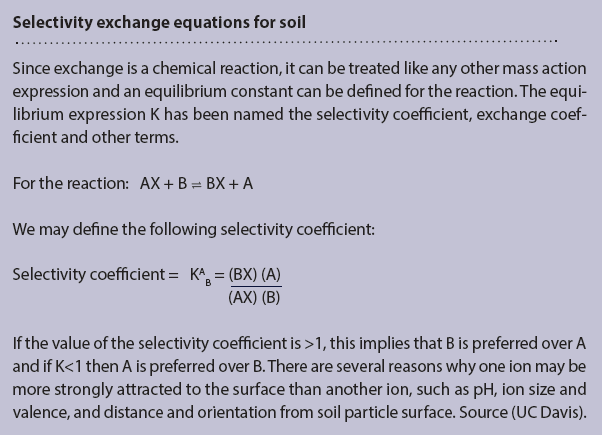
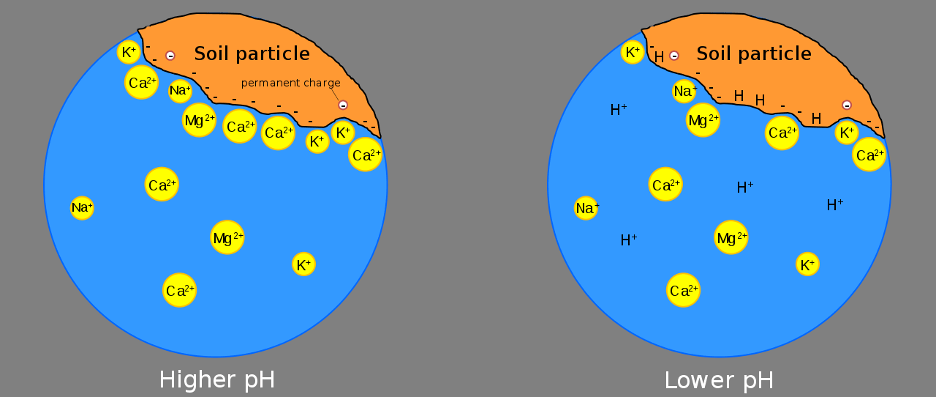
Figure 1: Illustration of CEC in high pH (acidic) and low pH (alkaline) soil particles (Sustainable Technologies, 2018. Image: Kyle MoJo & Kazem Zamanian, CC BY-SA 4.0).
Table 1: Normal range of cation exchange capacity values for common color/texture soil groups.
| Soil groups | Example US soils | CEC, mg/100 g |
| Light colored sands | Plainfield; Bloomfield | 3-5 |
| Dark colored sands | Maumee; Gilford | 10-20 |
| Light colored loams and silt loams | Clermont-Miami; Miami | 10-20 |
| Dark colored loams and silt loams | Sidell; Gennesee | 15-25 |
| Dark colored silty clay and silt loams | Pewamo; Hoytville | 30-40 |
| Organic soils | Carlise muck | 50-100 |
Source: Mengel, 1993
As the subject is so complex, there are many other additional equations for understanding soil pollution and contamination, such as: the leaching fraction, degradation and degradation products, dispersion and diffusion, dissolution and solubility, kinetics, exchange coefficients (including octanol water and fats), chelation potential, and evaporation.
Observations on Remediation
With so many different types and sources of degradation, remediation is a complex issue. Common remedial actions for major US soil pollutants are shown in Table 2.
Table 2: Major US soil pollutants and common remedial actions.
| Soil Pollutant | Common Remedial Action | Comments |
| Dense non-aqueous phase liquids (DNAPL) and recalcitrants like methyl tert-butyl ether (MTBE) | Containment/capsulation | Difficult to locate occurrence. Carcinogenic risk. |
| Heavy metals (lead, mercury, zinc, cadmium, selenium, nickel, arsenic, others) | Containment/ capsulation, in-situ fixation/precipitation/fusion, excavation/landfilling, phytoremediation/phytoextraction/ phytoaccumulation, acid washing/ leaching, electrolysis | Containment/capsulation often best. Hazard Index risk. |
| Pesticides (includes herbicides, insecticides, and fungicides) | Microbial degradation, phytoremediation/phytoextraction/ phytoaccumulation, containment/ capsulation, excavation/landfilling, thermal destruction | Thermal destruction often best for complete treatment. Hazard Index risk for metals, otherwise carcinogenic risk. |
| Petroleum products (also POL – petroleum, oil and lubricants) | Natural attenuation, land farming of refinery wastes, aerification/aeration/ oxidation | Monitored natural attenuation (MONA) often best for low-risk sites. Carcinogenic risk. |
| Salinity (sodium and calcium) | Soil leaching by pre-irrigation water | Need to protect underlying groundwater. Irrigation risk. |
| Per- and poly-fluoroalkyl substances (PFAS) | Activated carbon, ion exchange, high-pressure membrane filtration, dissolution/ air sparging-separation | Carcinogenic risk. |
| Sewage | Aeration/ oxidation, leaching fields, natural degradation | Natural degradation (ND) often best for low-risk sites. Microbiological infection risk. |
| Volatile organic compounds (VOC), polychlorinated biphenyls (PCBs), polycyclic aromatic hydrocarbons (PAH) | Soil vapor extraction, thermal destruction, aerification/ aeration/ oxidation, co-metabolic or enzyme-enriched digestion, bioengineered microorganism | Soil vapor extraction best when feasible. Carcinogenic risk. |
To focus on one technique, MONA – Monitored natural attenuation – is a practical strategy for remediating petroleum and other organically polluted soils and waters, where feasible (Popkin and Jacobs, 2007). In summary:
MONA is potentially an easy and effective method of hydrocarbon (HC) release cleanup, when all conditions are met. Because these conditions frequently need some enhancement, there are many ways that MONA can be optimized by adding to nature’s supply of the necessary ingredients (terminal electron acceptors (TEA), nutrients, microbial colony forming units, and food). In the mid-1990s, environmental regulators recognized how natural attenuation (NA) may mitigate oil spills. NA mechanisms include evaporation or volatilization, dissolution and dilution, adsorption or sticking to soil or aquifer surfaces, intrinsic biodegradation or consumption by micro-organisms, and product aging or transformation. MONA is now the presumptive cleanup remedy for petroleum releases in which the various parameters are verified and documented in guidance documents and case studies prepared by the AFCEE, USGS, and USEPA.
Visualizing the subsurface as a giant biofilter treatment system, MONA is demonstrated through contaminant mass reduction (difficult to show), and more easily, the presence of micro-organisms, reduction in contaminant concentrations, HC conversion to byproducts, and environmental attenuation markers. Where microbes, food source (hydrocarbon, HC), macronutrients and terminal electron acceptors are plentiful, microbial degradation proceeds unimpeded. For aerobic (O2) HC degradation, dissolved oxygen (DO) must be at 1 to 2 mg/L. At many sites, DO is consumed rapidly in the core of the plume shortly after the HC release, followed by consumption of other TEAs in the order of decreasing metabolic rates: NO3, Fe(II)/Mn, SO4, and CO2. If these TEAs were abundant in nature, long HC plumes would not develop. The energy level for aerobic microbes is much higher than the others; they are more efficient eaters of HC. Once O2 and NO3 are consumed, meaningful HC degradation stops. Conditions may be enhanced by passively adding DO or macronutrients. MONA cleanups are so well defined that they are often contracted under pay-for-performance agreements.
Figure 2 illustrates the process requirements for MONA. This technology has been successfully applied to remediate MTBE, chlorinated solvent, perchlorate, nitrate, solvent stabilizers, petroleum hydrocarbons, polychlorinated biphenyls (PCB), pesticides, and other organic pollutants in soils and groundwater in the US. Routine non-monitored natural attenuation occurs US-wide for many contaminates and pollutions, such as from irrigation fields, cemeteries, underground storage tanks, oil and gas refineries (ex. land farming), landfills, septic tanks, sewage leaching fields, and leaking wastewater collection pipelines. There is a good reason why its common practice to burry wastewater sewer lines below water lines and to place septic tanks over 33 meters from water wells, rivers or springs. In the US, sewage-polluted soils are not remediated by being left alone to naturally biodegrade. As most of the US has sewage systems in urban areas or contains septic tanks in rural areas, and leakage accounts for perhaps 10 to 25% of sewage flows, the amount of sewage leaking into soils is significant (Tchobanoglous and Keith, 2002; Tchobanoglous et al., 2003).
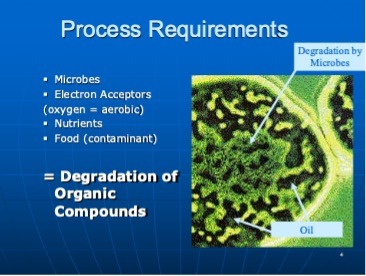
Figure 2: Process requirements for MONA (Source: Popkin and Jacobs, 2007).
Petroleum and volatile organic pollutants (VOC) in soil may be removed by natural monitored attenuation (MONA) through ambient resident or introduced bacteria which can be enhanced by oxygenation, enzymes, or co-metabolic food-source additions like wastewater sludge, dissolved fructose, sugar, or molasses. These petroleum and VOC soil pollutants are common wherever petroleum is produced, stored, used, or disposed (Tetra Tech EMI, 1998; Popkin and Jacobs, 2007).
Heavy metals in polluted soils are removed by soil excavation, plant extraction and landfill burial, heavily acidified leaching waters, or electrical-current concentration and seepage removal, but may also be solidified in soil by in-place thermal fusion. These industrial-metals soil pollutants are common at active and abandoned industrial, fabrication, and landfill sites (Bohn et al., 2001).
For metallic, embalming fluids, nuclear materials, pesticides, medicinals, dense non-aqueous phase liquids (DNAPL), per- and poly-fluoroalkyl substances (PFAS), resins, recalcitrants, and other pollutants, more aggressive technical treatments are needed. To treat such pollutants more research and development is needed though genetically modified and adapted organisms.
The irrigation-introduced accumulated soil metals calcium, magnesium, sodium, potassium, selenium and boron are removed from farmed soil by pre-season irrigation leaching, requiring as much as 10 to 30% of irrigation water demand. The process can be enhanced by acidifying the leaching water with dissolved sulfur powder, gypsum or manure. These irrigation-metal soil contaminants are common in dry land soils west of the Mississippi River to the Pacific Ocean (Ayers and Westcot, 1976; US Salinity Laboratory, 1954).
Our polluted soils from agricultural processes such as crop pest and disease control and irrigation farming can be reduced by integrated pest management strategies, minimum irrigation practices, and soil-salt leaching management strategies. Managing accumulated salt in soils is usually accomplished by leaching or pre-irrigation, which requires more fresh water and may increase weeds, or by leachate extraction wells and disposal to streams or less commonly to deep aquifers and abandoned mines. These are well documented in the professional literature.
Environmental laws and regulation in the US
The United States has extensive environmental laws and regulations at all levels of government which protect human health and the environment, including soil. In general, the US is a heavily environmentally regulated country, although there is a long-term permanent shortage of inspectors and regulators willing and able to enforce our scores of federal and many more local regulations, laws, and local codes and ordinances. The environmental protection principles of “command and control” and “let the polluter pay” (Schmidheiny, 1992) are well established and known but often not strictly implemented. This is especially true when applied to major or dominant businesses, government itself, the military, American Indian Native Tribes (which are “sovereign nations”), and favored industries like agriculture, mining, and oil and gas.
US federal laws are extensive in protecting human health and the environment, including soils. The major federal environmental acts are The federal Antiquities (1906), Oil Pollution (1924 & 1990), Federal Insecticide Fungicide and Rodenticide (1947), Federal Water Pollution Control (aka Clean Water Act, 1948), Clean Air (1963), Solid Waste Disposal (1965), National Historic Preservation (1966), Occupational Health and Safety (1970), National Environmental Quality (1970), Resource Conservation and Recovery (1970), Endangered Species (1973), Toxic Substances Control (1976), Comprehensive Environmental Response Compensation and Liability (1980), Asbestos Hazard and Response (1986), and Emergency Planning and Community Right-to-Know (1986) acts as amended.
US Federal Environmental Statutes tend to be command-and-control prescriptive statutes and make-the-polluter-pay statutes, with a few informational statutes for decision-makers (e.g. NEPA, CEQA). They have been passed by the US Congress, and pertain to (a) regulation of the interaction of humans and the natural environment, or (b) conservation and/or management of natural or historic resources. They need not be codified in the U.S. Code of Federal Regulations. In addition, there are others regulations, plus amendments, updates, revisions, administrative rules, legal decisions and common compliance practices. Most states and tribes have adopted federal laws and have primacy to implement them, while some state laws are more stringent than federal law.
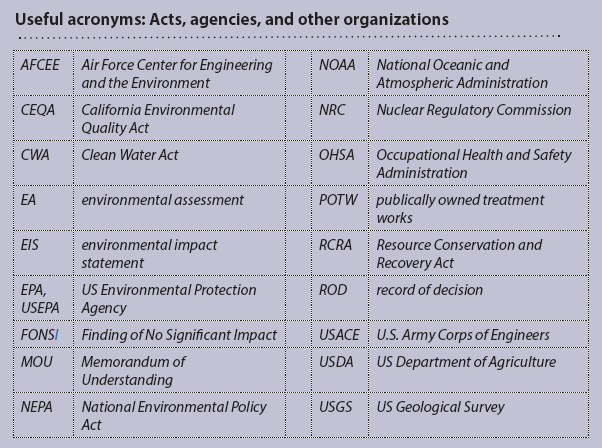
The US Environmental Protection Agency (USEPA or EPA; see Box 3 for a list of acronyms) is the presumptive national environmental authority. These federal acts are administered primarily by the US Environmental Protection Agency (USEPA) along with the Department of Justice, and state agencies where promulgated. Other agencies include the Occupational Health and Safety Administration (OHSA), the President’s Council on Environmental Quality for NEPA, USACE for inland waters, NOAA for coastal waters, USDA (Forest Service) for national forests, National Park Service, Forest Service, Fish and Wildlife Service, and/or the Bureau of Land Management for national monuments, Bureau of Indian Affairs for Indian Lands, NRC for radioactive wastes, MOUs (ex. mixed low-level radiation and hazardous waste; military facilities. The Administrative Procedures Act establishes the process by which federal agencies make regulations and the process by which citizens can challenge those decisions.
Some states, such as California, have stricter environmental regulations, such as the California Environmental Quality Act (1970) and the posted warnings and bounty provisions of California Proposition 85 (1986). Moreover, judges may interpret US law in new ways, thus defining new initiatives such as “environmental justice.”). Administrative and other courts may become involved as legal venues for relief through administrative and other courts if people filing a lawsuit can demonstrate that they have a stake in the outcome.
The government itself passed a law for its work abroad (22CRF216) for environmental protection as a result of a lawsuit over several inadvertent pesticide-related deaths; however, it is not enforced in practice as there is little or no public interest in litigating it and the US Agency for International Development Automated Directive System has no mandated penalties for non-compliance.
Observations on issues involving regulation
These challenges are illustrated below in examples of federal, state, county, and municipal issues, based in part by my observations and research, including Popkin (2015, 2017). I hope that this section gives a glimpse into the complex interaction of various regulations, the interests of companies, and the public interest. In all cases, the legal and regulatory requirements do not have significant impact on environmental behavior without enforcement, public pressure, and significant consequences for non-compliance.
As a general guide to procedures, the National Environmental Policy Act (NEPA) requires that when the federal government has authority to grant or deny a permit for a proposed activity, or federal land and waters are involved, the government must review the proposal and reach a Finding of No Significant Impact (FONSI) or may order an environmental assessment (EA) or a more comprehensive environmental impact statement (EIS) with stakeholder, beneficiary and public consultants. Finally, a record of decision (ROD) is issued. Often NEPA’s EIS process is used as a delaying tactic to give project objectors time to prepare a litigation case. The outcome is only advisory, without necessarily killing a proposed activity, especially if there are broad social or economic benefits and potential adverse effects may be mitigated. Several states have stricter equivalents: California’s version, which preceded NEPA, requires that a court may kill a project from going forward if the court decides the project would not be in the public interest.
Example 1. In California, there was a request for a state permit under state law to expand an ongoing hazardous waste landfill. This required informed consent of the residents in that area. Waste Management’s consultant placed public notices, held public meetings for scoping, wrote the EIR and presented it to a public meeting. Unfortunately, hardly anyone read the notices or participated in the scoping or any of the meetings, in Kings County, where the landfill was operated. By chance the very famous environmental activist Ellen Brockovich (no doubt you loved the movie made about her with Julia Roberts – all true by the way) saw a meeting notice and joined with a well-known environmental activist organization to sue the project proponent. They were right! Although the federal and state laws require postings, notices, meetings, etc., they do not specify the language. Posting in English ONLY may not be effective to inform a community which largely isn’t English-speaking and so can’t get the information needed for informed consent. Most residents of Kings County were Spanish-only speakers, listening to Spanish language radio, watching Spanish-language TV, seeing Spanish-language movies, and reading Spanish-language newspapers. The judge ruled against the project proponent and required recasting everything including the process in Spanish. The proponent declined to pursue it, as everyone in the county hated the project from then on. Oh, and the judge coined a new phrase, environmental justice.
Example 2. There was a Resource Conservation and Recovery Act (RCRA) hazardous waste site adjacent to the Houston Ship Channel tunnel (Houston, Texas), which was an active oil refinery. The state closed the channel due to noxious odors. By chance, environmental technicians saw a machine shop worker unlock a monitoring well and pour shop wastes down the well. The worker said the shop foreman’s policy was to routinely dispose of shop wastes down these holes as it was cheaper than disposal to RCRA-certified treatment, storage and disposal facilities, which required a licensed hauler and facility and tons of paperwork.
Example 3. The CWA upgraded its standards for effluent releases from publicly owned treatment works (POTWs) and required the states to pay for these federally mandated, and often state enforced requirements, which then ordered their municipalities to pay. President Reagan ended the federal funding to upgrade POTWs. The Arizona Department of Environmental Quality required Pima County to meet these standards. This is how Pima County had to take a loan of over $200 million, not including cost-overruns and debt service, to upgrade its regional wastewater reclamation facilities or POTWs to meet the requirements so that the effluent would not harm aquatic life in the receiving national waters of the US. Do you think there are such receiving waters in or near Pima? Nutrient removal is very costly, but there’s a hidden benefit: our nutrient-free wastewater is a great fresh drinking water source recharging our aquifers. The Pima County sewer service rates are largely due to debt service on nutrient removal of nitrogen and phosphorus.
Example 4. San Francisco citizens organized to draft an Environmental Baseline Report and then an Environmental Action Plan. They lobbied the Board of Supervisors to create an Environmental Department to promote environmentally sound management. To meet rising city water and wastewater capital and operation and maintenance costs, the city raised water and sewer rates significantly each year. Even though the City provided rate subsidies to the poor, many poor people were too proud, uninformed about or disinterested in applying for these generous subsidies. Many of the families installed their own shallow drinking water wells with well points and fitted them with air compressors as pumps to avoid paying the city’s water and sewer fees. This was both illegal and unhealthy, as the artificial fill materials in the shallow aquifer were mainly composed of old landfills, slaughterhouse wastes, commercial and industrial wastes, and oil spills. Several human health studies confirmed high levels of asthma, diabetes, hypertension, and several forms of cancer in the neighborhood. Because there were high levels of smoking, alcoholism, red meat consumption, obesity, crime and social stress, drug use, incarceration, and amateur home repairs and gardening, as well as exposure to contaminated drinking water, the studies were unable to separate the causes. But this situation led to the city establishing several neighborhood health clinics.
Example 5. RCRA Class I Landfills for hazardous waste are required to have a three-foot thick clay liner beneath the landfill to protect underlying groundwater from landfill leachate. The RCRA writers assumed that a foot of compacted clay would be impermeable to water and certainly three feet would be even better. However, a Rice University professor and colleague of mine discovered by laboratory and field tests that several carcinogenic VOCs like TCE would readily flow through any thickness of clay liners. After much debate, the EPA then required leachate collection systems to be installed in the liners – with debatable results.
Example 6. People learned that it was possible to get around the EPA standards for effluent releases from POTWs if triplicate and reproducible lethal dose laboratory tests (LD50) on specified laboratory-bred fish using effluent provided by the POTW were within acceptable limits. This created a great laboratory business for decades, yet many tests were inconclusive and some even showed that drinking water killed more fish than polluted water! I suspect this is because the “drinking water” used in those tests contained chlorine as a residual disinfectant.
Observations on Regulations and Science
Sometimes science conflicts with regulation. Regulations need to be clear, simple, and enforceable, while pollution can be very complex.
For instance, to enforce water quality standards for wastewater effluent, and more recently for non-point pollution sources, from say parking lots and streets, the standards are typically a single number for each chemical. But chemicals often have several forms. For instance, dissolved arsenic, iron, and chromium have several charges or valances, where some are deadly and others are required human health nutrients. In addition, there is a vast difference if the metal contaminant is a solid mass or in a dissolved solution which can enter your blood stream. All the iron, chromium, copper, nickel, etc. in the coins, watches, jewelry, and piercings that we are exposed to all day cannot readily get into our blood stream, even if they appeared in a laboratory analysis, so it would be patently silly to count these in a laboratory analysis to meet the regulated standard.
Most dissolved metals are highly attracted to clay particles of any and all sizes. Plus, many metals are within the mineral matrix physically embedded within soil or sediment, unavailable to life forms. The colorful chrome, nickel, cadmium, lithium, etc. in silica which make it into gemstones like amethyst, emerald, garnet, sapphire, lapis, turquoise, etc. are not dissolved in your blood stream, so they shouldn’t count. Finally, due to medical and pharmaceutical research and drug production, there is an enormous amount of anthropogenic or man-made, benign chelating agents which tie up metals, making them biologically unavailable in the southern San Francisco Bay waters.
It would be a nightmare to convince regulators to exclude metals in all such forms, species or states for a one-book number regulation standard. Consequently, treating wastewater or contaminated soil to meet such standards is extremely “conservative” or “overly protective” and enormously costly.
Conclusions and Recommendations
Modern commercial farming requires the use of fertilizers, pesticides, and soil amendments to meet the growing demands for food, animal feed, and fiber. In the US this is especially true in the nutrient-poor soils of the dry western states and the pest-rich moist and humid eastern states. It is impossible to imagine a modern world free of industrial hazardous materials and wastes related to manufacturing and other activities. It is naïve to visualize a modern world free of petroleum and volatile compounds to support industry and energy. It is impractical to envision a modern world without sewage collection, treatment, and disposal to support human and ecological health.
Our polluted soils contribute to the degradation of our agriculture, wildlife, recreation, water and air quality, public health, and environment. Legislation and regulations are intended to minimize these effects. However, the legal and regulatory requirements will not have a significant impact on environmental behavior without enforcement, public pressure, and significant consequences including penalty fees and prison terms for non-compliance. It is unlikely that those who pollute our soils will be persuaded to mitigate their pollution by incentives.
We know that it is possible to protect our soils – proper regulation and enforcement are both important, but other goals also motivate action. Likely the most fiercely nurtured soils, and those best protected from these forms of soil degradation, are the soils which are used to produce high quality wines from identified American Viticulture Areas and other wine-producing areas. Soil is also carefully protected at landmark monuments, sites that are historically significant, recreational and sporting event sites, golf courses, and other selected locations. The commercial value of golf courses in the US is enormous. Organic farmers are paying close attention to the quality of the soil and experimenting with methods for improving it. Perhaps a return to some Native American farming practices could be encouraged, at least in small-scale farming.
Beyond ‘command-and-control’ and ‘make-the-polluter pay’ strategies, there is budding evidence that behavioral changes are feasible for enhancing environmentally sound soil management. However, these changes are likely realized only through targeted, ongoing incentive campaigns which would appeal to behavioral motivational instincts. Increased regulatory enforcement and public pressure are needed to make improvements in managing polluted soils in the US. These will be costly and make many people unhappy.
Whether or not anything that humans may achieve or attempt as “sustainable” is dubious and debatable. But most of us may agree that environmentally sound management of our natural resources, including soil, is wise. As noted by my late University of Arizona soil chemistry professor, Dr. Hinrich L. Bohn (Bohn et al., 2001, p. xi):
(1) all the chemical elements – toxic and beneficial – were always in the soil;
(2) the soil is the safest part of the environment in which to deposit our wastes;
(3) there are wise and unwise ways to utilize soil for waste disposal;
(4) soil chemistry degrades wastes and converts them into benign or useful substances;
(5) environmental activists and the popular media usually ignore the dose-response concept that is central to toxicology and to soil fertility; and
(6) how much is in the soil, how fast it is changing, and how easily it transfers to plants and water are more important than what is there.
More work needs to be undertaken and refined on soil, water, and air pollutant fate and transport, degradation products, toxicity to demographically defined people and plants and animals, combined chemical impacts of hazardous materials, risks and uncertainties, and remediation (including bioengineering) by hydrologists, toxicologists, epidemiologists, risk assessors, biochemical engineers and scientists, and statisticians. Much relevant work in the US is performed and published primarily by the USEPA, the US Air Force, USACE, USDA, USGS, and many universities and specialty research centers.
Acknowledgements
The author gratefully acknowledges the education and training he generously was given at the University of Arizona, MIT, Stanford, UC Berkeley, the USGS, USAID, USEPA, and by scores of clients in the U.S. and abroad. He much appreciates the editor of the European Geologist journal.
References
Ayers, R.S. and D.W. Westcot. 1976. Water Quality for Agriculture. Food and Agricultural Organization of the UN, Irrigation and Drainage Paper, 29, Rome.
Bohn, H.L., McNeal, B.L., George A. O’Conner, G.A. 2001. Soil Chemistry, 3rd ed. Wiley.
Cordato, R.E. January 1, 2001. The Polluter Pays Principle: A Proper Guide for Environmental Policy. Institute for Research and on the Economics of Taxation Studies in Social Cost, Regulation, and the Environment, No. 6. http://iret.org/pub/SCRE-6.PDF
FAO. Website: Report/Impact brief. Global assessment of soil pollution: Report https://www.fao.org/policy-support/tools-and-publications/resources-details/en/c/1410722/
Mengel, D.B. 1993. Fundamentals of Soil Cation Exchange Capacity (CEC). Purdue University Cooperative Extension. Soils (Fertility), AY-238. https://www.extension.purdue.edu/extmedia/ay/ay-238.html
NMSU. 2013. Native American Three Sisters Garden. All about discovery! College of Agriculture, Consumer and Environmental Sciences, New Mexico State University. http://ddl.nmsu.edu/kids/webquests/wqthreesisters_k.html
Popkin, B.P. June 1999. Serpentine Soils and Environmental Management at Hunters Point Shipyard. American Association for the Advancement of Science, Pacific Division 80th Annual Meeting, San Francisco State University, and Western Society of Soil Science as Serpentine Soils of the San Francisco Bay Area Field Trip.
Popkin, B.P. January 25, 2015. Guide to social marketing: changing behavior towards sound societal environmental practices. Internet Archive. https://archive.org/details/GuideToSocialMarketingChangingBehaviorTowardsSoundSocietalEnvironmentalPractices
Popkin, B.P. March 25, 2017. Follies, foibles and justice of the U.S. environmental protection. Tucson Conservative Forum presentation.
Popkin, B.P. and Jacobs, J.A. August 14, 2007. When inaction or limited action is the best action for hazwaste site cleanups. ACHMM Annual Conference, Crystal City, Arlington, Virginia. http://www.continuinged.ku.edu/achmm/dc07/call.php#abstracts
Schmidheiny, S. 1992. Changing Course: A Global Business Perspective on Development and the Environment. The MIT Press.
Sustainable Technologies. 2018. Cation Exchange Capacity. Sustainable Technologies Evaluation Program. https://wiki.sustainabletechnologies.ca/wiki/Cationic_exchange_capacity(CEC)
Tetra Tech EMI. 1998. Nature, extent, fate and transport of petroleum products and polycyclic aromatic hydrocarbons in soil and groundwater, Hunters Point Shipyard, San Francisco. USNAVY BRAC, WestDiv.
Tchobanoglous, G. and Keith, F. eds, 2002. Handbook of Solid Waste Management. McGraw-Hill.
Tchobanoglous, G., Burton, F.L., and Sensell, H.D. 2003. Metcalf & Eddy – Wastewater Engineering, Treatment and Reuse. 4th ed. McCraw-Hill.
UC Davis. No date. Soil Chemistry 6.1: Exchange Reactions in Soils. University of California, Davis. https://lawr.ucdavis.edu/classes/ssc102/Section6.pdf
United States Salinity Laboratory Staff. 1954. Diagnosis and Improvement of Saline and Alkali Soils. United States Department of Agriculture. Handbook 60.
This article has been published in European Geologist Journal 52 – Soil – Our endangered food base
Read here the full issue:
