
European Geologist Journal 54
Geothermal resources for energy transition: A review of research undertaken for remote northern Canadian communities
by Mafalda M. Miranda 1,*, Félix-Antoine Comeau 1, Jasmin Raymond 1, Louis Gosselin 2, Stephen E. Grasby 3, Andrew Wigston 4, Alireza Dehghani-Sanij 4, Sarah Sternbergh 5, Serge Perreault 6
1 Institut national de la recherche scientifique, 490, rue de la Couronne, Québec City (QC) G1K 9A9 Canada
2 Université Laval, Department of Mechanical Engineering, Faculty of Sciences and Engineering, 1065, av. de la Médecine, Québec City (QC) G1V 0A6 Canada
3 Geological Survey of Canada, 3303 33 St NW, Calgary (AB) T2L 2A7 Canada
4 CanmetENERGY-Ottawa, 1 Haanel Dr, Nepean (ON) K1A 1M1
5 Yukon Geological Survey, 91807 Alaska Highway, Whitehorse (YT) Y1A 0R3 Canada
6 Centre d’études collégiales de Chibougamau, 110 rue Obalski, Chibougamau (QC) G8P 2E9
Contact: mafalda_alexandra.miranda@inrs.ca
Abstract
The sustainable development of Canada’s north is a growing challenge. Nearly 134,000 people, mostly Indigenous, live typically in a diesel-dependent dynamic, and thus initiatives to deploy clean technologies for heat and electricity are ongoing. Research is underway in the Yukon, Northwest Territories and Nunavut to assess geothermal resources of target communities while techno-economic feasibility of geothermal technologies is being evaluated in Nunavik (Quebec). Results suggest that geothermal technologies can provide important carbon reductions and are economically attractive. While shallow systems can be deployed in a short-term period, deep systems are a long-term objective that may provide sufficient energy to meet communities’ heavy heating needs.
Cite as: Miranda, Mafalda M., Comeau, Félix-Antoine, Raymond, Jasmin, Gosselin, Louis, Grasby, Stephen E., Wigston, Andrew, Dehghani-Sanij, Alireza, Sternbergh, Sarah, & Perreault, Serge. (2022). Geothermal resources for energy transition: A review of research undertaken for remote northern Canadian communities. European Geologist, 54. https://doi.org/10.5281/zenodo.7882811

This work is licensed under a Creative Commons Attribution 4.0 International License.
1. Introduction
Canada is a vast, cold and energy-intensive country that is making strong commitments to reduce carbon emissions and reach a climate neutral society [1]. While about 60% of Canada’s power comes from non-emitting sources [2], the situation in the north is different [3]. Remote northern communities in Canada are geographically distant and there are only a few areas with a regional electricity grid, some supported by hydropower (Figure 1). The remainder, comprising just over 100 communities – mostly Indigenous, with about 134,000 inhabitants – often rely on diesel for heat and power. Other sites, such as mines and military bases, likewise mostly rely on diesel (Figure 1).

Figure 1: (A) Location of remote northern communities in Canada; (B) main geological regions; (C) climate zones; and (D) map of the studied area centered on the Arctic. YT – Yukon Territory, NWT – Northwest Territories, NU – Nunavut, NK – Nunavik, QC – Quebec and NL – Newfoundland and Labrador (Nunatsiavut).
Given Canada’s commitment to reduce its greenhouse gas emissions, issues associated with diesel fuel used in the north (e.g., spills and soil/groundwater contamination, supply chain disruptions) and the desire to support economic development in this region, it is imperative to investigate alternative sources to find those that can provide clean, local, stable, reliable, and cost-effective power and heat.
Geothermal resources can play a significant role in the energy transition of diesel-based communities as a stand-alone solution or integrated with other renewables (e.g., [4]). In Canada, energy produced from deep and shallow geothermal systems is receiving growing attention and Tu Deh-Kah Geothermal (https://tudehkah.com/) and Fuel for Reconciliation (https://www.kitselasgeo.ca/) are two inspiring examples of community geothermal projects underway. Beyond electricity and space heating, geothermal resources can supply the heat needed for greenhouse applications. Food security is an additional issue in northern Canada and geothermal resources can provide a baseload source of local energy to support food production, as highlighted by a proof-of-concept study undertaken in Resolute Bay (Nunavut; [5]).
Despite the potential valuable contribution that geothermal energy can add to the energy transition of remote northern communities [6-8], there are still important data gaps in many areas of northern Canada [9] (Figure 2). Existing data, mainly from oil and gas exploration, assess only about 40% of Canada’s landmass (Figure 2) and most of the previous work in northern Canada has been focused on sedimentary basins in the Northwest Territories, northern Yukon and Canadian High Arctic [8] due to the existing wells. Currently, many territorial initiatives supported by various levels of government are underway to intensify the data collection and find viable targets. The ongoing work includes both expanding existing knowledge in the sedimentary basins and addressing the almost complete absence of geothermal-relevant data in the rest of Canada’s north.

Figure 2: (A) Distribution of geothermal potential in Canada based on end-use (after [9]); (B) Heat flow map of Canada (after [9]). YU – Yukon Territory, NT – Northwest Territories, NU – Nunavut, NK – Nunavik, QC – Quebec.
The purpose of this paper is to summarise geothermal research being undertaken for the remote northern communities of Canada (Figure 1). In this review, the goal was to cover most regions that are not connected to major power grids, where the climate is cold and the heating needs are generally more than 8,000 heating degree days below 18 °C (HDD18[1]) [10], and where active geothermal projects are being undertaken.
2. Deep geothermal potential of northern Canada
2.1. Yukon Territory
Yukon has several potential hydrothermal plays including fault controlled, radiogenic intrusive, volcanic, and sedimentary basin types (Figure 2A). A geothermal feasibility study revealed potential areas of interest (Figure 3A), and suggested resources consisting of more than 1.7 GW potential at <5 km, and approximately 100 MW potential at <2 km [11]. However, heat flow data is sparse (Figure 2B) and detailed assessment is necessary to fully understand Yukon’s geothermal potential. A well drilled near Takhini hot springs, close to Whitehorse, revealed a variable geothermal gradient with depth, suggesting fracture-controlled groundwater influx, and further work is needed to understand the hydrothermal system (Figure 3B; [12-14]). Another well drilled in the Tintina Trench near Ross River revealed greater geothermal gradient than predicted for the area (30.6 °C/km vs 25 °C/km; Figure 3C; [12,14]). Studies are underway to assess the geothermal potential in SW Yukon where deep water wells in the communities of Haines Junction and Burwash Landing provide water at 16-17 °C, and the Jarvis warm springs emerges at 18 °C [15]. Additional regional studies show there may be thermal potential related to Cretaceous intrusive rocks and volcanic belts [16].

Figure 3: (A) Primary geothermal exploration areas in Yukon Territory (after [11]); (B) stabilised downhole temperature data for the Takhini well, interpretative geothermal gradients and the surface water temperature at Takhini Hot Springs (after [12]), (C) stabilised downhole temperature data for the Tintina well and interpreted geothermal gradient (after [12]). The reader is referred to Figure 1 for geographical location. It is important to highlight that in (B) there is only one data point that shows an anomalous temperature value and therefore the gradient hypotheses shown are only rough approximations and may be overestimated.
2.2. Northwest Territories
The Northwest Territories (NWT) are characterised by three main geothermal plays: the Canadian Shield petrothermal system, Paleozoic and Mesozoic sedimentary basins hosting high temperature geothermal resources in deep aquifers with known thermal anomalies, and the Mackenzie Mountains with numerous thermal springs and high temperature intrusives (Figure 4; [17]). The Canadian Shield is characterised by a low heat flow and geothermal gradient (~ 17.6 °C/km) that limit the resource largely to heat pump systems, abandoned mines, and potentially enhanced geothermal systems (EGS). Deep conventional geothermal technologies can be foreseen in sedimentary basins to generate power and for direct use of heat [18]. In the sedimentary basins of southern NWT, the geothermal gradient can be up to 50 °C/km and heat flux as high as 90 mW/m2 [7,18,19,20].

Figure 4: Northwest Territories geothermal favourability map (after [21]). The reader is referred to Figure 1 for geographical location.
Research is underway in the Fort Liard area and in the South Slave region enclosing Hay River, Enterprise, and Fort Providence to assess the geothermal potential of these communities (Figure 4).
2.3. Nunavut
All communities in Nunavut rely on diesel. For this reason, Qulliq Energy Corporation, the company generating and distributing power in Nunavut, is interested in evaluating the territorial geothermal potential and is assessing some target communities for future geothermal development. Nunavut has two major geothermal plays: sedimentary basin geothermal resources and the Canadian Shield, where EGS or deep borehole heat exchangers may be necessary to exploit the resource [22,23]. The average heat flux in Nunavut is about 40-60 mW/m2, but values as high as 70 mW/m2 can be found in the Canadian Arctic Islands (Figure 2B; [23]). The technical power generation potential was estimated to vary between 59 MWe and 64 GWe in the Canadian Shield and between 662 MWe and 96 GWe in the sedimentary basins in the Arctic Islands [23].
A geothermal feasibility study was carried out in 2018 [23] and concluded that additional data collection with drilling in target communities (e.g., Resolute Bay, Baker Lake) is necessary to properly define the resource potential (Figure 5; [23]). It is also suggested that, given the remoteness and great distance of the communities from each other, the lack of infrastructure to support energy transfer, and the resource temperature, geothermal developments should occur in or near the communities [23].

Figure 5: Nunavut geothermal favourability map (after [23]). The reader is referred to Figure 1 for geographical location.
2.4. Nunavik (Northern Quebec)
Nunavik is home to 14 Inuit communities and, as in many parts of northern Canada, the geothermal data availability is limited. Thus, the surface heat flux and subsurface temperature maps produced for this region are based on extrapolation of sparse data and are therefore uncertain (Figure 6A-B).

Figure 6: (A) Heat flux map and (B) predicted temperature pattern at 10 km depth in Quebec (after [24]). The reader is referred to Figure 1 for geographical location.
Only four deep wells (>300 m) exist in Nunavik indicating a geothermal gradient of 9–17 °C/km and a heat flux of 26–38 mW/m2 (Figure 6; [24-28]). However, a recent well drilled in Kuujjuaq (~240 m) suggests greater local geothermal gradient and heat flux, with a most probable value of 21 °C/km and 57 mW/m2, respectively [29]. Such differences illustrate data gap challenges that must be faced when evaluating the geothermal potential. This variability can indeed make a significant difference when assessing the techno-economic viability of deep geothermal technologies, highlighting the need for intensive data acquisition completed at the community rather than the regional level. Nevertheless, all of the studies undertaken [24,25,30-35] agree that ground-coupled heat pump (GCHP) systems can be readily deployed for energy savings of buildings in subarctic communities while research is underway to fully assess the communities’ deep geothermal potential and the technological feasibility and economic viability of related technologies. Deep geothermal should be seen as long-term goal that, if feasible and cost competitive, could meet the whole heating needs and perhaps part of the electricity demand of each community.
3. Geothermal technologies for northern communities
3.1. Ground-coupled heat pumps (GCHP)
GCHPs are a well-established technology in southern Canada and could become one of the alternatives to heat buildings in remote subarctic communities. Simulations of GCHP operation undertaken for a typical commercial building in Kuujjuaq (Figure 6) showed that energy savings are of the order of 55 to 76% [30] and a 50-year life-cycle cost analysis suggests that shallow geothermal energy with state-of-the-art heat pumps is a financially interesting option [31].
Furthermore, shallow geothermal mapping in Kuujjuaq (Figure 6; [31]) and Whapmagoostui-Kuujjuarapik (Figure 6; [32]) suggest that a 100 m deep borehole heat exchanger may be able to provide, on average, 5.8 and 12 MWh/year, respectively. Additionally, a compression heat pump with a proportion of its electricity consumption derived from solar photovoltaic panels seems an economical and eco-friendly heating solution for both residential dwellings (Table 1; [31]) and commercial buildings [33]. However, these studies showed that the source of the electricity originating from a diesel plant limits the economic and environmental benefits of heat pumps.
Table 1: Summary of net present cost (NPC) and CO2 emissions for different solutions to heat a 5-occupant residential dwelling in Kuujjuaq (Quebec; [31]).
| Heating solution |
NPC (k$) |
CO2 emissions (t) |
| Fuel oil | 277 | 29 |
|
Compression heat pump 70% of electricity by solar PV panels 30% from diesel power plant |
203 | 18 |
|
Compression heat pump 100% of electricity by solar PV panels[2] |
179 | 15 |
|
Compression heat pump 100% of electricity by diesel power plant |
259 | 26 |
| Absorption heat pump | 231 | 25 |
PV – Photovoltaic. The cost is in Canadian dollars (CAD).
Horizontal closed-loop GCHP systems installed in the active ground layer above the permafrost can also be a viable solution for remote northern communities. Belzile et al. [34] concluded that an air-source absorption heat pump in Kangiqsualujjuaq (Figure 6) may offset 17.4% of diesel consumption while a ground-source absorption heat pump may offset up to 39.4%. Additional studies to investigate the geo-risk of GCHP systems in subarctic regions suggest that these have a low risk and can reduce ground subsidence and help to stabilise permafrost [36,37]. However, the long-term thermal depletion may become an issue and solutions need to be found.
Given the technical feasibility and economic attractiveness of GCHPs, Kuujjuaq (Figure 6) carried out a geothermal heating project for the community’s swimming pool as part of the federal program Indigenous Off-diesel Initiative. The system is a horizontal closed-loop GCHP of 30 kW. Additionally, a new research station of the Centre d’études nordiques (CEN) is under construction at Umiujaq (Quebec; Figure 6) and the integration of a mix of renewable technologies (biomass, solar, and geothermal) is foreseen. Moreno et al. [35] suggested that this mix can be a cost-effective option since the levelized cost of energy (LCOE) of a mix of renewable heating systems can be comparable to that of oil furnaces, but with lower CO2 emissions (Table 2).
Table 2: Summary of NPC, levelized cost of energy (LCOE) and CO2 emissions for the different heating solutions in Umiujaq [35].
| Heating solution |
NPC (k$) |
LCOE ($/kWhth) |
Carbon emissions (t) |
| 100% Oil furnace | 364 | 0.21 | 27 |
|
50% Biomass + 50% GCHP 100% of electricity by solar PV panels |
373 | 0.26 | 0.2 |
|
70% Biomass + 30% GCHP 100% of electricity by solar PV panels |
346 | 0.23 | 0.3 |
The cost is in Canadian dollars (CAD).
3.2. Borehole thermal energy storage (BTES)
A numerical study coupled to a 50-year life-cycle cost analysis demonstrated for the first time in a polar climate that borehole thermal energy storage (BTES) can be viable for heating drinking water in a subarctic climate utilising seasonal solar energy storage [38]. The numerical simulations suggested that solar fraction of 45 to 50% and heat recovery of more than 60% can be achieved by the 3rd year of operation. This would result in annual savings of 7,000 l of diesel consumption. Furthermore, the life-cycle cost analysis suggests that a specific incentive programme can guarantee similar NPC and LCOE compared to the current diesel situation (Table 3).
Table 3: Summary of NPC and levelized cost of energy (LCOE) for the different BTES scenarios studied for the drinking water facility in Kuujjuaq [38].
| Scenario |
NPC ($) |
LCOE ($/kWhth) |
| Fuel oil | 2,054,682 | 0.214 |
| BTES 224 | 3,419,089 | 0.357 |
| BTES 224 subsidised | 2,326,917 | 0.243 |
| BTES 37 | 2,846,336 | 0.297 |
| BTES 37 subsidised | 2,040,541 | 0.213 |
The cost is in Canadian dollars (CAD).
Recovery and seasonal storage of waste heat from diesel generators can be another viable option for remote northern communities. Ghoreishi-Madiseh et al. [39] showed that 350 MWh of heat can be annually stored and provided by a BTES system relying on waste heat. The system is estimated to have a capital expenditure (CAPEX) of $ 235,000, with a payback period below 5 years. Such a system can led to an annual decrease of about 90 tonnes of CO2 and about $ 48,000 of savings.
3.3. Enhanced/engineered geothermal systems (EGS)
Research indicated that EGS can be both technologically feasible and economically viable for Canadian remote northern communities [4,6,7,40]. The thermal energy extracted from the subsurface may be sufficient to meet the communities’ heating (and electricity) needs and the LCOE can be comparable to that of the oil furnaces (Table 4) but with lower CO2 emissions. Majorowicz and Grasby [6] estimated that Canadian and US EGS projects can potentially save 164 t/day of CO2 and 88,000 m3/day of natural gas.
Table 4: Summary of LCOE for an EGS in Kuujjuaq [40] and northern Canada [4].
| Heating solution |
LCOE ($/MWh)
|
||
| Optimistic | Likely | Pessimistic | |
| Fuel oil furnaces (Kuujjuaq) | 190 | ||
| EGS (Kuujjuaq) | 54 – 145 | 83 – 265 | 170 – 626 |
| EGS (northern Canada) | 50 – 80 | ||
The cost is in Canadian dollars (CAD).
3.4. Hybrid geothermal systems
Several communities in Canada’s north are making growing use of solar and/or wind energy to meet part of their power needs [41,42]. Recent cost data is not publicly available, and is site specific, but discussions with experts indicate that they are most likely cheaper than geothermal, especially compared to EGS. However, their intermittent nature means they require expensive energy storage and full-scale diesel power backup, which is often not considered when calculating their LCOE. In addition, the long, dark season and icing issues make wind and solar ineffective when energy demand is greatest.
Hybrid systems, comprising geothermal energy combined with other renewables like wind and solar (also biomass, hydrokinetic, etc.) and energy storage technologies (e.g., batteries, compressed air, seasonal thermal energy storage; [38,43]), are a prospective energy solution for remote northern communities (Figure 7). They have the potential to provide stable, baseload power and heat with increased environmental benefits at reduced cost compared to stand-alone geothermal systems and diesel systems with intermittent renewables [44].
Wind and solar can meet more of a communities’ energy needs in the summer when their potential is greater. Therefore, the geothermal system can be optimised by taking advantage of the lower ambient temperature in the colder months, which means a lower input temperature (i.e., shallower and cheaper) is required. Reducing the draw on the geothermal reservoir for heat and power can extend its lifetime and thus reduce its cost. Therefore, Dehghani-Sanij and Wigston [45] have been conducting a techno-economic feasibility analysis of a hybrid geothermal system for Fort Liard, NWT (Figure 7).

Figure 7: A proposed hybrid geothermal system for Fort Liard, NWT – as an example [45].
4. Discussion and conclusions
The development of geothermal and other renewable energies can bring important socio-economic benefits to northern communities. However, despite the potential benefits, geothermal deployment is still a complex task in northern communities, with buildings not prepared for the technology and with a lack of training for the system operation and maintenance. Additionally, the deployment cost is still high, and more work is needed to make geothermal systems cost-efficient compared to diesel (Figure 8).
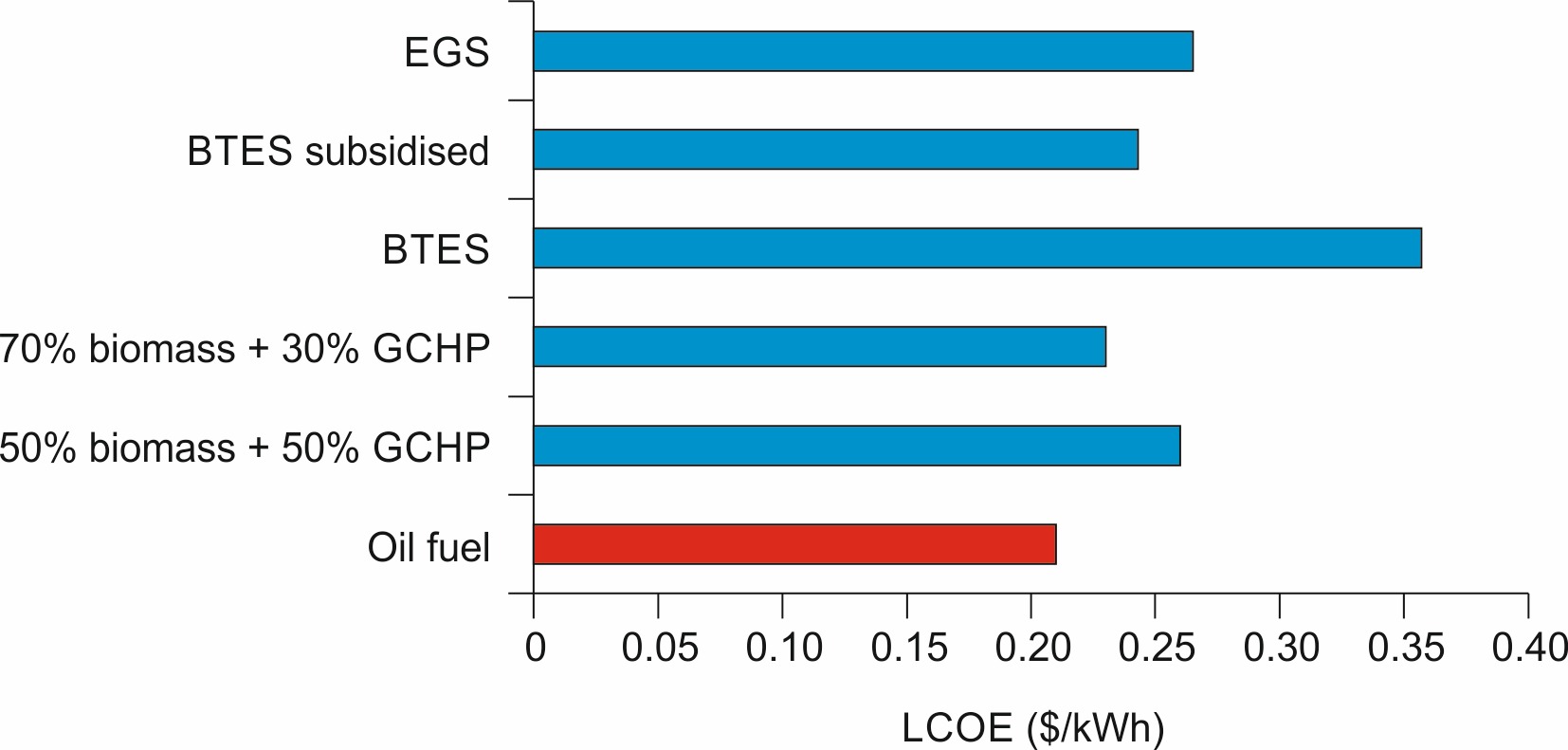
Figure 8: Estimated LCOE of the different heating solutions studied [35,38,40]. Oil fuel price from 2019, in Canadian dollars.
Nevertheless, previous research showed that solar-assisted GCHP can be a viable short-term solution to provide energy savings for most communities located in a subarctic climate [31,33-35]. Dealing with building loads that are unbalanced and require heating only plus ground conditions near permafrost are the main challenges that can be faced for properly sizing systems. Deep resources harnessed with EGS technologies are medium to long-term options that may have enough capacity to meet the entire electricity and heating requirements of isolated communities [4,40]. Here, the main challenge is to evaluate subsurface conditions at a depth of several kilometres where deep boreholes are often non-existent but are needed to trigger development interest.
In summary, geothermal energy can be an option for remote northern communities if Indigenous peoples are interested in such development. Further geothermal exploration and research is needed to decrease uncertainty and risk. Drilling of deep wells and data acquisition campaigns should be designed at a community scale level. Numerical simulations of geothermal technologies can also help predict their performance and find the optimal design to meet the power and heating needs of Indigenous communities in the context of cost, environmental impact, reliability and ease of use/repair.
Author Contributions: Conceptualisation, M.M.M., F.A.C. and J.R.; investigation, M.M.M., F.A.C., J.R., L.G., S.G., A.W., A.D., S.S., S.P.; resources, M.M.M., F.A.C., J.R., L.G., S.G., A.W., A.D., S.S., S.P.; writing—original draft preparation, M.M.M., F.A.C., J.R., L.G., S.G., A.W., A.D., S.S., S.P.; writing—review and editing, M.M.M., F.A.C., J.R., L.G., S.G., A.W., A.D., S.S., S.P.; visualisation, M.M.M., F.A.C., J.R., L.G., S.G., A.W., A.D., S.S., S.P. All authors have read and agreed to the published version of the manuscript.
Conflicts of Interest: The authors declare no conflict of interest.
References
- Pan-Canadian Framework on Clean Growth and Climate Change. Available online: https://www.canada.ca/en/services/environment/weather/climatechange/pan-canadian-framework.html (accessed 27 July 2022).
- Provincial and Territorial Energy Profiles – Canada. Available online: https://www.cer-rec.gc.ca/en/data-analysis/energy-markets/provincial-territorial-energy-profiles/provincial-territorial-energy-profiles-canada.html (accessed 31 August 2022)
- Market Snapshot: Overcoming the challenges of powering Canada’s off-grid communities. Available online: https://www.cer-rec.gc.ca/en/data-analysis/energy-markets/market-snapshots/2018/market-snapshot-overcoming-challenges-powering-canadas-off-grid-communities.html (accessed 12 July 12 2022).
- Majorowicz, J; Grasby, SE. Geothermal energy for northern Canada: Is it economical? Natural Resources Research 2014, 23, 159-173. https://doi.org/10.1007/s11053-013-9199-3
- Kinney, C; Dehghani-Sanij, AR; Mahbaz, SB; Dusseault, MB; Nathwani, JS; Fraser, RA. Geothermal energy for sustainable food production in Canada’s remote northern communities. Energies 2019, 12(21), 4058. https://doi.org/10.3390/en12214058
- Majorowicz, J; Grasby, SE. High potential regions for enhanced geothermal systems in Canada. Natural Resources Research 2010, 19, 177-188. https://doi.org/10.1007/s11053-010-9119-8
- Majorowicz, J; Grasby, SE. Heat flow, depth–temperature variations and stored thermal energy for enhanced geothermal systems in Canada. Journal of Geophysics and Engineering 2010b, 7(3), 232-241. https://doi.org/10.1088/1742-2132/7/3/002
- Grasby, SE; Majorowicz, J; McCune, G. Geothermal energy potential for northern communities, Open File 7350; Geological Survey of Canada: Ottawa (ON), Canada, 2013, 50 p. https://doi.org/10.4095/292840
- Grasby, SE; Allen, DM; Bell, S; Chen, Z; Ferguson, G; Jessop, A; Kelman, M; Ko, M.; Majorowicz, J; Moore, M; Raymond, J; Therrien, R. Geothermal energy resource potential of Canada, Open File 6914; Geological Survey of Canada: Ottawa (ON), Canada, 2012, 322 p. https://doi.org/10.4095/291488
- Heating degree days. Available online: https://climateatlas.ca/map/canada/hdd_baseline#z=3&lat=62.19&lng=-82.97 (accessed 18 October 2022).
- CanGEA – Canadian Geothermal Energy Association. Yukon Geothermal Opportunities and Applications, report 2016; Canadian Geothermal Energy Association, 2016.
- Fraser, T; Colpron, M; Relf, C. Evaluating geothermal potential in Yukon through temperature gradient drilling. Yukon Exploration and Geology 2018, 75-90.
- Langevin, H; Fraser, T; Raymond, J. Assessment of thermo-hydraulic properties of rock samples near Takhini Hot Springs, Yukon. Yukon Exploration and Geology 2019, 57-73.
- Langevin, H; Fraser, TA; Raymond, J. Assessment of thermo-hydraulic properties of rock samples near Takhini Hot Springs and in the Tintina fault zone, Yukon, Miscellaneous Report 19; Yukon Geological Survey: Whitehorse (YT), Canada, 2020, 30 p.
- Witter, JB. Early-stage exploration for geothermal energy resources along the Denali fault near Duke River, Yukon, Open File 2020-3; Yukon Geological Survey: Whitehorse (YT), Canada, 2020, 62 p.
- Colpron, M; Hayward, N; Crowley, JL. Potential heat production from the Seagull and Teslin plutonic suites, southern Yukon: Geochemistry, geochronology, rock physical properties, and 3D geophysical inversion of Bouguer gravity data. Yukon Exploration and Geology 2020, 47-72.
- Caron, M-E; Grasby, SE; Ryan, MC. Spring water trace element geochemistry: A tool for resource assessment and reconnaissance mineral exploration. Applied Geochemistry 2008, 23, 3561-3578
- Grasby, SE; Majorowicz, J; Fiess, K. Geothermal energy potential of Northwest Territories, Canada. Proceedings, World Geothermal Congress 2020+1, Reykjavík, Iceland, April-October 2021.
- Majorowicz, JA; Jones, FW; Jessop, AM. Preliminary geothermics of the sedimentary basins in the Yukon and Northwest Territories (60-70N) – Estimates from petroleum bottom-hole temperature data. CSPG Bulletin 1988, 36, 39-51.
- Majorowicz, JA; Jessop, AM; Judge, AS. Geothermal regime. In Geological atlas of the Beaufort Mackenzie area, J. Dixon (Ed.), Geological Surbey of Canada: Ottawa (ON), Canada, 1996, 33-37.
- EBA Engineering Consultants Ltd. Geothermal Favourability Map Northwest Territories. Northwest Territories Environment and Natural Resources: Yellowknife (NWT), Canada, 2010, 59 p.
- Chen, Z; Grasby, SE; Dewing, K; Osadetz, KO; Brent, T. Geological controls on the present temperature field of the western Sverdrup Basin, Canadian Arctic Archipelago. Basin Research 2016, 30, 479-496.
- Minnick, M; Shewfelt, D; Hickson, C; Majorowicz, J; Rowe, T. Nunavut Geothermal Feasibility Study, Topical Report RSI-2828; RESPEC: Saskatoon (SK), Canada, 2018, 42 p.
- Majorowicz, JA; Minea, V. Shallow and deep geothermal energy potential in low heat flow/cold climate environment: northern Quebec, Canada, case study. Environmental Earth Sciences 2015, 74, 5233-5244. https://doi.org/10.1007/s12665-015-4533-1
- Comeau, F-A; Raymond, J; Malo, M; Dezayes, C; Carreau, M. Geothermal Potential of Northern Quebec: A Regional Assessment. GRC Transactions 2017, 41, 1076-1094.
- Lévy, F; Jaupart, C; Mareschal, J-C; Bienfait, G; Limare, A. Low heat flux and large variations of lithospheric thickness in the Canadian Shield. Journal of Geophysical Research: Solid Earth 2010, 115, B06404. https://doi.org/10.1029/2009JB006470.
- Taylor, AE; Judge, A. Permafrost studies in northern Quebec. Geographie physique et Quaternaire 1979, 33, 245-251. http://dx.doi.org/10.7202/1000361ar
- Drury, MJ. Heat flow and heat generation in the Churchill Province of the Canadian Shield and their paleotectonic significance. Tectonophysics 1985, 115, 25-44. https://doi.org/10.1016/0040-1951(85)90097-6
- Miranda, MM; Raymond, J. Assessing Kuujjuaq’s (Nunavik, Canada) deep geothermal energy potential, Rapport de recherche R2109; INRS: Quebec (QC), Canada, 2022, 122 p.
- Kanzari, I. Évaluation du potentiel des pompes à chaleur géothermique pour la communauté nordique de Kuujjuaq. MSc thesis, Université du Québec, Institut national de la recherche scientifique, Quebec (QC), Canada, 2019.
- Gunawan, E; Giordano, N; Jensson, P; Newson, J; Raymond, J. Alternative heating systems for northern remote communities: Techno-economic analysis of ground-coupled heat pumps in Kuujjuaq, Nunavik, Canada. Renewable Energy 2020, 147, 1540-1553. https://doi.org/10.1016/j.renene.2019.09.039
- Comeau, F-A; Giordano, N; Raymond, J. Using a near-freezing subsurface to heat one of Canada’s remote and northern communities. GRC Transactions 2020, 44, 784-803.
- Raymond, J; Kanzari, I; Giordano, N; Comeau, F-A. Can geothermal heat pump systems be operated in a subarctic climate? – Lessons learned from Kuujjuaq. GeoNiagara, Niagara Falls (ON), Canada, September 26-29, 2021.
- Belzile, P; Comeau, F-A; Raymond, J; Lamarche, L; Carreau, M. Arctic climate horizontal ground-coupled heat pump. GRC Transactions 2017, 41, 1958-1978.
- Moreno, D; Raymond, J; Comeau, F-A; Gosselin, L. Life cycle cost analysis of heating system alternatives for residential buildings in subarctic climate (Nunavik, Canada). GRC Transactions 2022 (submitted).
- Gheisari, AF; Maghoul, P; Hollander, HM, Kenyon, R; Sinclair, R; Saaly, M. The long-term mitigating effect of horizontal ground-source heat exchangers on permafrost thaw settlement. Processes 2021, 9(9), 1636. https://doi.org/10.3390/pr9091636
- Norouzi, E; Li, B; Raymond, J. Numerical modeling of thermo-hydro-mechanical processes related to geothermal heat pump operations in a subarctic climate. 56th US Rock Mechanics/Geomechanics Symposium, Santa Fe, New Mexico, USA, June 26-29, 2022.
- Giordano, N; Raymond, J. Alternative and sustainable heat production for drinking water needs in a subarctic climate (Nunavik, Canada): Borehole thermal energy storage to reduce fossil fuel dependency in off-grid communities. Applied Energy 2019, 252, 113463. https://doi.org/10.1016/j.apenergy.2019.113463
- Ghoreishi-Madiseh, SA; Kuyuk, AF; Rodrigues de Brito, MA; Baidya, D; Torabigoodarzi, Z; Safari, A. Application of borehole thermal energy storage in waste heat recovery from diesel generators in remote cold climate locations. Energies 2019, 12(4), 656. https://doi.org/10.3390/en12040656
- Miranda, MM; Raymond, J; Willis-Richards, J; Dezayes, C. Are engineered geothermal energy systems a viable solution for arctic off-grid communities? A techno-economic study. Water 2021, 13(24), 3526. https://doi.org/10.3390/w13243526
- NTPC – Northwest Territories Power Corporation A Vision for the NWT Power System Plan. Northwest Territories Power Corporation and NT Energy: Yellowknife (NWT), Canada, 2013.
- Knowles, J. Power Shift: Electricity for Canada’s Remote Communities. The Conference Board of Canada: Ottawa (ON), Canada, 2016, 68 p.
- Bachand, A; Raymond, J; Comeau, F-A. Assessment of compressed air energy storage (CAES) potential in boreholes using an iterative method to estimate air leakage. GeoNiagara, Niagara Falls (ON), Canada, September 26-29, 2021.
- Mahbaz, SB; Dehghani-Sanij, AR; Dusseault, MB; Nathwani, JS. Enhanced and integrated geothermal systems for sustainable development of Canada’s northern communities. Sustainable Energy Technologies and Assessments 2020, 37, 100565. https://doi.org/10.1016/j.seta.2019.100565
- Dehghani-Sanij, AR; Wigston, A. Feasibility assessment of hybrid geothermal systems in remote northern Canadian communities. CanmetENERGY-Ottawa, NRCan: Ottawa (ON), Canada, 2022 .
[1] Heating Degree Days (HDD) are equal to the number of degrees Celsius a given day’s mean temperature is below 18 °C [10]. The number of degree days is a measure of the heating needs based on difference between the base temperature and the outdoor temperature over the year.
[2] Assuming energy storage (battery).
This article has been published in European Geologist Journal 54 – Geothermal energy – A geological contribution to the energy transition
Read here the full issue:
