
European Geologist Journal 54
Pathways to better integrate geothermal energy at its full technological scale in European heating and cooling networks
by Gregor Goetzl1, Jessica Chicco2, Christopher Schifflechner3, Joao Figueira4, Georgios Tsironis5, Aleksandrs Zajacs6
1Geological Survey of Austria, Vienna, Austria
3Technical University of Munich, Munich, Germany
4Technical University of Lisbon, Lisbon, Portugal
5Democritus University of Thrace, Xanthi, Greece
6Riga Technical University, Riga, Latvia
Contact: gregor.goetzl@gmail.com
Abstract
Geothermal energy is a vital option to provide clean heating and cooling. Interlinking geothermal energy with the concept of heating and/or cooling networks offers excellent opportunities to benefit from economies of scale and multiplication when it comes to decarbonising the heating and cooling sector. Still, there are both technological and socio-economic challenges to foster the significant implementation of geothermal energy supplied heating and cooling networks in Europe. We identify key challenges towards better integration of geothermal energy and outline possible solutions for a boosted pan-European market uptake. Geothermal networks can only become a key technology if concepts are available to address both new and existing network infrastructures and the existing building stock.
Cite as: Goetzl, Gregor, Chicco, Jessica, Schifflechner, Christopher, Figueira, Joao, Tsironis, Georgios, & Zajacs, Aleksandrs. (2022). Pathways to better integrate geothermal energy at its full technological scale in European heating and cooling networks. European Geologist, 54. https://doi.org/10.5281/zenodo.7882918

This work is licensed under a Creative Commons Attribution 4.0 International License.
1. Introduction
The recent debate on climate change mitigation and geopolitical developments requires new approaches for the decarbonisation of the heating and cooling sector, which is still responsible for almost half of the final energy consumption in Europe and significantly depends on energy imports, above all, fossil fuels [1]. Moreover, the geopolitical developments since February 2022 demand an acceleration of deploying local energy sources to increase the resilience of the energy sector when it comes to supply security and political autonomy. Both, district heating and geothermal energy may provide an important leverage to realize the green energy transition. Nevertheless, geothermal energy supplied heating and cooling networks are covering a minor niche inside the heating and cooling sector of around 2% [2]. Roadmaps towards an increased deployment of geothermal heating and cooling networks (hereinafter referred to as ‘geoHC networks’) require an understanding of key market drivers covering the technological as well as socio-economic domain. This article outlines the most relevant aspects of pathways towards the increased use of geoHC networks in Europe and discusses the activities performed in the EU COST Action CA18219 ‘Geothermal-DHC’ (www.geothermal-dhc.eu), which addresses the integration of geothermal energy in its full technological range in heating and cooling networks.
2. Challenges and opportunities regarding the green transformation of the European heating and cooling sector
Heating and cooling is currently responsible for 49% of the final energy consumption in the European Union [3]. Low temperature space heating represents a heavily underestimated segment, which requires 30% of the final energy consumption as of 2017 [4]. While significant efforts have been made in Europe for the decarbonisation of the electricity sector during the past decade, the heating and cooling sector developed more slowly than expected, as the share of renewables currently covers 23% of the final energy demand [5]. A major hurdle concerning the decarbonisation of the heating and cooling sector is related to the lack of transport of heat or cooling over large distances, except for fossil fuels or electricity, which leads to a regulatory responsibility on the regional to national level in most EU Member States.
The central role of heating and cooling in energy transition has also been recognised under the European Green Deal’s Climate Target Plan and the ‘Fit for 55’ package, as without increasing renewable energy shares in this large sector, the EU’s energy and climate targets cannot be achieved cost-effectively [6]. A further European initiative is represented by the REPowerEU Plan, a roadmap for mitigating energy market disruption in Europe and reducing the dependence on fossil fuels. The current energy crisis has led governments to put in place short and long-term measures aimed at shielding consumers from the direct impact of the rising energy prices across Europe and to counteract the continuous economic volatility. As highlighted in a recent report by Bruegel [7], a think tank on political and economic issues, in most of the EU countries policies and energy regulations are set at the national level. This means a different approach and general inhomogeneity at European level, not only in regulating energy prices but also towards the outlooks in energy production. The pressure is high for finding solutions to reduce energy imports and fight against climate change impacts.
District heating and cooling offer vital options for addressing the both most urgent challenges in the heating and cooling sector: 1) the need to increase low- to no-emissive renewables and 2) the reduction of energy imports. Based on an on overview on the heating sources in Europe, shown in Figure 1, frontrunner countries like Sweden, Finland, Estonia or Denmark have widely reduced the consumption of fossil fuels while implementing district heating and renewable sources, distributed by these. Figure 1 also indicates that countries dominated by individual heat supply systems (Western Europe and Mediterranean Regions) show a strong dependency either on fossil fuels or electricity consumption, which increases energy import dependencies and lowers the resilience of the heating and cooling sector towards disruptive events or crises.
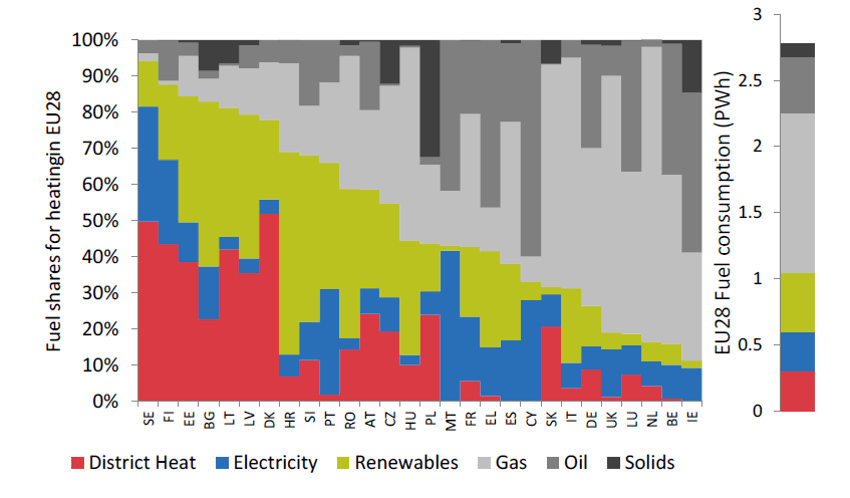
Figure 1: Fuel consumption for space heating in the EU in 2015 [8].
3. Current state and development of district heating and cooling networks
From the different heating and cooling solutions, district heating and cooling (DHC) is one of the main energy related infrastructures for decarbonisation by integrating renewable and carbon neutral energy sources and technologies as well as participating in energy system integration [9].
In principle, a district heating and cooling network is based on a simple concept of pipelines connecting heat sources and sinks to clients. In addition, energy converters, such as heat exchangers or heat pumps and control units at various level of complexity, complement a district heating and cooling network. Since the introduction of the concept in the second half of the nineteenth century, several generations of technological solutions developed. Starting at first-generation (1G) steam-supplied district heating networks at temperature levels up to 200 °C, during subsequent decades the energy efficiency (heat loss inside the network) has continuously increased while the network temperatures have been decreased. Reduced temperature levels in turn implied an increase in the diversity of heat sources to supply a district heating network. This also influenced the topography of the network as such. While early-generation networks were organised in hierarchical tree patterns, recent developments have led to ring–based or mesh-based concepts, pursuing de-centralised and unstructured networks (see Figure 2). In contrast to tree-based networks, ring- and mesh-based topographies also increase the flexibility to connect new clients and allow for “organic growth of networks” over certain periods. One needs to consider that tree-based networks cannot be expanded since the capacity of transferring energy is limited by the diameter of its pipelines. However, latest considerations cover the introduction of cascade networks, which connect conventional hierarchical networks with unstructured mesh or ring-based networks via a temperature cascade. In that sense, the conventional heat network is only used for peak load supply or annual balancing.

Figure 2: Evolution of heating and cooling network topographies, offering vital chances for better integration of geothermal energy.
Modern and efficient district heating and cooling is well placed to benefit from and implement an overall multi-energy system approach, including in connection with city planning. It can also provide flexibility on the electricity market via power-to-heat solutions such as electric boilers or large-scale heat pumps, especially when coupled with thermal storage, or via combined heat and power (CHP) plants, to accommodate renewable electricity production for example. The most concise version of the classification of district heating systems was presented by the study of Lund et al. [10]. The authors distinguished four generations of district heating with rising efficiency and lowering supply temperatures as generations evolve. The proposed concept of the 4th generation DH, among other renewable energy sources and sustainable technologies, considers geothermal energy as a full-fledged energy source to meet heat supply needs. In addition to the four generations defined in [10], there are also many researchers who define modern DHC networks with a supply temperature below 30/40 °C as 5th generation (e.g. [11]).
As of 2018, district heating covered around 13% of the space and domestic water heating supply in the EU27 [4]. As indicated in Figure 1, the share of district heating varies strongly between the different geographic regions inside the European Union. Whilst district heating plays a significant role in Scandinavian and Baltic countries with shares up to 50% of the space and domestic water supply, Western European and Mediterranean countries have no tradition of using this concept. As shown in Figure 3, the heat supply mix inside the district heating segment of the European Union is still dominated by the use of fossil fuels (61% in total), from which natural gas maintains the largest share. The share of geothermal energy inside the heat supply mix in district heating is still negligible in the European Union, at a level of around 2% (Figure 3, left). When combining the information given in Figure 1 and Figure 3 it becomes evident that a cluster of regions exists that have an elevated share of existing district heating supplied by fossil fuels. A clean and sustainable transition of the heating and cooling sector may only be realised if solutions for the retrofitting of existing fossil-fuel-supplied district heating systems might be offered. In contrast, low-temperature heating and cooling networks of the 5th generation are important hubs for integrating renewable or clean heat sources (see Figure 4, right). Moreover, the majority of the networks collected and characterised in [11] use subsurface or shallow geothermal concepts as the main or relevant heat source.

Figure 3: Heat generation mix for all district heating networks in the European Union (left, from [4]) and for 5th generation heating and cooling networks (right, from [11]). The numbers shown in brackets refer to the number of 5th generation networks using a certain heat source (e.g. ‘Ground’).
4. The use of geothermal energy in heating and cooling networks
Using geothermal energy in district heating networks is not a modern concept. In fact, the first local network supplied by geothermal energy was installed in Chaudes-Aigues (Chaudas Aigas in Occitan) in the Cantal region in south-central France in the 14th century [12].
As shown in Figure 4, geothermal energy may supply the full range of generations referring to district heating (and cooling) networks. However, the supply of 1G (hot steam) and 2G (pressurised hot water) heating networks based on the current technologies at market ready level is limited to only a few hot spot regions in Europe linked to active volcanic activities (e.g., Tuscany or Iceland). As shown by the resource triangle in Figure 4, the accessibility of geothermal resources significantly increases with lowered supply temperature.

Figure 4: Geothermal energy supplied heating and cooling network classification scheme, based on [13].
From a technical point of view, most options for the inclusion of geothermal energy in heating and cooling networks are given in the temperature range between below 30 °C (5G) and around 90 °C (3G), which also includes the use of underground thermal energy storage (UTES) for seasonal heat storage.
Based on recently published statistics, 364 geothermal-energy-supplied district heating networks [14] as well as at least 40 5th generation heating and cooling networks exist in Europe [11]. The total supply capacity of direct geothermal heat use in heating networks reached 65.6 GWth in 2021 and the number of installed plants grew at a moderate level of +3.6% from 2020 to 2021 [14]. However, according to the statistics collected for the EGEC Market report 2020 [15]), typical use cases for direct heat use in heating networks are still limited to local networks at moderate temperatures (see P50, Table 1). Even cases at the 75th percentile of the data available for 2019 do not exceed installed capacities of 14 MWth and temperatures at the production well of 80 °C.
Table 1: Statistical KPIs of direct geothermal energy used in heating networks in Europe as for 2019 based on the EGEC Geothermal Market report 2020 [14].
| KPI | Sample Size | P50 | P75 |
| Installed capacity (MW) | 341 | 7 | 14 |
| Temperature of production well (°C) | 179 | 72 | 80 |
| Capacity factor (gross heat / installed capacity (kh/yr) | 234 | 2.59 | 3.98 |
Based on the available market data, we have calculated a “capacity factor” describing the ratio between the annual heat produced and installed geothermal peak load capacity using the unit 100 hours (kh) per year. Although this represents a synthetic value and not the true operational hours of a geothermal plant per year, this key performance indicator (KPI) indicates the level of integration and optimisation of a geothermal installation inside a heating network. Ideally, geothermal energy provides base load supply at stable capacity levels to reduce the levelised cost of heating (LcoH). This is reflected by capacity factors above 5 kh/yr. Low capacity factors either indicate a significant gap between peak load capacities and annual heat production (e.g., by operating in monovalent heat supply mode, which is affected by high investment costs) or reduced annual operational hours, increasing the LCoH.
5. Business interest in geoHC networks
As suggested by many recently published scientific articles, social media networking platforms can deliver valuable and high-quality data regarding various scientific and business sectors [16]. In this work, the authors studied companies or organisations registered on LinkedIn which based on their LinkedIn profiles contain selected keywords to identify existing trends in the geothermal sector in EU-27 countries. More specifically, the four keywords searched for were “geothermal”, “district heating”, “drilling services” and “energy supplier”; a keyword could be found in any section of a company’s profile (e.g., title, description or specialties offered by the respective company).
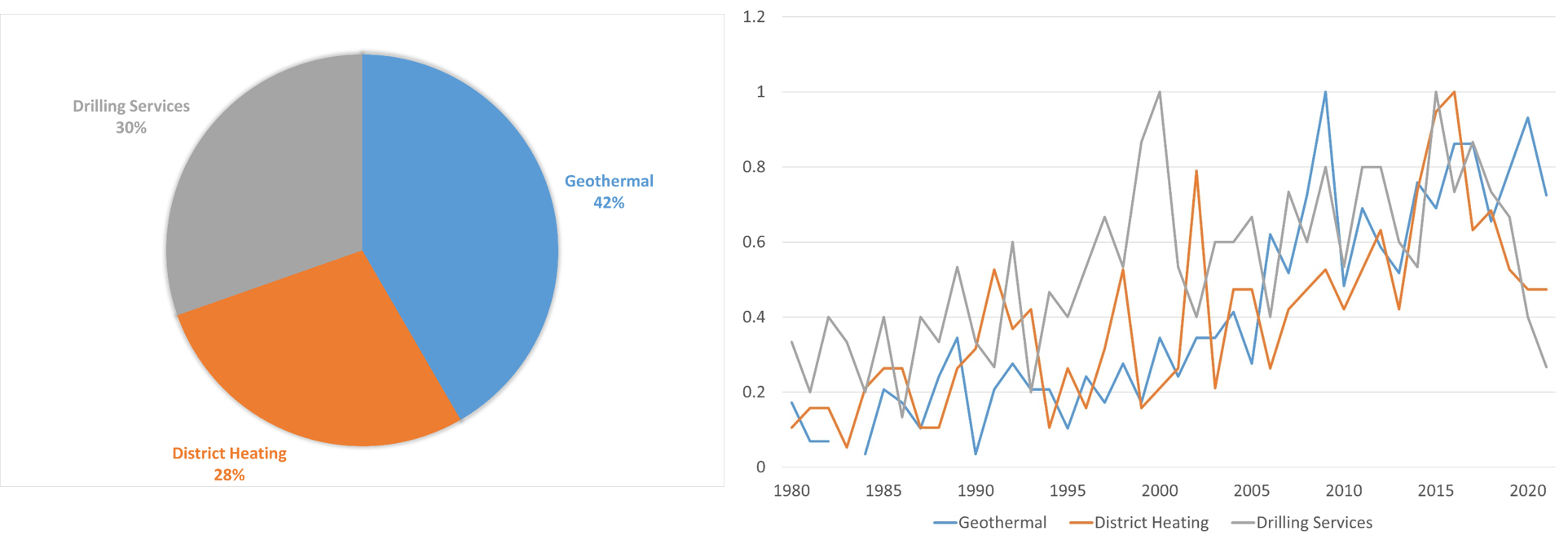
Figure 5: Business trends based on LinkedIn profile trends for the keywords “Drilling Services”, “District Heating” and “Geothermal”. Relative share of company profiles linked to 3 keywords (left) and a time line of company foundation or re-organisations since 1980 showing the normalized relative frequency for each key word (right).
In total, 470 companies related to “district heating”, 510 to “drilling services” and 699 to “geothermal” were found and extracted from the LinkedIn data search, which took place in July 2022. At this point, it should be noted that some of the identified companies are assigned to more than one of the selected keywords. Renewables & Environment was the leading industry sector in every dataset except for “drilling services”, where the vast majority of companies are in the Oil & Energy sector. All keywords selected show a continuous growth of business foundations or re-organisation in the past decades. While companies related to drilling services reached a peak at the beginning of this millennium, triggered by increasing oil & gas prices, businesses offering geothermal services peaked ahead of the financial crisis starting in 2008. We want to point out that this peak is presumably linked to the planning and installation of individual ground-source heat-pump installations rather than to services related to the use of geothermal energy in heating and cooling networks. Nevertheless, after the financial shock of the late 2000s the business sector related to geothermal energy started to grow continuously in the past years almost reaching the all-time peak of 2008. This also applies to businesses related to “district heating”. We observe a significantly increasing business interest in the past decade, with a peak in new companies just a few years ago in 2017. Referring to business sizes, geothermal services are dominated by small enterprises with up to 10 employees, according to the investigated LinkedIn profiles. This mostly reflects planners and exploration service providers as well as installers related to ground-source heat pumps. District heating service as well as drilling service providers indicate small to medium-sized enterprises showing peaks in the category of 11 to 50 employees.
6. Main barriers towards implementation of geothermal energy in heating and cooling networks
Both geothermal energy and district heating only play a minor role so far in the European heating and cooling sector. Moreover, the combination of geothermal and district heating and cooling (‘geoHC networks’) represents a niche with a share of 2% of the end energy supply [4]. In interactions with decision makers and investors relevant to the heating and cooling sector, the main arguments can be summarised as “too expensive”, “too complicated” or “unsuitable capacities and temperature levels”.
Therefore, we created a list of significant market barriers hindering investment in geoHC networks in Table 2, based on data from workshops organised by the EU COST Action CA18219 Geothermal-DHC. We aligned the identified barriers to two main domains: the technological and the societal domain; the impact of the latter is even more relevant as it triggers or hinders technological development.
Table 2: Overview of identified market barriers covering the technological and societal domains.
|
Market barrier
|
Domain | Sub-domain |
| Geothermal concepts at high market readiness level strongly depend on specific geological conditions (e.g., high enthalpy resources or aquifer systems) | Technology | Access to resources |
| High CAPEX and associated financial and operation risks during the development and use of geothermal sources | ||
| Lack of demonstration and pilot sites to increase the market readiness level of promising technologies for a better inclusion of geothermal energy, such as UTES | ||
| Upscaling of well-developed individual concepts to increase the capacity of geoHC networks and facilitate the integration of geoHC networks in urban areas | System integration | |
| Lack of replicable concepts to optimise the use of geothermal energy in geoHC networks to reduce LCoH | ||
| Limited access to information on geothermal resources and options | Societal | Policy & Governance |
| Unfit or fragmented legal framework, increasing the development efforts and time periods of geothermal developments | ||
| Development periods exceeding policy circles, which lead to stop-and-go policies | ||
| Misleading and prejudged opinions of market actors and stakeholders, leading to low levels of awareness of and trust in geoHC networks | Awareness & Acceptance | |
| Higher complexity associated with increased investment risks compared to other renewable energy sources bearing the risk of “wasting high enthalpy carriers for low enthalpy uses” | Financing & Business | |
| Lack of scalable business models to seed more service providers and one-stop-solutions to deploy geoHC in new and existing infrastructure |
Apart from efforts made concerning the integration of geothermal energy in low temperature heating and cooling networks, developments to increase the technological scope of geothermal or reduce investment costs and risks progressed more slowly mostly due to lack of attention by decision makers to the clean transformation of the heating and cooling sector. In the past decade, more attention has been paid to the integration of renewables into the electricity sector in Europe. The long development periods of geothermal projects in general resulted in ‘stop-and-go’ policies when it comes to financial incentives or other public support. The term ‘stop-and-go policies’ covers ambiguous measures through change of government and especially applies when development periods of geothermal projects exceed legislation periods. Many European countries also face unfit regulations and fragmented regulatory frameworks that neglect geothermal heat as a relevant source of energy. The recent multiple crises have led to increased interest in using geothermal energy in heating and cooling networks to substitute fossil fuels, especially gas boilers. However, due to shortcomings in the market development efforts in the past years, services needed for the rollout of geoHC networks in Europe are limited and require significant ramp-up periods.
7. Pathways for more geothermal heating and cooling networks in the future
During the past decades, the so-called “low hanging fruits” for the use of geothermal energy in heating and cooling networks have been harvested. We conclude that balneology has been an important driver in many European countries to stimulate investment in geoHC networks. The same applies to the capitalisation of “unsuccessful” hydrocarbon wells, which showed instead the occurrence of natural thermal water used for recreation and energy supply purposes. This is also indicated in the statistic characteristics related to direct geothermal use in heating and cooling networks, as shown in Table 2. In addition, the production of electricity has been another important market driver, especially in high enthalpy zones of Europe like Iceland or Turkey, leading to the implementation of combined heat and power (CHP) applications. Important development steps have been made in the past years to introduce the concept of 5th generation heating and cooling networks.
Fostering the use of geothermal energy in heating and cooling networks across Europe requires shifts of paradigm to expand and refine the concept of geothermal energy use in heating and cooling networks. We propose that future geoHC networks ideally show the following characteristics:
- Geothermal is part of multivalent heating and cooling networks harvesting and capitalising on-site available heat sources. Geothermal energy may play a twofold role by providing base load and large volume, seasonal heat storage (UTES);
- New network topographies allow for organic growth and cascade-based interlinking of district heating networks with unstructured local networks to support the decarbonisation of existing district heating networks and increase the energy balance of individual networks;
- Heat pumps at different temperatures, capacity levels and positions within the geoHC network (central as well as de-central placement) will act as modulators to support energy conversion inside the network and between the network and clients. This will lead to the increased flexibility and adaptability of heating and cooling networks.

Figure 6: Generalised scheme of pathways towards better integration of geothermal energy in heating and cooling networks.
Efforts to increase the share of geothermal energy in heating and cooling networks may not just cover new infrastructure but also need to address existing heating networks or buildings previously supplied by individual boilers. Due to the nature of geothermal energy, there are system limits for supplying heating networks, which are given by the temperature and capacity level. As indicated in Figure 6, the integration of geothermal energy in existing infrastructure will heavily depend on measures to reduce the required supply temperatures. Two current technological developments make the future integration of geothermal energy in district heating even more attractive: the trend towards lower supply temperatures in district heating networks [10] and the increasing commercial availability of high-temperature heat pumps [17]. Both trends enable the significantly higher thermal capacity of a geothermal project, since the thermal water can be further cooled down and more heat can be provided towards a district heating network. We identify critical tipping points at supply temperatures levels between 90 °C and 100 °C. On the other hand, technological research and development focusing on engineered geothermal solutions (e.g., enhanced geothermal systems, deep closed loop systems) may reduce the dependency on natural hot water and steam and provide vital options to make geothermal supply accessible to retrofitted existing heating networks, even at enhanced supply temperature levels. In addition, cascade-related network topographies (see also Figure 2) help increase the overall supply capacity of a district heating network and may compensate for the capacity losses of tree-based networks due to the reduction of the grid temperature at the same pipeline diameters. As mentioned earlier in this article, cascade use of local, low-temperature heating and cooling networks (4G to 5G) connected to a conventional district heating network (2G to 3G) enable the harvesting of local heat sources – including geothermal – and the application of seasonal heat storage for balancing reasons, including underground thermal energy storage.
Heating networks operating at temperatures below 100 °C have access to a wider range of geothermal technologies, including conventional hydrogeothermal use. We estimate the level of exploitation of known thermal aquifers in Europe at around 10%, which is in line with the conclusions of the GeoDH project (http://geodh.eu) that around 20% of the European population can be supplied by hydrogeothermal district heating. This segment of geoHC networks is predominately affected by insufficient policies and governance structures to trigger future investment. Accounting for the long development periods of geothermal projects (3 to 7 years), measures to improve the socio-economic boundary conditions need to be put in place immediately to achieve impacts before 2030. The European Commission could set important cornerstones by developing a European strategy on geothermal energy, for instance. On the other hand, development periods of geoHC networks can be reduced not only by supportive policies but also by sustainable business concepts. In that context, geothermal developers may apply strategies from the hydrocarbon industry to develop portfolios of geothermal heating plants in a certain region instead of always creating individual, isolated projects. This would also offer instruments to reduce the economic risk associated with the development of geothermal heating plants. Communities and conventional energy suppliers who are not experts in geothermal would in turn shift from investors to clients of geothermal heat supply in heating networks.
Low- to ultra-low-temperature heating and cooling networks (4G to 5G) in turn are vital options for greenfield solutions and new networks connecting existing buildings not yet supplied by district heating. According to [11], at least 40 fifth generation heating and cooling networks exist in Europe and the number is rapidly growing. The individual components of such networks (e.g., borehole heat exchangers, operational control components) are well developed on the level of an individual network. Further developments are needed to make the network topography more adaptive for connecting individual networks to meshes or cascade networks. Moreover, the successful roll-out of such networks in Europe also depends on the development of business models and one-stop-shop service providers, especially addressing urban areas in Europe for offering alternative solutions to individual fossil-fuel boilers in houses and apartments. This of course requires increased efforts to accelerate the retrofitting of buildings as well as more strategic spatial energy planning in urban areas. Eventually, new business solutions to foster 4G and 5G networks supplied by geothermal energy need to be aligned with spatial energy plans, since geothermal installations such as borehole heat exchangers will very likely require the use of public space (e.g., parks, pathways or streets) in densely settled areas.
Acknowledgement
This article is based upon work from COST Action CA18219 Geothermal-DHC, supported by COST (European Cooperation in Science and Technology). CA18219 Geothermal-DHC is an open research network addressing the integration of geothermal energy in decarbonised heating and cooling networks across Europe. For more information visit www.geothermal-dhc.eu.
References
[1] Thomaßen, G., Kavvadias, K., Jiménez Navarro, J. P. 2021. The decarbonisation of the EU heating sector through electrification: A parametric analysis. Energy Policy, 148(A), 111929. https://doi.org/10.1016/j.enpol.2020.111929
[2] Goetzl, G., Milenic, D., Schiflechner, C. 2021. Geothermal-DHC, European Research Network on Geothermal Energy in Heating and Cooling Networks. Proceedings World Geothermal Congress 2020+1, Reykjavik, Iceland.
[3] IRENA 2020. Renewable capacity statistics 2020. International Renewable Energy Agency (IRENA), Abu Dhabi.
[4] ENER/C1/2018-494. European Commission, Directorate-General for Energy, Kranzl, L., Fallahnejad, M., Büchele, R. (2022). Renewable space heating under the revised Renewable Energy Directive: final report, Publications Office of the European Union. https://data.europa.eu/doi/10.2833/525486.
[5] EU-COM: Renewables steadily increasing in heating and cooling. Eurostat website, 11‑02‑2022. https://ec.europa.eu/eurostat/web/products-eurostat-news/-/edn-20220211-1, accessed on 9 October, 2022.
[6] 051COM/2016/051 final. An EU Strategy on Heating and Cooling https://eur-lex.europa.eu/legal-content/EN/TXT/?qid=1575551754568&uri=CELEX:52016DC0051
[7] Bruegel: Website, Bruegel AISBL. https://www.bruegel.org/dataset/national-policies-shield-consumers-rising-energy-prices Accessed on 24 September 2022.
[8] Kavvadias, K., Jiménez-Navarro, J.P., Thomassen, G., Decarbonising the EU heating sector – Integration of the power and heating sector 2019. EUR 29772 EN, Publications Office of the European Union, Luxembourg, doi:10.2760/943257
[9] COM(2020) 299: Powering a climate-neutral economy: An EU Strategy for Energy System Integration.
https://eur-lex.europa.eu/legal-content/EN/TXT/PDF/?uri=CELEX:52020DC0299&from=EN
[10] Lund, H., Werner, S., Wiltshire, R., Svendsen, S., Thorsen, J.E., Hvelplund, F., Mathiesen, B.V. 2014. 4th Generation District Heating (4GDH): Integrating smart thermal grids into future sustainable energy systems, Energy, 68, 1-11. https://doi.org/10.1016/j.energy.2014.02.089.
[11] Buffa, S., Cozzini, M., D’Antonio, M., Baratieri, M., and Fedrizzi, R. 2019. 5th generation district heating and cooling systems: A review of existing cases in Europe. Renewable and Sustainable Energy Reviews 104, 504 – 522. https://doi.org/10.1016/j.rser.2018.12.059
[12] Bérard, P., Loizeau, M., Rouzaire, D., Vigouroux, P. 2002. Amélioration de la connaissance des ressources en eau souterraine des sites thermaux – Région Auvergne – Site de Chaudes-Aigues (15) BRGM RP-51722-FR, Bureau de Recherches Géologiques et Minières, Orleans, France.
[13] Goetzl, G., Milenic, D., Mandrone, G., Chicco, J.M., Gemeni, V., Haslinger, E., Rman, N., Singh, R.M., Vranjes, A., Zosseder K. 2022. COST Action Geothermal-DHC – Roadmaps for integrating geothermal energy in its full technological spectrum into heating and cooling networks across Europe. Proc. European Geothermal Congress 2022 Berlin, Germany, 17-21 October 2022.
[14] EGEC 2022. EGEC Geothermal Market Report 2021, European Geothermal Energy Council, Brussels.
[15] EGEC 2021. EGEC Geothermal Market Report 2020, European Geothermal Energy Council, Brussels.
[16] Tsironis, G., Daglis, T., Tsagarakis, K. P. 2022. Social media and EU companies’ engagement in circular economy: A LinkedIn approach. Sustainable Production and Consumption, 32, 802-816. https://doi.org/10.1016/j.spc.2022.06.006
[17] Arpagaus, C., Bless, F., Uhlmann, M., Schiffmann, J., Bertsch, S. 2018. High temperature heat pumps: Market overview, state of the art, research status, refrigerants, and application potentials. Energy 152, 985–1010. https://doi.org/10.1016/j.energy.2018.03.166
This article has been published in European Geologist Journal 54 – Geothermal energy – A geological contribution to the energy transition
Read here the full issue:
