
European Geologist Journal 54
CROWDTHERMAL services for the energy transition and the Green Deal
by Isabel Fernández1, Márcio Tameirao Pinto2 and Tamas Miklovicz3
1 CROWDTHERMAL Project Coordinator, European Federation of Geologists
2 Junior Project Manager, La Palma Research Centre
3 Project Officer, European Federation of Geologists
Contact: isabel.fernandez@eurogeologists.eu
Abstract
The European Green Deal, the EU’s climate and economic policy that aims at transforming Europe into the first climate-neutral continent by 2050, focuses on clean energy and climate action. However, the energy transition will not happen without citizens. The CROWDTHERMAL project places citizens at the centre of energy supply development. The project has elaborated web tools for community investors, local authorities and project developers. Through the “Core Services” portal, they can identify the most efficient social engagement strategies and financial instruments; carry out a self-assessment on financial and risk mitigation; discover the parameters for economic modelling of projects; learn the fundamental aspects for the successful implementation of a geothermal project; and browse a meta-database of geothermal projects with the option to self-register.
Cite as: Fernández, Isabel, Tameirao Pinto, Marcio, & Miklovicz, Tamas. (2022). CROWDTHERMAL services for the energy transition and the Green Deal. European Geologist, 54. https://doi.org/10.5281/zenodo.7602365

This work is licensed under a Creative Commons Attribution 4.0 International License.
1. Introduction
1.1 Political context
Research and deployment of renewable energies have never been more urgent. Globally, humanity is faced with a threatening climate change and energy prices have never been so high, while a growing number of countries are becoming painfully aware of geopolitical energy dependencies.
Policy and industry are slowly reacting, moving into an energy transition. The predominant regime of fossil fuel is gradually being downsized. Investment is directed to the new energy system based on renewable energy sources, infrastructure, new business models and opportunities. This is a historical and systemic shift where all sources of energy have to find their place. Geothermal energy is definitely one of these, with a large growth potential for heating, cooling and power generation.
EU policy is on the forefront driving this systemic shift, addressing both supply and demand of energy. In December 2019, the European Commission launched the European Green Deal [1], a comprehensive policy to accelerate the energy transition in the EU ensuring a climate-neutral EU by 2050. Investment, regulations and reforms are mobilised in parallel to create the right framework conditions for both industry and consumers. More recently, responding to the geostrategic energy dependency on Russia, the EU launched the RePowerEU policy, which includes an ambition to double the deployment of geothermal in the EU [2] .
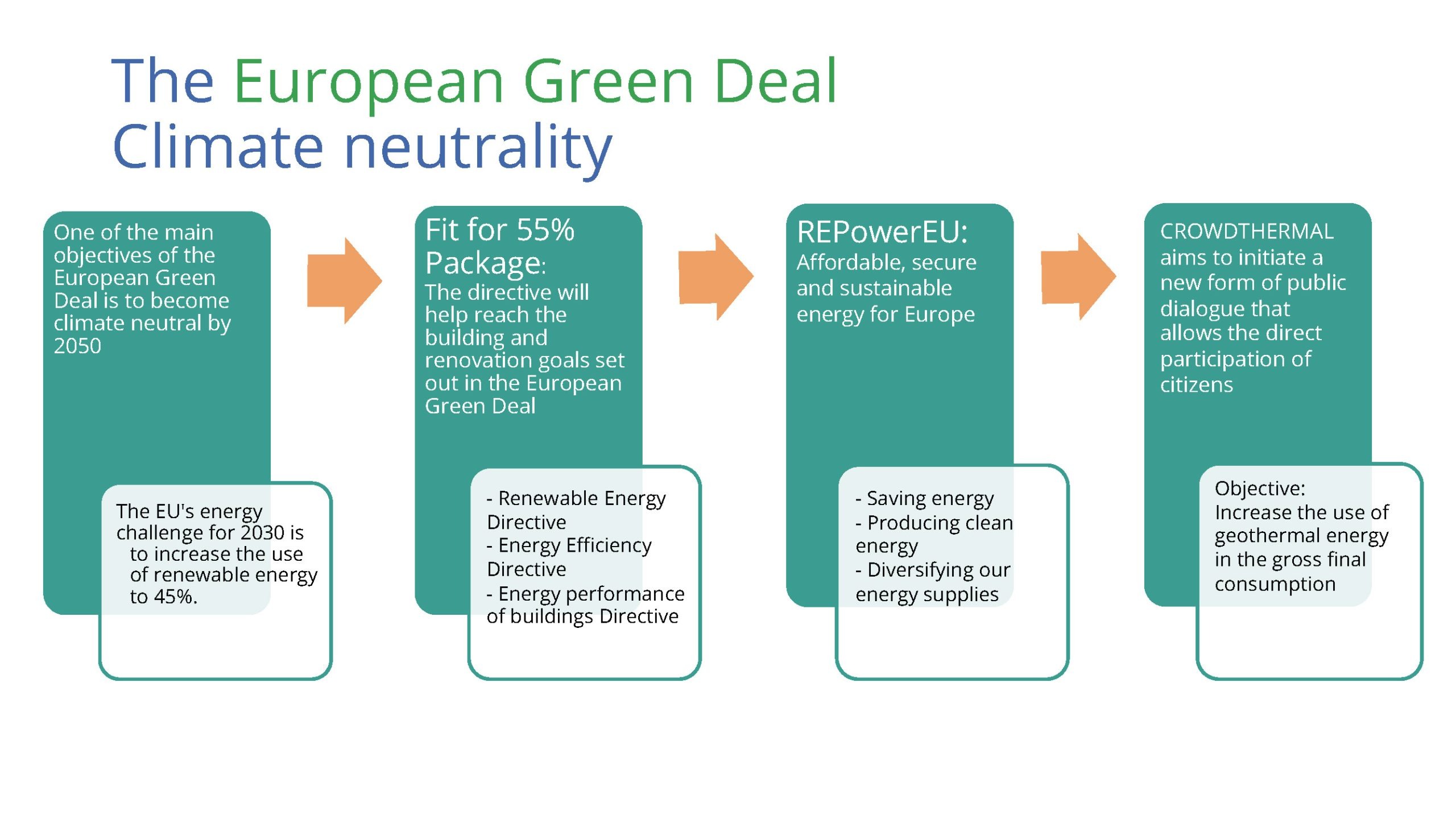
Figure 1: CROWDTHERMAL project in the European policy context.
However, despite these high-level political initiatives, Figure 1, the deployment of renewable energy faces several blockages on the ground. Adequate finance is not always available or flexible enough. And even more fundamentally, citizens are not always keen on the construction of new sites of renewable energy generation. While globally accepting the need for clean and diversified energy, citizens are protesting against new production sites close to their neighbourhoods. In several EU member states, new investment projects in wind, solar or geothermal energy have been vetoed by local municipalities. This dynamic tends to exacerbate the tension between urban and rural areas, where the latter are net suppliers of energy.
1.2. Geothermal energy in Europe
Geothermal energy is a resource that has potential for development in many countries around the world. However, despite its versatility and economic viability, this resource faces numerous obstacles that hinder its deployment and its capacity for achieving a similar degree of use as its other renewable and clean energy counterparts.
In Europe, the status of geothermal utilisation and potential ranges from direct use of hydrothermal resources in sedimentary basins to high-temperature geothermal resources found in volcanic areas. Sedimentary basins are present in multiple European countries, while there is a lower number of European countries characterised by young volcanic activity.
Shallow and low-temperature geothermal is available almost everywhere in Europe and is commonly harnessed through GSHP (Ground Source Heat Pump) installations [3]. There are several types of geothermal energy technologies and different classification schemes. Figure 2 summarises the classifications adopted by the CROWDTHERMAL consortium [4].

Figure 2: Classification of geothermal energy projects.
The uses of geothermal energy are determined by the temperature of the resource and the exploitation technology. Figure 2 indicates some uses of geothermal energy. Based on the EGEC 2019 European Country Reports, the share of installed capacity of shallow geothermal systems (mostly GSHP) amounts to 66.5%, direct use 26.2% and electricity 7.3% [5]. Despite its huge potential to supply sustainable, decentralised and low-carbon baseload energy for electricity, heating and cooling, geothermal still plays a marginal role in the European energy mix.
According to the EGEC country fiches [6] for the EU Member States we can find potential for geothermal resources in most EU countries:
Austria’s geothermal resources are particularly well suited to the deployment of deep geothermal projects for heating and cooling, and allow for greater use of geothermal electricity in the long term. The geothermal resources of Austria are particularly well distributed throughout the territory.
Belgium’s identified geothermal resources are mostly located in the northeast and the south of the country. They are well suited for deep geothermal heating and cooling projects.
The Czech Republic’s available geological data reveal the availability of resources dotting the country from the northwest to the southeast.
Croatia’s geothermal resources are well identified and primarily located in the north, within the Pannonian Basin (which is the source of many Central and Eastern European countries’ geothermal resources). These resources are suitable for heating and cooling and for electricity production.
Denmark’s deep geothermal resources, notably suitable for heating and cooling, are well identified and well distributed throughout the country.
Finland is particularly well suited for shallow geothermal developments, as its geology allows for more cost-effective drilling, and its climate justifies more easily the larger investments required by this heating and cooling technology. For deep geothermal, Finland does not have significant resources that have been identified so far. However, some ongoing projects for deep geothermal heating and cooling illustrate that there are deep geothermal resources available in the country, notably near the capital region of Helsinki.
France has geothermal resources well distributed across the territory. A particularly important contribution can be provided in the Paris area for heating and cooling and in Alsace or overseas territories for electricity. Shallow systems can be installed all across the country for heating and cooling.
Germany’s identified deep geothermal resources are distributed in the north and the south of the country. Currently, the Rhineland and Bavaria are the areas where most of the deep geothermal capacity has been developed.
Greece’s deep geothermal resources identification still requires extensive exploration work on Greece. In terms of resources, the northeast of the country is characterized by good potential for geothermal electricity. In addition, a major geothermal resource is shallow geothermal systems, which can provide renewable cooling.
Hungary’s geothermal resources are well known, are well distributed throughout the territory, and are of high quality. This makes Hungary a country extraordinarily well suited to massive reliance on geothermal energy, a dispatchable, flexible source of renewable heating and cooling and electricity.
Deep geothermal resources have been identified in Ireland, notably around the Dublin region, where geothermal district heating developments could take place.
Italy’s resources have been exploited for a century to produce geothermal electricity. Currently, Italy’s geothermal industry is concentrated in the high-temperature resource of the Tuscany region. Italy also has additional potential for electricity production in other areas of the country. The largely undeveloped potential for Italy is geothermal for heating and cooling.
The Netherlands’ geothermal resources are distributed throughout the territory, although unevenly so. They are however located suitably for a large proportion of the Dutch population to be potentially able to cover its heating and cooling needs through geothermal energy. In addition, the Netherlands has a potential to develop geothermal electricity production at competitive costs in the medium term.
Poland’s geothermal resources are well identified, notably in the Polish Lowland at the centre of the country and in the south (inner Carpathian area). Other prospective resources are being explored in the Sudetes regions, outer Carpathian and Carpathian for deep geothermal. Altogether, Poland’s potential in the short to medium term is primarily aimed at heating and cooling applications, although resources allow for localised geothermal electricity developments.
Portugal has high-quality resources available for geothermal electricity in the Azores, where more developments can be undertaken. The country also has some identified resources in parts of the country, notably in the Lisbon area, where deep geothermal resources would be available for heating and cooling uses. Shallow geothermal can be developed across the whole country, and is notably a proven solution to provide renewable cooling.
Romania’s deep geothermal resources for heating and cooling have been identified and developed in the northwest of the country. Romania also has the potential to develop some geothermal electricity capacity, and shallow geothermal technologies can be developed throughout the country.
Slovenia has significant geothermal energy resources, in particular for deep geothermal projects for heating and cooling. Geothermal electricity projects are possible. Finally, shallow geothermal projects can be implemented across the country, which also has climatic conditions and geology particularly suited to this technology.
Slovakia has significant geothermal energy resources that are identified, in particular for deep geothermal projects for heating and cooling. Moreover, the known geological resources in Slovakia allow for the development of some geothermal electricity projects in the short to medium term. Finally, shallow geothermal projects can be implemented across the country.
Mainland Spain has some prospects for EGS, while the Canary Islands are likely home to the largest resource for rapid deployment, with well-documented high-temperature resources. For deep geothermal heating and cooling some resources have been identified in mainland Spain, notably in the north.
Sweden is particularly well suited for shallow geothermal developments, as its geology allows for more cost-effective drilling, and its climate justifies more easily the larger investments required by this heating and cooling technology. Shallow geothermal systems can be deployed throughout the whole country. For deep geothermal, Sweden has identified resources in the south.
Across Europe, geothermal energy is being used in different industries with great success. Figure 3 is an infographic from CROWDTHERMAL which illustrates some examples of the use of geothermal energy depending on the temperature of the resource.
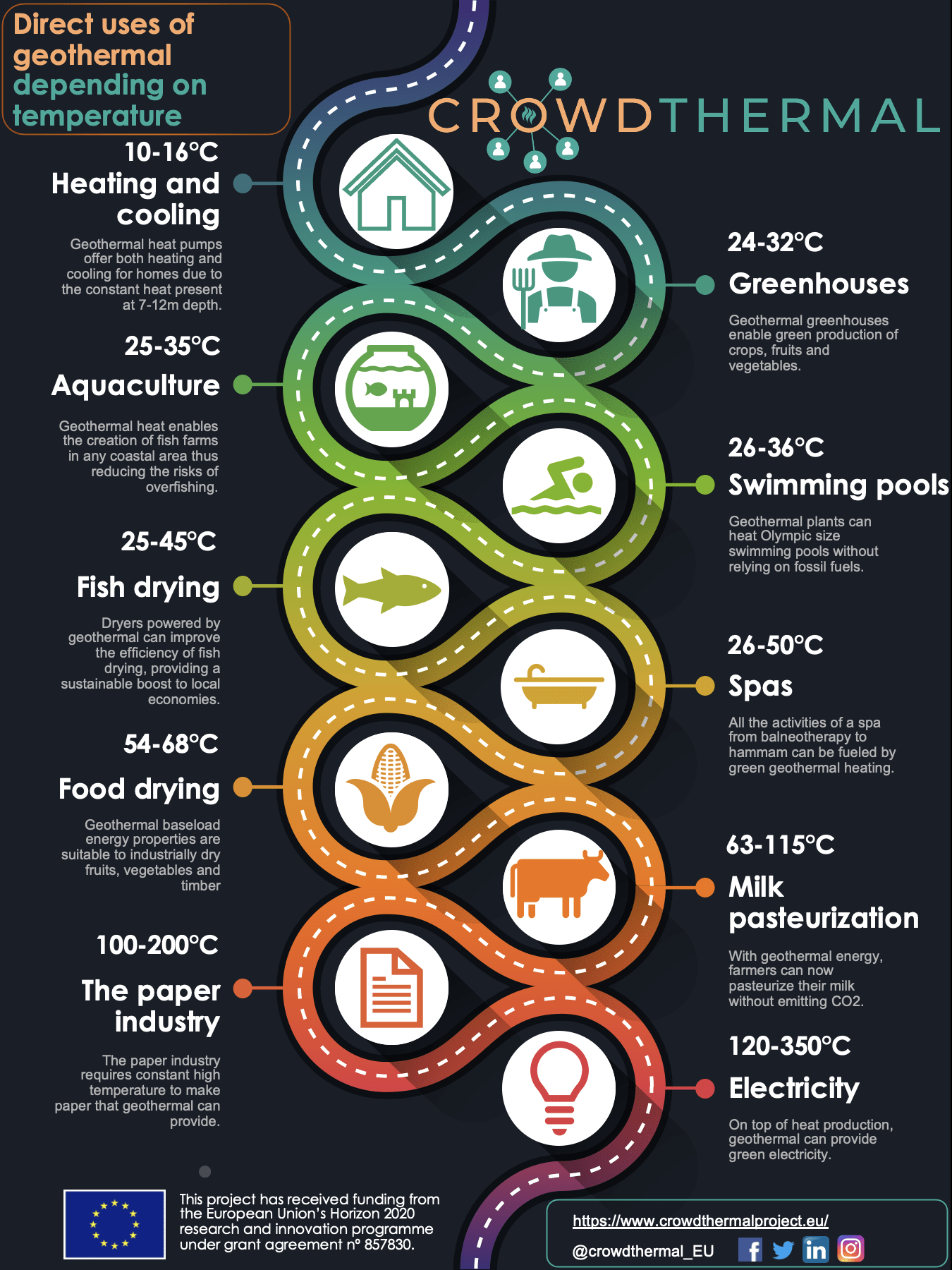
Figure 3: Geothermal uses depending on resource temperature.
1.3. CROWDTHERMAL project
To promote further geothermal market development in Europe, the EU-funded CROWDTHERMAL project (‘Community-based development schemes for geothermal energy’) aims to empower the public to participate in the development of geothermal projects through social engagement tools and alternative financing schemes like crowdfunding.
CROWDTHERMAL is a project funded under the European Union’s Research and Innovation programme Horizon 2020 – Grant Agreement no. 857830. It is a 40-month project led by the European Federation of Geologists (EFG), with a consortium of 10 partners from 7 different European countries. The project started on 1 September 2019 and will end 31 December 2022. The topic for the call of the project was market uptake support, focusing on the area of building a low carbon, climate resilient future (LC).
The CROWDTHERMAL project is based on multidisciplinary research, combining engineering and technical knowledge on geothermal energy with social science, psychology, innovative finance engineering and social innovation. This is possible thanks to a multidisciplinary consortium team, where relevant institutions from several European countries joined up:
- European Federation of Geologists, EFG: Project coordinator, European professional NGO
- Institute for Future Energy Systems gGmbH, IZES: Germany, research institute
- University of Glasgow, UoG: UK, research institute
- Vulcan Energy Subsurface Solutions GmbH, VES: Germany, SMEs
- La Palma Research Centre for Future Studies, SL, LPRC: Spain, SMEs
- CrowdFungindHub BV, CFH: Netherlands, SMEs
- District Heating Company of Szeged, SZDH: Hungary, energy company
- Spanish Geothermal Technology Platform, GEOPLAT: Spain, NGO
- Geothermal Research Cluster, GEORG: Iceland, research centre
- EIMUR: Iceland, NGO
This team includes geology associations, research centres on social and technical aspects of geothermal energy, geothermal industry, and SMEs specialised in financial engineering. The geographical spread is further enhanced by “linked third parties”, i.e., collaborating geological associations from 17 European countries. Finally, the project benefitted from an Advisory Board with 10 members representing the societal, technical and financial sectors.
There is a clear need to learn more about public engagement and the social acceptance of renewable energy, focusing here on geothermal energy in its different forms. Equally, there is a positive correlation between public engagement and new forms of financing of renewable energy projects. With the right framework conditions, citizens not only accept renewable energy but actively promote it, engaging as co-investors. Community funding and innovative use of crowdfunding both require and increase public engagement and trust.
One key outcome of the project is to develop core services for social-media based promotion and alternative financing of geothermal projects, working closely with existing structures and conventional players. The Core Services outcome is based on the three pillars of work: social, financial, and technical (Figure 4).
- Social: new forms of public dialogue to tackle concerns and increase interest in geothermal energy;
- Financial: empowering citizens to directly participate in the development of geothermal projects with the help of alternative financing, such as crowdfunding;
- Technical: techniques to gain public trust, risk mitigation and transparency of geothermal projects.

Figure 4: Schematic development of Core Services based on the three angles: social, financial, and technical.
The CROWDTHERMAL project validates its findings with the help of three case studies in Iceland, Hungary and Spain. These case studies of CROWDTHERMAL have the following characteristics:
- Spanish case studies: By using geothermal heat pumps as well as ventilation equipment with heat recovery, the project Edificio Arroyo Bodonal in Tres Cantos, Madrid provides heating, cooling and domestic hot water to 80 houses. The project EAI 310 building, sited in the middle of Madrid’s Chamartín district, consists of 220 apartments distributed in several buildings that are being provided with energy from a shallow geothermal system.
- Hungarian case study: The geothermal energy project from Hungary consists of nine projects that each target multiple, currently gas-based heating circuits in the district heating system of the city of Szeged. A total of 27 geothermal (9 production and 18 injection) wells are being constructed, whereby the supply of 26,338 end users (of the 27,257 total) will be based on renewable energy.
- Icelandic case study: The aim of the project Community Greenhouse is the illustration of how crowdfunding can increase the share of geothermal energy in food production and processing and therefore increase the region’s sustainability with value creation.
The Core Services have been delivered to facilitate access to new financial instruments. The target groups are:
- Communities of citizens keen to become actors in the energy transition process. The benefits for these communities could be economical or environmental;
- Geothermal project developers interested in involving the community to increase commitment and/or fundraising;
- Local authorities interested in involving the community to develop a Sustainable Energy (and Climate) Action Plan 2030.
2. Core Services
The interdisciplinary combination of expertise in the project has resulted in the development of a set of key outcomes of the project that were converted into web tools – the CROWDTHERMAL Core Services. Their purpose is to help the target audiences in the development of new geothermal projects in Europe and they are available on the project website under the Core Services Portal. In this portal, users can explore and access all Core Services, though there is a suggested division of the tools per target audience according to the potential benefits and relevance for the stakeholder group. These target audiences were defined by project partners as geothermal project developers, communities of citizens who are interested in geothermal energy, and local authorities, as indicated in Figure 5.

Figure 5: CROWDTHERMAL Core Services by target groups.
The available Core Services are the following:
- Decision support tool: The tool addresses the concerns related to the environment, finance, risk mitigation and social engagement in a geothermal project. It is a toolbox for geothermal project developers and public authorities to support decisions at different stages of the project. This tool is a workflow with a set of guiding questions with regards to project phase, objectives, social engagement, alternative finance, risk mitigation and environmental aspects. The workflow is tailored according to the answers provided by the user based on their situation, which will lead them to tailored recommendations at the end of the process. Link to tutorial.
- Interactive guide to integrated finance in geothermal energThe tool supports the decision for the best alternative finance and risk mitigation schemes for each geothermal project. It is a self-assessment tool focused on the financial aspect, divided in two main components. On the front page, users have access to a sequence of steps to be considered with regards to finance and risk mitigation in a geothermal project. The second component consists of an interactive step plan in which users are asked a set of questions related to each of the steps and insert their answers in the respective text boxes. Once the interactive guide is concluded, users can download a report containing a full summary of their situation, with valuable information that can be used as source material for specialised consultancy, for example, to implement their projects. Link to tutorial.
- Toolbox for risk evaluation and mitigation: The tool addresses the economic modelling for each geothermal project. It is a technical tool that was prepared to help geothermal project developers to efficiently perform economic modelling of their projects, also divided in two levels. The front page contains an overview about the toolbox and the list of the necessary parameters to calculate the costs of a geothermal project, for project description, geology & heat power plant, CAPEX, OPEX, and financing plan. The main part of the tool is a downloadable spreadsheet in which all parameters are included, and project developers can enter their actual numbers for each of them. Upon completion of the spreadsheet, users will have a complete summary of their costs at their hands – which will help them in preparing an economic model of their project, with or without help from external consultants. Link to tutorial.
- Implementation framework for community-based geothermal development: The key elements to be taken into consideration for the development of community to finance geothermal projects are presented in this tool. It is a report that compiles five fundamental aspects that should be taken into consideration when implementing a geothermal project, based on CROWDTHERMAL case studies that were concluded in Spain, Hungary and Iceland: a) characterization of the project, b) social aspects, c) regulatory framework, d) innovative finance mechanisms, and e) financial risks in a geothermal project. The report is interactive and its navigation is facilitated through the table of contents and additional functions to improve the users’ experience. Link to tutorial.
- Meta-database of geothermal projects: The tool aims to connect users with services. Geothermal projects with the potential for alternative finance, risk mitigation and social engagements have been identified by EFG’s National Associations in Europe and included in the database. The database also informs visitors about the national geothermal framework of European countries, existing geothermal projects, including benchmark projects, and provides the option to self-register in the database to facilitate networking with other project developers and learn about how other projects benefit from alternative finance. There are two maps created, using the data from the country overview and the geothermal projects, as a map-based search engine. The primary user for this tool are project developers. The data collection is ongoing and the meta database is open for new registrations. Link to tutorial.
- Education tools: Finally, there are educational Core Services in the portal dedicated to all CROWDTHERMAL stakeholders who wish to learn more about its key topics. For example, communities of investors who are not familiar with geothermal energy, or project developers who are not aware of the benefits of alternative finance. First, the ‘Information Catalog for Self-learning’ consists of wiki articles that explain common topics related to CROWDTHERMAL pillars, such as social aspects, alternative finance, risk mitigation and geothermal energy. Similarly, the ‘Frequently Asked Questions’ provide shorter explanations and key references for further research. Link to tutorials.
The CROWDTHERMAL tools and added value to its target audiences are summarised in Table 1 based on data from [7, 8, 9, 10, 11].
Table 1: Summary of the Core Services.
| Service | For whom | What? |
| Decision support tool | Project developers & Local authorities | Offering a workflow with questions on social, environmental, financial, and risk mitigation factors to help you identify appropriate strategies for your project. |
| Interactive guide to integrated finance in geothermal energy | Community investors & project developers | A self-assessment with regards to the financial and risk mitigation framework to consider in developing a geothermal project, according to the profile of your community. |
| Toolbox for risk evaluation and mitigation | Project developers | Parameters to help you perform complete economic modelling of geothermal projects, with or without community funding. |
| Implementation framework for community-based geothermal development | Community investors & project developers | Five fundamental aspects to consider for any geothermal energy project developed by a community of citizens. |
| Information catalogue for self-learning | Community investors & geothermal professionals | Offering in-depth information on anything related to the CROWDTHERMAL pillars: community financing, social aspects, risk mitigation and geothermal energy. |
| FAQ | Community investors | Answers to all of your questions around community financing for geothermal projects, social engagement strategies, risk mitigation and geothermal energy. |
| Meta-database of geothermal projects | Community investors, project developers & local authorities | Your platform of geothermal projects that are potentially suitable for alternative financing schemes. |
3. Conclusions
We are at a historic moment in terms of the need to use renewable energy. Geothermal energy remains a largely underused power source in the overall energy mix in Europe. Therefore, the CROWDTHERMAL project aims to empower citizens and local communities for local clean energy solutions, contributing to the European Green Deal.
Geothermal energy is a resource that has a large potential for further deployment and development in many countries around the world. In Europe, the status of geothermal deployment ranges from direct use of hydrothermal resources in sedimentary basins, or high-temperature geothermal resources found in volcanic areas, to shallow and low-temperature geothermal.
In order to enhance the presence of geothermal projects in the mix of renewable energy sources in Europe, the multidisciplinary team of CROWDTHERMAL research combines engineering and technical knowledge on geothermal energy with social science, psychology, innovative finance engineering and social innovation. This interdisciplinary combination of expertise has resulted in the development of a set of key project outcomes, shared and converted into web tools – the CROWDTHERMAL Core Services.
The analysis in this project confirms that co-financing, co-ownership, and shared responsibility all support the energy transition, as they extend the possibilities of social acceptance. Alternative finance has the double potential of co-funding the project and involving citizens in the development of the project. The implementation of the techniques of alternative finance requires an analysis of the attitudes and preferences of the local community. The project described in this article presents guidelines for this type of analysis.
The specific financial risks inherent to geothermal installations also raise barriers for investors. Part of these risks are related to the resource uncertainties; others are related to the probability of achieving social acceptance. The project has explored mechanisms to mitigate these risks and even convert them into opportunities by applying alternative financial mechanisms.
CROWDTHERMAL provides mixed expertise to target these bottlenecks, through the development of tools adding value for project developers, local authorities and communities of citizens.
Author Contributions: Conceptualisation and Introduction: I.F.F.; Core services: M.T.P., T.M.; Conclusions: all authors. All authors have read and agreed to the published version of the manuscript.
Funding: This project has received funding from the European Union’s Horizon 2020 research and innovation programme under grant agreement no. 857830.
Acknowledgment: The Core Services have been developed by the CROWDTHERMAL Consortium Members.
References
- European Green Deal, Striving to be the first climate-neutral continent, 2019. Available online: https://ec.europa.eu/info/strategy/priorities-2019-2024/european-green-deal_en (accessed on 5 September 2022)
- REPowerEU: A plan to rapidly reduce dependence on Russian fossil fuels and fast forward the green transition, 2022. Available online: https://ec.europa.eu/commission/presscorner/detail/en/IP_22_3131 (accessed on 5 September 2022)
- Enex & Geysir Green Energy. 2008. Geothermal Utilization in Europe.
- (2021). Deliverable D5.1. Case Study Assessment Protocol (Authors: Margarita de Gregorio, Paloma Pérez, Ana Casillas – GEOPLAT).
- Sanner, Burkhard. 2019. “Summary of EGC 2019 Country Update Reports on Geothermal Energy in Europe.” in European Geothermal Congress 2019. Den Haag.
- EGEC, 2019. Geothermal country fiches: key proposals for geothermal in European Countries, https://www.egec.org/media-publications/geothermal-country-fiches-key-proposals-for-geothermal-in-european-countries/ (accessed on 2nd December 2022)
- (2021). Deliverable D4.1. Implementation Framework for Community-based Geothermal Development (Authors: Margarita de Gregorio and Paloma Pérez – GEOPLAT).
- (2021). Deliverable D4.2. Guidelines For Developers and Promoters of Geothermal Energy (Authors: Anastasia Ioannou and Gioia Falcone – University of Glasgow).
- (2021). Deliverable D4.3. Synergy Between Alternative Finance and Risk Mitigation (Author: Georgie Friederichs – CrowdfundingHub).
- (2021). Deliverable D4.5. Economic Analysis of The Application of the New Risk Mitigation Scheme (Authors: Christina Baisch – GeoThermal Engineering GmbH, and Thorsten Weimann – gec-co Global Engineering & Consulting-Company GmbH).
- CROWDTHERMAL. (2022). Deliverable D4.8. Information Catalogue for Self-Learning (Author: Márcio Tameirão – LPRC).
This article has been published in European Geologist Journal 54 – Geothermal energy – A geological contribution to the energy transition
Read here the full issue:
