
European Geologist Journal 54
A Risk Mitigation Framework for Community-Based Financing in Geothermal
by Christina Baisch 1*, Philipp Wolpert 1 and Georgie Friederichs 2
1 Vulcan Energy Subsurface Solutions GmbH (before 07/22: GeoThermal Engineering GmbH), An der RaumFabrik 33c, 76227 Karlsruhe, Germany
2 CrowdfundingHub, Amsterdam, The Netherlands
Contact: cbaisch@v-er.eu
Abstract
As part of the Horizon 2020 project CROWDTHERMAL, the opportunities of different alternative finance strategies – like crowdfunding – for geothermal projects were assessed along with their potential risks and possible mitigation measures. Recommendations were formulated for a novel Risk Mitigation Framework that can complement alternative financing solutions for deep geothermal projects throughout Europe. A support mechanism is proposed that addresses several of the main barriers to geothermal market development. It can reduce the amount of risk capital required by project developers and can help more projects become economically feasible. At the same time, it can mitigate the financial risk for community investors and broaden the applicability of participatory finance for geothermal project funding. An economic analysis was carried out confirming and quantifying these effects.
Cite as: Baisch, Christina, Wolpert, Philipp, & Friederichs, Georgie. (2022). A Risk Mitigation Framework for Community-Based Financing in Geothermal. European Geologist, 54. https://doi.org/10.5281/zenodo.7602267

This work is licensed under a Creative Commons Attribution 4.0 International License.
1. Introduction
Despite its enormous potential to supply sustainable, decentralised, and low-carbon baseload energy for electricity, heating, and cooling purposes, deep geothermal still plays a marginal role in the European energy mix. The high resource risk that is typically present in the early stages of geothermal project development makes it difficult to mobilise the required capital for funding early exploration surveys and first drillings through traditional bank finance.
The exploration risk – the risk of not finding a geothermal reservoir in sufficient quality or quantity for economically viable exploitation – significantly contributes to the investment reluctance and the relatively slow development of the deep geothermal industry. In order to realise investments in geothermal, it is necessary to provide sufficient investment security by mitigating the exploration risk [1,2]. Several de-risking and insurance schemes with different regional foci and various risk-sharing concepts have been established or are currently being developed internationally to address this issue [3-5].
So far, however, none of the existing or envisaged schemes allows for combining risk mitigation and community funding for geothermal projects. Yet, alternative finance methods like crowdfunding can be vital elements of the funding plan for deep geothermal projects. They can close the financing gap and reduce the amount of equity required for early project phases. At the same time, they can improve local project ownership and mitigate the risk of project failure due to non-acceptance [6,7].
New approaches to participatory finance for geothermal also bring about new scopes of risks. Community investors in geothermal projects basically face the same exploration risk as project developers. Unless the investment is secured by a guarantee or insurance scheme, crowd investors risk losing (part of) their money in case of project failure. If geothermal crowdfunding is to be applied more widely, an accompanying mechanism is needed that can reduce the exploration risk exposure of community investors to a proportion that they can absorb.
Against this background, one of the main objectives of the project CROWDTHERMAL was the development of a conceptual framework for a risk mitigation scheme that can complement alternative financing solutions for geothermal projects throughout Europe.
2. Methodology
The groundwork for this task was laid by a demand analysis for geothermal risk mitigation in which we performed a cluster analysis amongst various stakeholders [8]. More than 30 networking dialogues were established with geothermal project developers, investors, co-operatives, past and ongoing exploration risk mitigation schemes and initiatives, the insurance market, geothermal and institutional experts, research projects, geothermal energy policy initiatives, and public authorities. In-depth interviews were held with risk mitigation experts from several organisations and programmes experienced in geothermal risk mitigation (namely the World Bank Group, GRMF, ARGeo, KfW, and the BGR-GEOTHERM programme). The interviews focused on lessons learned from previous geothermal de-risking schemes and as of yet unaddressed issues in risk mitigation. A questionnaire on risk assessment and risk mitigation demand was filled in by the CROWDTHERMAL Case Studies Szeged (Hungary), Madrid (Spain) and Húsavík (Iceland). Finally, additional interviews were held with two German projects that experienced project failure due to an unsuccessful well (Offenbach/Queich and Geretsried) in order to get an understanding of different facets of risk materialisation.
Drawing upon several cases where alternative finance solutions had already been applied in geothermal projects, we next analysed various alternative financing methods about their key advantages, potential risks, and possible mitigation strategies, both from a project developer’s and from a community investor’s perspective [9]. For this purpose, we studied nine geothermal cases from France, the UK, the Netherlands (2), Spain, Iceland, Germany, Kenya and Romania as examples of different types of community funding. The cases include one negative example of financial fraud in order to demonstrate what happens when such a risk occurs and to avoid future repetition. Besides eight deep geothermal projects, the CROWDTHERMAL Case Study Madrid served as a positive example for crowdfunding for shallow geothermal developments. The results were condensed into an alternative finance risk inventory [10].
Based on the requirement specifications from the demand analysis and the results of the alternative finance risk inventory, we developed recommendations for a Risk Mitigation Framework for deep geothermal projects utilising community funding. The conceptual framework was refined in cooperation with experts from within and outside the CROWDTHERMAL consortium contributing geothermal policy, financial, crowdfunding and insurance sector expertise [11].
An economic analysis subsequently evaluated the economic implications of the proposed Risk Mitigation Framework [12]. For the economic assessment, the modelling software Renewalyzer – designed for economic calculations of geothermal and other renewable energy projects – was adapted to encompass alternative finance and risk mitigation solutions. Profit and Loss, Cash-Flow, and Balance Sheet statements were generated in order to compile and evaluate different economic benchmark parameters for a range of scenarios.
The work presented here was concluded by assessing potential financiers for the CROWDTHERMAL Risk Mitigation Fund [13]. Special attention was paid to financing institutions that have already demonstrated their interest in the geothermal or alternative finance market.
3. Results
3.1. Alternative Finance Risk Mitigation
The most common forms of alternative finance that can be used along the course of geothermal project development are crowdfunding (loans), crowdfunding (shares/equity), crowdfunding (reward-based), direct lending and leasing. Crowdfunding is the most commonly used form of community funding, where funds are raised from the community – often through a crowdfunding platform – in return for a set interest rate (loans), dividends (shares/equity) or rewards (reward-based). Direct lending is lending by a financial intermediary without a banking license that attracts funding and uses this funding to give out loans to other parties. A special form of direct lending is social bonds or green bonds. Such impact bonds can be given out by a project itself and are specifically earmarked to raise money for climate and environmental projects or projects that are intended to create better social outcomes. A lease is a contract that permits the use of an asset. The “lessor” purchases or develops an asset and then leases it to the “lessee” in return for a contractually agreed series of payments [9].
Successful community funding needs to match the characteristics and funding requirements of individual geothermal projects along with the community investors’ risk appetite and motivation for involvement. Before choosing a specific form of alternative finance fundraising or investment, all options along with the associated opportunities and risks should be evaluated to systematically improve risk management and decision-making processes.
As a general recommendation, it can be stated that in the early project phases, which are associated with the largest exploration risk, equity or reward-based crowdfunding instruments are often the most suitable (Figure 1). These instruments offer a high level of involvement for the investors, and – for the equity models – also high potential returns. They do however imply a relatively high risk of financial losses in case of project delay or failure (for example due to drilling problems or a dry well) and are therefore only suitable for community investors with a sufficient risk-absorbing capacity.
From the point in time when the geothermal resource is proven, at least by a first successful well, the risk of project failure becomes much lower. From then on, uncertainties regarding a project’s timing and results are significantly reduced, and loan-based methods like crowdfunding (loans) or direct lending can be used. They are also applicable for crowd investors with a lower risk appetite.
For project developers, direct lending and leasing are two alternative finance strategies especially suited for the late project stages. While direct lending offers the opportunity of easier access to funding than through conventional bank finance, leasing can entail the advantage that the resource risk is removed from the project developer.
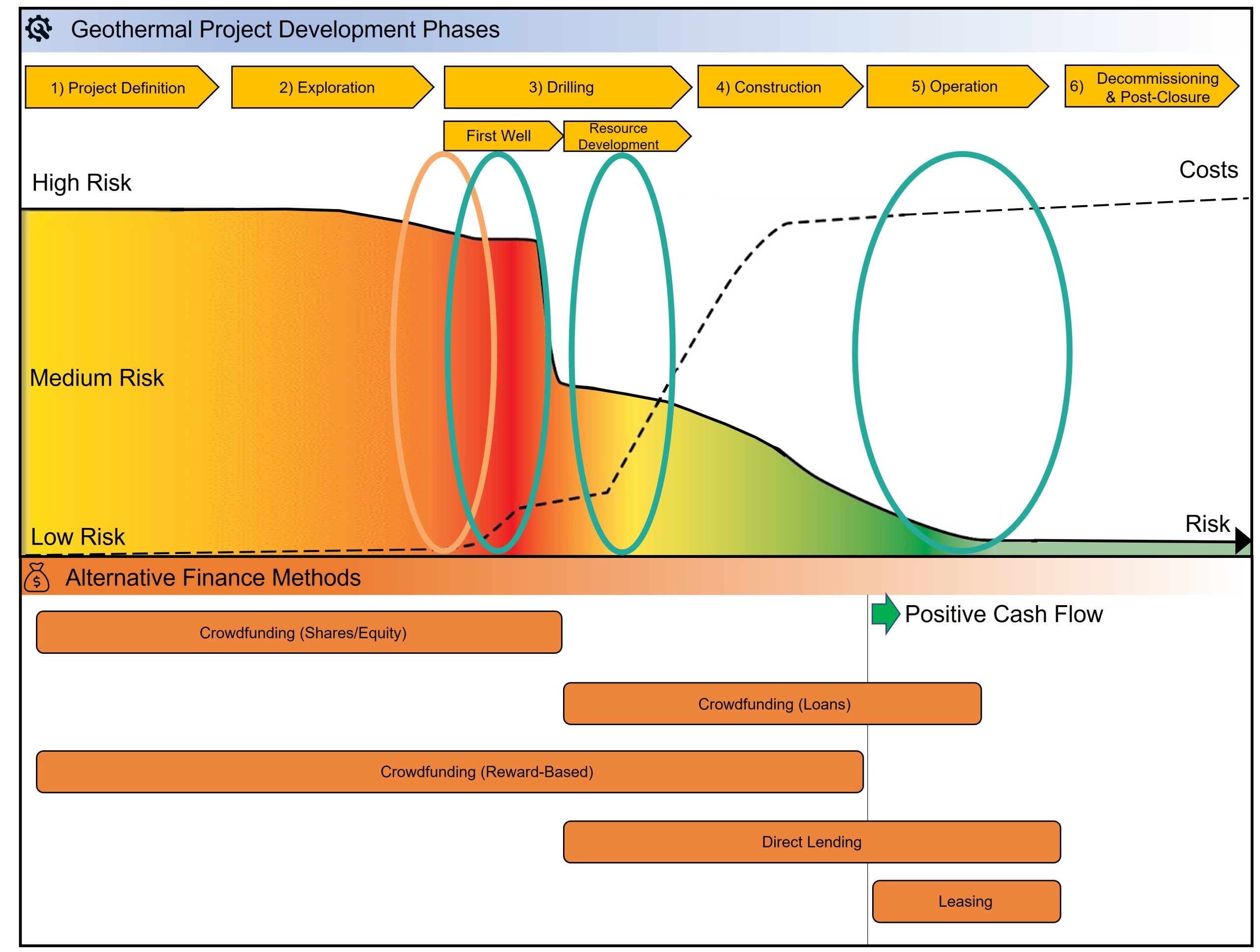
Figure 1: Technical geothermal project development phases, associated risks, costs, and most appropriate alternative finance methods. Timing of the support from the proposed CROWDTHERMAL Risk Mitigation Framework. Orange circle: co-financing support, green circles: loan guarantee range ([11], modified after [14] and [15]).
3.2. The CROWDTHERMAL Risk Mitigation Framework
Experiences from former and current de-risking schemes led to a concept for a Risk Mitigation Framework that is designed to optimally assist community-funded deep geothermal projects throughout Europe.
Given the current geothermal market conditions in most European countries, it is recommended to set up a CROWDTHERMAL Risk Mitigation Fund that would ideally be financed by a public funding source. The fund would be a pan-European support instrument mitigating the financial risks associated with subsurface uncertainties of geothermal projects. It would be applicable to deep geothermal projects that raise a minimum of 5% of their project capital expenditures (CAPEX) from community investors through loan-based alternative financing methods (i.e., crowdfunding (loans), direct lending or impact bonds).
The proposed support framework includes a grant-based, co-financing component in the form of matchfunding and a risk-sharing component in the form of loan guarantees (Figure 2). The matchfunding would be paid as a grant to the project developer prior to exploration drilling. It would match the amount of funds that can be raised from the crowd (for example, if two million euros are raised through loans from community investors, the Risk Mitigation Fund will invest an equal amount, i.e. an additional two million euros).
The loan guarantees would mitigate both the short-term exploration risk in the drilling phase and the long-term subsurface risks during operation (e.g. reservoir degradation due to scaling). In case an economically viable project operation is not or no longer possible, they would secure the (partial) repayment of community investors’ loans. By addressing the resource risk in different project phases (Figure 1), the Risk Mitigation Framework should facilitate sustainable developments throughout the project lifetime.
In case a loan guarantee is needed, the guarantee amount would be paid from an ear-marked Trust Fund. Payments from the Trust Fund would be made through the crowdfunding platform or financial intermediary facilitating the community funding process. This procedure ensures that the loans of community investors are not subordinated.
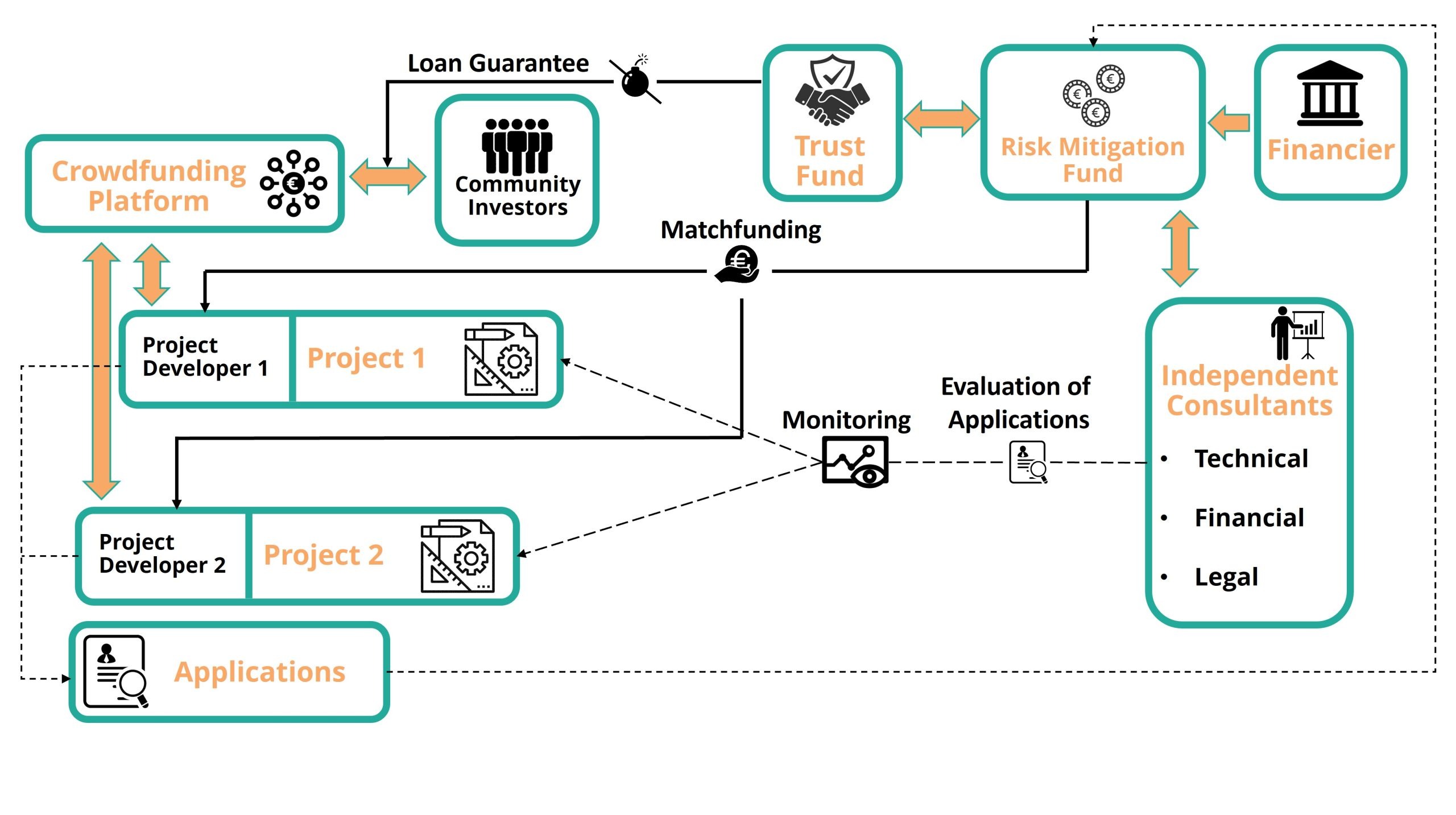
Figure 2: The Proposed CROWDTHERMAL Risk Mitigation Framework [11].
The decision over project success and failure should take into consideration the project-specific reservoir and economic parameters. The short-term loan guarantee would be activated in case the actual reservoir parameters do not allow an economically viable project. The decision would be made on the basis of the results after drilling, testing, and – if applicable – enhancement of the first or second well (Figure 3). The threshold for the long-term loan guarantee to be activated would be a negative value of a project’s earnings before interest, taxes, depreciation, and amortization (EBITDA) during operation. This scenario could for example occur if induced seismicity requires additional seismological monitoring and a reduction in circulation rate. Successful projects would be required to pay back revenue-based royalties, thus making the fund both a risk- and profit-sharing facility.
The establishment and implementation of the Risk Mitigation Framework would be accompanied by an expert committee of external, independent consultants or advisors with technical, financial and legal expertise. The importance of mechanisms for alignment of interest and quality assurance is highlighted. Concrete suggestions are given in [11].
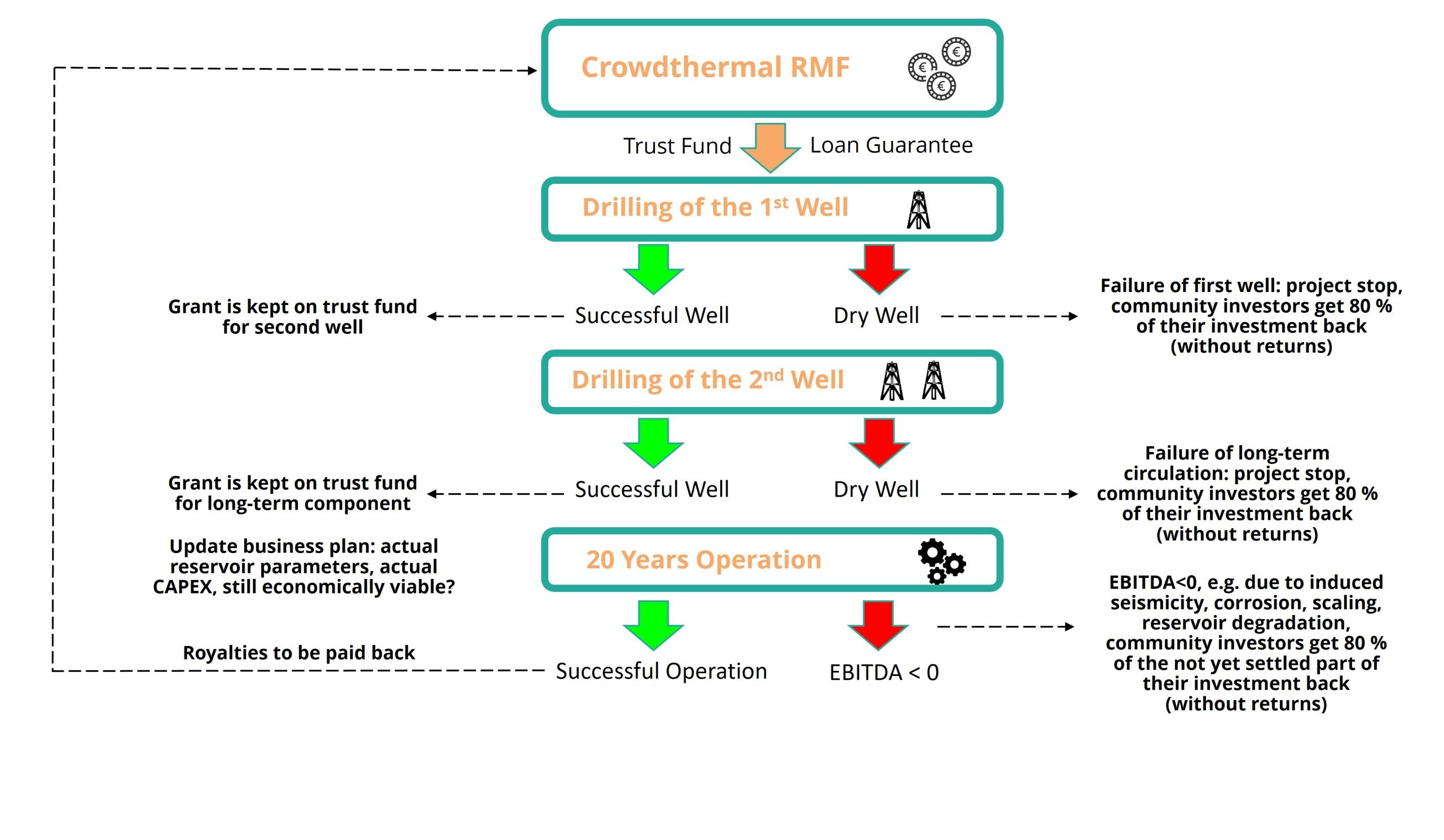
Figure 3: Operating Principles of the CROWDTHERMAL Risk Mitigation Fund’s Short- and Long-Term Loan Guarantees [11].
The proposed support framework tackles several of the main financial barriers to geothermal market development and offers the following benefits:
- It encourages deep geothermal project developers to apply alternative finance solutions;
- The matchfunding is an incentive for project developers for a maximum use of financial community engagement. At the same time, the matchfund is positively leveraged by the community funding;
- Providing matchfunding grants prior to exploration drilling reduces the amount of (equity) risk capital needed by project developers. The co-financing contributes to the project budget that can be used for early phases’ CAPEX and helps to close the financing gap;
- With the proposed loan guarantee, the financial risk to be carried by individual community investors becomes much more predictable and acceptable. The investment will become more attractive;
- For project developers, crowdfunding is relatively costly. Due to the high-risk profile of deep geothermal projects, investors usually expect high returns. A loan guarantee reducing the risk level for community investors can entail lower return expectations to be met by project developers;
- Adding a guarantee to alternative financing loan instruments introduces more flexibility in investment opportunities in the early project phases. It also gives people with a lower appetite for risk the opportunity to be part of the project from the beginning;
- With the guarantee, the applicability of loan-based community funding solutions is broadened. The bars for the suggested application range of crowdfunding (loans) and direct lending in Figure 1 can be extended to also cover the project definition and exploration phases;
- For project developers, the guarantee helps to pay back loans in case of project failure. It considerably reduces the financial risks associated with subsurface uncertainties. Besides the focus on the exploration risk, other subsurface risks like drilling risks, corrosion, scaling, or long-term degradation of the reservoir are also captured by the proposed approach;
- The Trust Fund concept and the co-operation with platforms or financial intermediaries ensure that the loans of community investors are not subordinated;
- The loan guarantee can help to secure confidence and peace of mind for project developers, platform operators/financial intermediaries, and community investors alike;
- The scheme can help to pool geothermal projects that apply alternative finance solutions for knowledge exchange, the use of synergies, cohesion, spreading of risk, and to obtain a critical mass;
- The presented framework is applicable to all Geothermal Play Types. It supports different deep geothermal project types and sizes and can equally encourage the development of low, medium, and high enthalpy resources;
- Promoting new geothermal initiatives and more sustainable energy can benefit Europe and its de-carbonisation strategies.
3.3. Economic Assessment
Once the conception of the CROWDTHERMAL Risk Mitigation Framework was worked out, economic efficiency calculations were performed in order to assess the economic implications of the framework for both project developers and community investors [12]. The assessment analysed the effects of the CROWDTHERMAL Risk Mitigation Framework on the economic feasibility, profitability, bankability, and investment risk level of a project.
In a scenario analysis, a range of quantitative and qualitative economic indicators was compiled for an array of project success and failure scenarios. The 18 scenarios were arranged in a way that they can demonstrate the individual effects of crowdfunding and matchfunding, as well as short- and long-term loan guarantees.
The benchmark parameters include both tangible figures like IRR (Internal Rate of Return) and NPV (Net Present Value) and more qualitative criteria like the investment risk level at a certain point in time. They illustrate the project perspective, the principal equity investor perspective, the bank perspective, and the community investor perspective. In their entirety, they can give indications regarding expectable investment decisions, decisions over project stop versus continuation, the economic efficiency of a project, and a project’s ability to fulfil its obligations towards community investors.
The economic analysis confirmed that both community finance and each individual component of the proposed CROWDTHERMAL Risk Mitigation Framework have a positive effect on the overall economic performance of a deep geothermal project. The application of the Risk Mitigation Framework can entail more positive investment decisions and encourage more project continuations. It can help more projects become economically feasible and can improve a project’s bankability. It has a positive effect on the ability to repay loans and reduces the risk of insolvency and project stop. For community investors, the framework reduces the amount of capital at risk as well as the risk of credit default and losses, thus making geothermal a safer investment.
3.4. Sponsorship
Obviously, the largest challenge for initiatives like the CROWDTHERMAL Risk Mitigation Fund is to find a financier providing the required seed capital for its establishment.
A potential financier of the proposed CROWDTHERMAL Risk Mitigation Fund needs to have the willingness and ability to provide funds to a support scheme for relatively high-risk projects without expecting a direct return on investment. The motivation would rather be a return on impact: to support the market uptake of community-funded geothermal projects in Europe with all associated benefits for the environment and for society. An overview of various potential funding sources and sponsors from different public and private investor categories is given in [13].
In the light of the deep geothermal market status in Europe, high involvement of public aid-granting entities is considered important [16]. Ideal funding sources hence include transnational financing bodies, development banks, national governments, and public investment funds. At the EU level, a wide range of public financing instruments already offer funding opportunities for renewable energy initiatives. The European Green Deal for climate neutrality by 2050 and the REPowerEU plan introduced in May 2022 have set the stage for a multitude of additional funding opportunities for low-carbon energy technologies. New strategies for de-risking renewable energy projects have also emerged from the Renewable Energy Directive recast process. Unlocking such funds to finance a geothermal risk mitigation scheme would be a great chance to advance the geothermal sector.
Besides public funding, results-based green financing through social bonds, green bonds, private financing institutions, or strategic investors can be additional sources of capital for the CROWDTHERMAL Risk Mitigation Fund. Several oil and gas players, for instance, have committed to climate neutrality in the future and are converting their companies and business structures accordingly. Likewise, utility companies and energy providers are increasingly attentive towards alternative energy sources for the green energy transition. Furthermore, insurance companies are interested in geothermal as a technology that can help reduce claims related to climate change. In individual cases, tangible experience with geothermal and/or crowdfunding complements the strategic interest of such private market players.
The crowdfunding ecosystem has already proven the legal and operational feasibility of co-funding and risk-sharing collaborations between public entities and community-funded projects, for example in the framework of the European Structural and Investment Funds (ESIF) [17]. In addition, the European crowdfunding regulation (ECSP) adopted in late 2021 provides a common structure and harmonised framework and is expected to boost the European crowdfunding industry in the coming years. Against this background, now is a very favourable moment to establish a Risk Mitigation Fund for geothermal crowdfunding in Europe.
4. Discussion
A novel Risk Mitigation Framework is presented that addresses the exploration risk of community-based geothermal development schemes. It is a tailored de-risking scheme that considers the needs of both geothermal and alternative finance industry, of both project developers and community investors. It is a relevant concept, designed to optimally assist community-funded deep geothermal projects and to encourage public participation in geothermal funding. Once implemented, it can be an effective way to assist the geothermal sector and to facilitate European market development.
An economic analysis confirmed that the conceptual CROWDTHERMAL Risk Mitigation Framework can achieve a significant reduction of the main economic challenges and risks that are faced by deep geothermal project developers and community investors:
- It tackles the lack of risk capital for geothermal developments;
- It facilitates public participation in geothermal projects;
- It complements alternative finance solutions;
- It protects community investors‘ interest;
- It mitigates the exploration risk.
To be able to reach its objectives, the support scheme first needs to be funded and established. The existence of various public and private financing options has been demonstrated. A multitude of further funding opportunities are expected to emerge in the wake of recent policy priorities and initiatives. The newly adopted pan-European crowdfunding directive has additionally set the stage for remarkable growth of the European alternative finance market.
Against this background, now is the perfect time to gain momentum in community investments in geothermal projects. Finding a sponsor to implement the CROWDTHERMAL Risk Mitigation Fund can be an important stepping stone for the geothermal industry to seize the present opportunities and to progress towards fulfilling its great potential.
Political support at all levels remains crucial, both regarding the public funding of geothermal de-risking schemes and regarding the enforcement of decarbonisation efforts so that strategic investments in geothermal become sufficiently appealing.
Acknowledgments: This research was funded by the European Union’s Horizon 2020 research and innovation programme under grant agreement number 857830. The present research represents the work led by GeoThermal Engineering GmbH (GeoT), in July 2022 renamed Vulcan Energy Subsurface Solutions GmbH, in Work Package 3 (WP3) and Work Package 4 (WP4) of the H2020 CROWDTHERMAL project.
References
- Wendel, M.; Hiegl, M.; Jaudin, F.; Poux, A. GEOFAR – Financing Geothermal Energy in European Regions. Proceedings of the World Geothermal Congress, Bali, Indonesia, 25-30 April 2010.
- Robertson-Tait, A.; Jayawardena, M.; Sanyal, S.; Berman, L.; Huttrer, G. An Evaluation of Risk Mitigation Approaches for Geothermal Development. Proceedings of the World Geothermal Congress, Melbourne, Australia, 19-25 April 2015.
- Fraser, S.; Calcagno, P.; Jaudin, F.; Vernier, R.; Dumas, P. European Geothermal Risk Insurance Fund EGRIF. GEOELEC Project. Deliverable 3.2. 2013. Available online: geoelec.eu/wp-content/uploads/2011/09/D-3.2-GEOELEC-report-on-risk-insurance.pdf (accessed on 9 September 2022).
- Bonfait, J.; Kreuter, H.; Chardon, A. How to Attract Investors in Geothermal Projects? The Risk Mitigation Funds Benchmark. Transactions Volume 42 of the GRC Annual Meeting, Reno, USA, 14-17 October 2018.
- Boissavy, C. Report reviewing existing insurance schemes for geothermal. GEORISK Project. Deliverable 3.1. 2019. Available online: https://www.georisk-project.eu/wp-content/uploads/2020/02/D3.1_Report-reviewing-geothermal-risk-mitigation-schemes-v2.pdf (accessed on 9 September 2022).
- Hildebrand, J.; Jahns, A.; Klein, K.; Wagner, M. Guidelines for Public Engagement. CROWDTHERMAL Project. Deliverable 1.4. 2020. Available online: https://bit.ly/3dJHg5w (accessed on 9 September 2022).
- Barich, A.; Stokłosa, A.W.; Hildebrand, J.; Elíasson, O.; Medgyes, T.; Quinonez, G.; Casillas, A.C.; Fernandez, I. Social License to Operate in Geothermal Energy. Energies 2022, 15, 139. https://doi.org/10.3390/en15010139
- Baisch, C.; Kraml, M. Cluster Analysis Report: Unaddressed Issues in Exploration Risk Mitigation. CROWDTHERMAL Project. Deliverable 3.1. 2020. Available online: https://bit.ly/3cAJBvz (accessed on 9 September 2022).
- Baisch, C.; Wolpert, P.; Friederichs, G.; Kraml, M. Alternative Finance Risk Inventory. CROWDTHERMAL Project. Deliverable 3.2. 2020. Available online: https://bit.ly/2DQprCd (accessed on 9 September 2022).
- Baisch, C.; Wolpert, P.; Friederichs, G.; Kraml, M. Alternative Finance Risks’ Mitigation Tools. CROWDTHERMAL Project. Deliverable 3.3. 2020. Available online: https://bit.ly/2DQtQVD (accessed on 9 September 2022).
- Baisch, C.; Wolpert, P. Draft Structure of a Play Type Independent Geothermal Exploration Risk Mitigation Scheme. CROWDTHERMAL Project. Deliverable 3.4. 2021. Available online: https://bit.ly/3u2fE0b (accessed on 9 September 2022).
- Baisch, C.; Weimann, T. Economic Analysis of the Application of the New Risk Mitigation Scheme. CROWDTHERMAL Project. Deliverable 4.5. 2021. Available online: https://bit.ly/3Knb1XN (accessed on 9 September 2022).
- Baisch, C. Financiers’ and Investors’ Tool for Play Type Independent Geothermal Exploration Risk Mitigation Scheme. CROWDTHERMAL Project. Deliverable 4.6. 2022. Available online: https://www.crowdthermalproject.eu/wp-content/uploads/2022/09/CROWDTHERMAL-D4.6_GeoT_Final.pdf (accessed on 9 September 2022).
- Gehringer, M; Loksha, V. Geothermal Handbook: Planning and Financing Power Generation. ESMAP Technical Report 002/12. World Bank, Washington, DC, USA, 2012. © World Bank. License: CC BY 3.0 IGO. Available online: https://openknowledge.worldbank.org/handle/10986/23712 (accessed on 9 September 2022).
- Types of Alternative Finance by lifecycle. 2018. Available online:
https://www.altfinator.eu/resources/Types-of-Alternative-Finance-by-entrepreneurial-venture’s-lifecycle-and-finance-sources
(accessed on 9 September 2022). - Seyidov, F.; Weimann, T. Proposal for a transition in the Risk Mitigation Schemes. GEORISK Project. Deliverable 3.4. 2020. Available online: https://www.georisk-project.eu/wp-content/uploads/2020/03/D3.4-Proposal-for-a-transition-in-the-Risk-Mitigation-Schemes.pdf (accessed on 9 September 2022).
- Odorovic, A.; Mertz, A.; Kessler, B.; Karaki, K.; Wenzlaff, K.; Araújo, L.N.; Kleverlaan, R. Unlocking the crowdfunding potential for the European Structural and Investment Funds. European Commission DG Regio. 2021. Available online: https://ec.europa.eu/regional_policy/sources/docgener/studies/pdf/crowdfunding_potential_esif_en.pdf (accessed on 9 September 2022).
This article has been published in European Geologist Journal 54 – Geothermal energy – A geological contribution to the energy transition
Read here the full issue:
