
European Geologist Journal 52
Sustainable land-use alternatives in tropical rainforests? Evidence from natural and social sciences
by Jörg Matschullat1, Roberval Monteiro Bezerra de Lima2, Sophie F. von Fromm1, *, Gilvan Coimbra Martins2, Mauana Schneider3, Armin Mathis4, Andrea Malheiros Ramos5, Alexander Plessow1, Kelly Kibler6
1Technical University Bergakademie Freiberg, Interdisciplinary Environmental Research Centre, Brennhausgasse 14, D-09599 Freiberg, Germany
2Embrapa Amazonas Ocidental, Rodovia AM 010 Km 29, Manaus, Brazil, 69010-970
*now associated with Max Planck Institute for Biogeochemistry, Department of Biogeochemical Processes, Hans-Knöll-Str. 10, 07745 Jena, Germany; and ETH Zürich, Department of Environmental Systems Science, Universitätsstr. 16, 8092 Zürich, Switzerland
3Universidade Federal de Santa Catarina, Campus Universitário, Trindade, Florianópolis, Santa Catarina, Brazil, CEP: 88040-970
4Universidade Federal de Pará, Rua Augusto Corrêa, 01, Guamá, Belém, PA, CEP 66075-110, Brazil
5Instituto Nacional de Meteorología (INMET), Eixo Monumental Sul Via S1, Rua G, 4. avenida, Setor Sudoeste, Brasília, DF, CEP 70680-900, Brazil
6University of Central Florida (UCF Coastal), 4000 Central Florida Blvd., Orlando, Florida, 32816
Contact: matschul@tu-freiberg.de
Abstract
The Amazon rainforest, formerly pristine and highly biodiverse, is increasingly under threat from deforestation for cattle grazing, other forms of agriculture, mining and development. To better understand which land management type best serves sustainability aims, we compare soil gas exchange (CO2, CH4, N2O) and soil chemistry for forested land with post-forest land at 13 locations and 29 sites within the state of Amazonas, Brazil. We find that forest soils show distinctively different signals and signatures compared to soils in post-forest land use cases. Crucial answers emerge regarding the limits of system resilience as well as sustainable alternatives to deforestation and current land-use practices. We carry out a socioeconomic evaluation and discuss the likely reasons for inaction and how to overcome them.
Cite as: Matschullat, Jörg, Monteiro Bezerra de Lima, Roberval, von Fromm, Sophie F., Coimbra Martins, Gilvan, Schneider, Mauana, Mathis, Armin, Malheiros Ramos, Andrea, Plessow, Alexander, & Kibler, Kelly. (2021). Sustainable land-use alternatives in tropical rainforests? Evidence from natural and social sciences. European Geologist, 52, 5–20. https://doi.org/10.5281/zenodo.5769730

This work is licensed under a Creative Commons Attribution 4.0 International License.
Introduction
Tropical rainforests, the dominant natural landcover in the inner wet tropics, currently cover roughly 18 million km2 or about 12% of the Earth’s land surface (3.6% of the planetary surface); about 55% of which are considered undamaged (Krogh, 2020). Intact tropical rainforests generate their own climatological and thus hydrological regimes (Marengo, 2006). High precipitation rates, coupled with large water-storage capacity and high evapotranspiration rates, trigger fast and almost permanent water recycling over these biomes (Zemp et al., 2017). This is particularly true for the tropical rainforest in the Amazon basin, Brazil, which yields the world’s largest integral tropical rainforest area (> 1 million km2; Krogh, 2020). There, this cycle enables the system to sustain itself despite the fact that most soils within the biome are relatively poor in key plant nutrients (magnesium, Mg; potassium, K; calcium, Ca; Matschullat et al., 2020; Quesada et al., 2010; Souza et al., 2018). Fast nutrient uptake by plants leads to significant in-plant storage of these elements, which become recycled into the soil upon plant decay, yet are returned rapidly into new plant growth by soil microbial metabolism (Alvarado, 2016). However, recent years have seen:
- Reduced precipitation rates in the dry seasons, primarily to the south of the Solimões-Amazon River channel towards the states of Acre, Rondônia and Mato Grosso;
- Several extreme dry seasons with next to no precipitation in June, July and August (Betts et al., 2008; Jiménez-Muñoz et al., 2016; Lewis et al., 2011; Yang et al., 2018). Such drought events should significantly impact the soil-plant-atmosphere interface (Nagy et al., 2016).
Deforestation largely explains the increasing drought phenomena (Longobardi et al., 2016; Phillips et al., 2009; Shukla et al, 1990) that are most prominent from the Transamazônica Highway towards the south. The Brazilian state of Amazonas benefits from the biggest intact share of the Brazilian part of the rainforest biome. This is no longer true for the neighbouring state Pará, which has apparently already lost its carbon retention capacity (Gatti et al., 2021). Deforestation easily leads to immediate alteration of physical and chemical soil quality, generally resulting in more depleted, less permeable and highly erosion-sensitive soils (Fearnside, 2005; Laurance et al., 2013; Tolimir et al., 2020). Deforestation in low latitudes triggers atmospheric warming with specific risks for the Amazon rainforest biome (IPCC, 2021; Longobardi et al., 2016). This biome is one of two global terrestrial biospheric tipping elements (IPCC, 2021; Lenton et al., 2008).
Deforestation also leads to rapid negative change in soil microbial communities (Kroeger et al., 2018) and soil physical properties (especially soil density, permeability), altering the greenhouse gas exchange between soil, plants and the atmosphere (Medina et al., 1980; van der Werf et al., 2009). Reducing deforestation and forest degradation is considered a cost-effective means to mitigate anthropogenic greenhouse-gas emissions (Gullison et al., 2007; van der Werf et al., 2009). Within the Brazilian Amazon rainforest biome, however, original forest is replaced by pastureland, agriculture (plantations), agroforestry and to a minor degree by aquaculture and mining activities – mostly since 1970 with establishment of the Transamazônica Highway (Fearnside, 2005; Moran, 1981). Regional soil degradation as a consequence of improper land-use management has been known for a long time (Nobre et al., 2016; Sioli, 1983).
To what extent may such post-forest landcover types be sustainable – and how can this be assessed objectively? We targeted 13 locations across Amazonas state, accessing both forest and post-forest areas at each location to study deforestation effects in respect to land-use change (Figure 1). At each site, we repeatedly determined the soil chemical status and soil gas exchange (CO2 CH4, N2O). Composite litter material (ORG) and mineral soil samples from two depths (TOP, BOT) were taken to quantify the element pools of macro and micronutrients as well as of carbon (Ct, Corg). Gas exchange serves as gauging biological vitality. All sampling took place in two subsequent rainy and dry seasons each from 2016 to 2017 (Matschullat et al., 2020, and references therein).
Here, we test the hypotheses that
- Amazonas soils are truly nutrient and carbon depleted,
- Forest soils are less depleted than post-forest soils,
- Gas exchange distinctively differs between forest and post-forest soils,
- Agroforestry appears to be the best-adapted type of post-forest land cover,
- Sustainable alternatives to current land-use practices in the Amazon basin biome are possible.
Based on the evidence obtained from various physical science studies, an analysis of socioeconomic and socio-psychological boundary conditions finally helps to understand why the pathway to more resilient and sustainable land use appears challenging and how obvious obstacles could possibly be overcome on a medium term. Based on several thousand years of indigenous cultures, the Amazon basin today is dominated by settlers with mostly European roots from the south and the northeast of Brazil, where cattle herding is a key cultural characteristic. Changing habits is a most demanding, yet necessary challenge (Kibler et al., 2018; Nepstad et al., 2014).
Materials and methods
Within Amazonas state, we selected 13 upland (terra firme) locations, aiming at maximum diversity within the basin. Year-round accessibility by 4WD vehicles was mandatory, since other means of transport are either too time-consuming (boat) or too costly (aircraft, helicopter). The selected locations cover an area of roughly 170,000 km2, generally with at least one forest site and a nearby post-forest site (Figure 1 and supplementary data). Post-forest sites are classified as pastureland (n = 3), agroforestry (Brazil nut trees: Bertholletia excelsa, rubber trees: Hevea brasiliensis, açaí palms: Euterpe oleracea, eucalyptus trees: Eucalyptus sp.; n = 4), and agriculture (corn: Zea mays, cassava: Manihot esculenta, orange trees: Citrus sinensis; n = 4). We grouped orange plantations (n = 2) under agriculture, justified by the fact that the orange trees were short (maximum height 2.5 m) and lacking other crops under the canopy. To classify the orange plantation under agriculture is somewhat arbitrary, yet does not radically change results to the alternative of agroforestry.
Each site had a minimum size of roughly 1 hectare (10,000 m2) and was visited at least three times in subsequent rainy and dry seasons from February 2016 to March 2017. Three sampling spots were selected on each site to represent site-specific variability. Very good data agreement between the sampling spots of any one site (gas exchange) and between seasons (soil chemistry) confirmed this selection. For more information on geological setting and site details, see Matschullat et al. (2020).

Figure 1: Position of the 13 sampling locations in the state of Amazonas, Brazil. See text for details.
A total of 159 composite mineral soil samples were taken from three spots per hectare by soil augers (Sondaterra, Piracicaba, Brazil) from 0–20 cm (TOP, n = 79) and from 30–50 cm (BOT, n = 80) depth. Sample weight was between 2 and 3 kg each. Samples were stored in gas and water-tight Rilsan® bags (Tub-Ex, Denmark) until further laboratory work. The intermediate 10 cm (20–30 cm) were discarded in order to minimise cross contamination between the two depth layers. The litter layer (various humus forms = ORG) was sampled as composites, too, with a volume of 2–3 liters each (n = 75). ORG samples were taken in cotton bags and left to air dry as of sampling. In parallel to sampling, soil water content (SWC) was determined by multiple TDR probe measurements around the drill spots. Soil water pH (H2O) and electrical conductivity (both WTW instruments with Meinsberg electrodes, Germany) were determined in the laboratory on all composite samples. Field duplicates and certified standards (ORIS, BHA-1) as well as in-house reference (BraSol) materials were added for quality control.
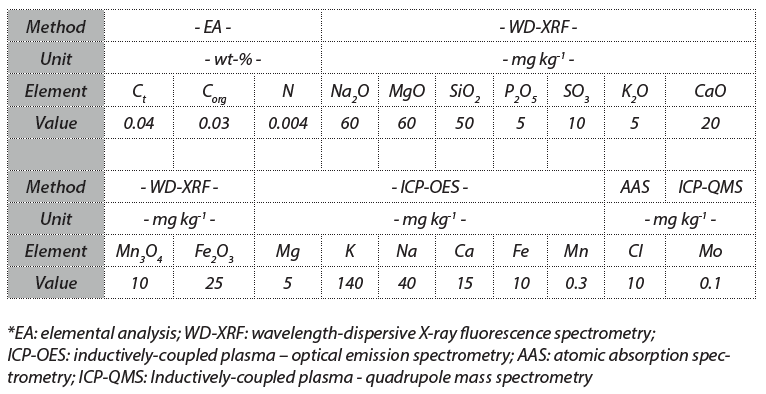
Samples were analysed in our Freiberg laboratories by WD-XRF (Bruker S8, Germany) for major, minor and a few trace elements, by ICP-OES (Perkin Elmer 3300 DV, USA) mainly for alkali elements and alkaline earths, by ICP-QMS (Perkin Elmer Sciex Elan 9000, USA) for trace and ultra-trace elements and by elemental analysis for carbon (total and organic), nitrogen and sulfur (Elementar Vario El Cube, Germany). The chlorine (Cl) analyses were performed by Mauana Schneider by AAS in Florianópolis, Santa Catarina, Brazil. For this work, macro (nitrogen, N; magnesium, Mg, phosphorous, P; sulfur, S; potassium, K; calcium, Ca) and trace nutrients (boron, B; chlorine, Cl; manganese, Mn; iron, Fe; nickel, Ni; copper, Cu; zinc, Zn; molybdenum, Mo) were quantified, as well as components such as carbon (Ct and Corg), and additionally sodium (Na) and silicon (Si), albeit non-essential for most plants, and cobalt (Co), which is considered potentially essential. Our determination limit was too high (2.5 mg kg-1) to quantify selenium (Se); our detection limits for all elements are provided in Table 1. For more details on analytical methods and quality control, see Matschullat et al. (2020).
Table 1: Detection limits (3 σ) for the methods used*, individual elements and related concentration units.
Soil respiration was determined with the portable manual closed dynamic chamber system SEMACH-FG (Zurba, 2016). Each unit contained a Vaisala GMP-343 IR-spectrometer for fast and precise in-situ CO2 determination, and sensors to determine soil and air temperature and humidity, air pressure and photosynthetically active radiation (PAR). With every campaign, the chambers were positioned on each of the three measurement spots per site onto soil-inserted rubber-sealed PVC rings (øi 25 cm). Carbon dioxide concentrations were measured in situ over about 30 minutes per sequence, and repeated three times. With each third sequence, gas samples were additionally taken via a chamber interface to determine CH4 and N2O concentrations in the laboratory by gas chromatography (861 OC, SRI instruments Europe). These samples were taken with 20 mL syringes (0.25 µm needles) and filled into 12 mL double-wadded, pre-evacuated Exetainers® (type 839W, Labco, England). Gas fluxes were calculated from the field data and from those gas samples (at 0, 5, 10, 15, 20, 25, 30 minutes).
All sites were ortho-photographed by drone (DJI Phantom 3 professional). The high-resolution images were used to enhance satellite images from 1990 onwards (improvement of pixel information and more precise landcover data). Keen observations and non-structured interviews with land-owners, representatives of lobby-groups and governmental institutions as well as scientists with experience in Amazonas form a fruitful base of socio-economic and socio-psychological assessment, as Matschullat and Deschamps (2015) have shown for a case study in Minas Gerais, Brazil.
Results and discussion
To answer the key question of this work, we first characterise Amazonas soils (pedogeochemical and some physical characteristics), then assess soil gas exchange – both in direct comparison between forested and post-forest soils – and interpret the information in respect to the key question. Finally, we explore the obstacles and pitfalls to more sustainable land use in the Amazon biome, expanding the view from the geosciences to a broader socioeconomic perspective.
Soil characteristics
Soils of the inner humid tropics differ in many respects from temperate soils due to their age and climatic boundary conditions. Yet, the basic processes and core properties remain the same – namely acidic, low electrical conductivity conditions and a low pool of mineral nutrients (Juo & Franzluebbers, 2003; Sanchez, 2019; Tables 2 and 3).
Table 2: Median (n = 159) soil temperature (°C), humidity (SWC%), pHH2O, electrical conductivity (EC, µS cm-1), and granulometry (clay, silt, sand fraction, %; n = 56) – in Amazonas lowland (terra firme) soils (this work).
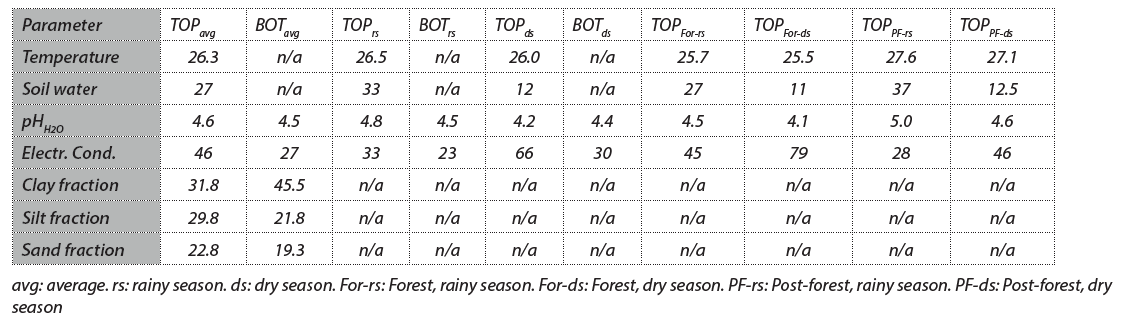
Table 2 shows these characteristics, averaged for the locations and sites discussed here. From a mineralogical and granulometric perspective, the higher percentages of clay-size material in the BOT layer reflect clay particle transport to deeper soil horizons (argillation or lessivage; Buringh, 1970). Lower BOT electrical conductivities corroborate this result, reflecting higher sorption capacity of the deeper, more clay mineral-rich layers. Distinct differences between dry and wet seasons emerge, with considerably higher electrical conductivities in the dry season that result from less dilution by fresh rainwater. Soil solution pH is higher in the rainy season, independent of land cover. However, while TOP pH values are distinctively higher than in BOT during the rainy season, this signal reverses in the dry season, albeit less strongly. This likely reflect the solubility (non-solubility) of anionic complexes and thus respective soil water content (SWC).
Similarly, significant differences appear between forest and post-forest landcover. While TOP soil temperatures show a minor signal of seasonal dynamics under forest canopy, this difference is more pronounced and shows at least 2 °C higher temperatures on post-forest sites as result of reduced shading and lower evapotranspiration rates. Soil water content, while much higher in the rainy season, is higher in post-forest soils. This can be explained by rapid loss of soil porosity and surface compaction with and after deforestation, forcing water to stay longer at the surface of post-forest sites. Soil solution pH values are higher in post-forest soils (+0.5 units), likely reflecting the interrupted (broken) rapid recycling process between forest plants and soil, where plants (namely trees) rapidly take up nutrients, including buffering base cations, and is possibly also due to individual liming (Table 3). These effects are corroborated by much higher electrical conductivities in forest soil solutions as compared to those of post-forest soils.
Macro and trace nutrient elements. Healthy plant growth demands availability of chemical elements, differentiated by macro (N, Mg, P, S, K, and Ca) and trace nutrients (B, Cl, Mn, Fe, Ni, Cu, Zn, and Mo), as well as components such as hydrogen, H; carbon, C; and oxygen, O. Compared to upper crustal averages (Rudnick & Gao, 2014) and world soil averages (Koljonen, 1992), most of these 14 determined elements are depleted in Amazonas mineral soil (Table 3). This is not true however, for Ct and Corg, N, Si, Cl, Mn, Fe, and Mo. Seasonal differences in physicochemical parameters (Table 2) are not reflected statistically in the pedogeochemical data, likely because the observation period as well as the time passed since deforestation (from months to a maximum of 60 years) is insufficient to show such change beyond doubt – except for carbon and nitrogen, where distinct differences develop rapidly with deforestation (Figure 2).
Table 3: Nutrient element concentrations [mg kg-1] in Amazonas soils (median values and ranges in ORG, TOP and BOT) in comparison with average upper continental crust (UCC*), world soil average (WSA*), and European data (FOREGS*). Data rounded for clarity. *See below for references.

Interseasonal variability is noticeable for both Corg and N in topsoil and is most pronounced in forest and agroforestry land use. Organic C is highest in forest and agroforestry, while nitrogen shows the highest values in forest topsoil, yet there is no statistically relevant difference to agroforestry and pastureland (Figure 2). Comparing all median forest soil data with those of post-forest soils shows subtle yet clear differences in both TOP and BOT soil layers, however (Table 4, and Matschullat et al., 2020: Tables 2 and 4). In both layers, Na, Mg, Si, P, K, Ca, Mn, and Fe show higher concentrations in post-forest soils, with strongest signals for Mg, K, and Ca, while carbon (Ct and Corg), nitrogen and sulfur show lower values in post-forest soils in the TOP layer; no difference is found in the deeper BOT layer. Those higher concentrations in post-forest soils are likely to be explained by soil management (fertilisation).

Figure 2: Organic carbon (top) and nitrogen (bottom) in lowland terra firme Amazonas topsoil – comparison between forest and post-forest grouped by land-use types. Phases 1 and 3: Wet seasons, phase 2: Dry season.
Carbon, including Corg, and N show similar average concentrations in lowland Amazonas mineral soils as the average of the European continent (Salminen et al., 2004). Such unexpectedly high C and N concentrations were published much earlier, by Sanchez and Buol (1975) and references therein. The reason likely lies in the very fast biogeochemical recycling of organic matter in the inner humid tropics, with permanent C and N replenishment in forest soils by their plant cover. Table 3 presents their very high values in biomass, here reflected by litter material (ORG). Truly depleted in the organic matter are Na, Co, Ni, and Mo, while C, N, Mg, S, Cl, K, Ca, and Mn are comparatively enriched. The depletion relates to both relatively high solubilities in the chemical weathering cycle (alkali and alkaline earth elements, P and S) as well as enhanced mobilities under highly acidic conditions (Co, Ni, Cu and Zn). The relative mineral soil enrichment of Cl and Mo may relate to lithology (soil mineralogy), to plant physiological activity (Mo: Gardner et al., 2014) and to soil biological (fungal) activity, typical for the humid tropics (Cl: Bastviken et al., 2007; Svensson et al., 2017).
Table 4: Comparison of median (nutrient) major, minor [wt-%] and trace elements [mg kg-1] values between forest and post-forest soils in the mineral soil layers TOP and BOT soils in Amazonas (this work).

Total and organic carbon significantly decrease from forest to post-forest soils in both TOP and BOT layers (Figure 2). The same is noticeable, albeit less pronounced, for nitrogen, sulfur and chlorine. Halogenides can be liberated with degradation of organic matter into soils (Keppler et al., 2003; Svensson et al., 2021). Carbon, N, S and Cl are closely related to microbial, particularly fungal, metabolism, which becomes suppressed with the transition from more or less undisturbed forest to post-forest ecosystems. Sodium, Mg, Si, P, K, Ca, Fe, Co, Ni, Zn, Cu and Mo show higher concentrations in the post-forest TOP soil material, and only Na, Mg, P, K, Fe, Co, Ni, Zn, and Co also in the post-forest BOT layers as compared to the forest soils. We attribute this to reflecting the strongly decreased soil-plant interface, where plants (mostly trees) no longer take up and store these elements in their biomass; it remains in the soil instead.
Soil gas exchange
Within a certain range of boundary conditions (soil pH, temperature and water content), soil gas exchange is relatively high in the inner humid tropics as compared to other climate zones; this is true independent of land-use type. Within the tropics (and elsewhere), wetlands tend to show the highest respiration rates (CO2 equivalents), followed by forested land, grassland, cropland and finally barren land (Oertel et al., 2016).
We observed distinct gas exchange differences between wet and dry seasons for CO2, CH4 and N2O, as well as for land cover (forest versus post-forest), (Figure 3). Forest soils show generally higher CO2 and N2O release and higher CH4 uptake rates than post-forest soils, with distinctively lower signals for each gas species in the dry season.

Figure 3: (Top) CO2, CH4 and N2O gas exchange at post-forest and forest sites. (Bottom) CO2 exchange, differentiated by the central and southern parts of the Amazon basin. Both Amazonas lowland (terra firme) soils. Phase 1 and 3: Wet seasons; phase 2: Dry season. Note the different scales (y-axes).
Forest soils showed the highest median CO2 emissions (in µmol m-2 s-1) with 5.46, followed by almost equal values for agriculture (3.38), pasture (3.32) and agroforestry (3.30). The same sequence was found for median N2O values (in µmol m-2 h-1) with forests showing 0.90, followed by agriculture (0.67), pasture (0.35), and agroforestry (0.28). Median values for CH4 (in µmol m-2 h-1) clearly show forests as a methane sink (-3.62), while agriculture (0.00) and agroforestry remained neutral (0.00) and only pastureland soils acted as source (1.25). The higher forest soil signals for CO2 and N2O certainly reflect higher soil microbial activity and root density as compared to those of post-forest soils. The sink quality of forest soils for CH4 do corroborate this outcome. That the post-forest land-use types do not show major differences between themselves appears reasonable given the limited period of time that has passed since deforestation. While post-forest soil emissions directly escape into the atmosphere, forest soil emissions largely stay within the tree canopy – the net escape signal into the atmosphere is lower than that of post-forest soils (Pan et al., 2011). Our laboratory CO2 values (gas chromatography) were very consistent with those measured earlier in-situ (not shown).
When separating the central part of Amazonas state (Amazonas-Solimões River “valley”) from the southern reaches of the basin (south of Transamazônica Highway near Rondônia and Acre states), relatively higher CO2 (and N2O, not shown) respiration signals emerge in the more humid central part. However, the central region appears to be a larger CH4 sink than the south (see Figure 3). This behaviour likely reflects more constant rainfall in the central part, even in the dry season – with related optimal water availability – as compared to the extreme drought experienced in September 2016. This argument is corroborated by the gas exchange behaviour in the three subsequent campaigns and a flux optimum between 20 and 40% SWC.
Obviously, forest soils represent more balanced and more resilient conditions compared to any post-forest land use. In topsoil, particularly carbon (Ct and Corg) is higher, and gas exchange shows the highest vitality in forest soil. While no significant differences emerged between agriculture and agroforestry in our study, pastureland clearly qualified as the worst possible post-forest land use, conforming findings of Bringhurst and Jordan (2015) and of Reiners et al. (1994).
Land-use alternatives
Decision makers often pursue and seek to encounter and apply a single ultimate solution for a complex issue. However, reality and scientific theory teach us that there are no simple or single-track solutions for complex problems, since many such problems are rather wicked and escape quick “fixes” (Ostrom et al., 2007; Rayner & Malone 1998). The issue of sustainable land-use management in the Amazon basin certainly belongs into this category. While simple solutions appear attractive, they may do more harm and damage than doing nothing. We therefore propose a different approach in form of a conceptual model that integrates project and external experience with long-term experience by Embrapa (the Brazilian Agricultural Research Corporation).
The Amazon biome and its socioeconomic challenges are a highly complex meta-system, not even fully understood by natural and social sciences. Overprinting this biome and its functionality with any kind of post-forest land use increases complexity in close spatial proximity to the original forest system. The various stages of biophysical immaturity of human demand-driven land cover develops its own dynamics. Small-scale slash-and-burn practices with rotating small-scale agriculture, such as practiced by indigenous people, have little more disturbing effect than a natural forest opening triggered by the loss of some large mature trees, e.g., felled by a tropical wind storm. Individual small-scale farming, independent of the type of plantation, is likely also of limited disturbance. Yet, collectively, many individual small-scale farms in close proximity to each other may rapidly magnify into a much larger-scale disturbance. In consequence, the biome becomes fragmented, comparable to the effects of large-scale industrial agriculture. Figure 4 shows land degradation in five-year increments from 1990 to 2015 near Boca do Acre (location 13 in Figure 1). Numerous small farmers rapidly transformed the original forest to dominantly pastureland and are now facing water scarcity and soil fertility decrease, since creeks are drying up and the remaining forest patches no longer supply enough water via water retention. Since 2017, Embrapa has been assisting individual farmers to re-establish “forest areas” at least alongside former creeks and valleys, aiming at re-establishing a minimum supply of water for cattle and people.
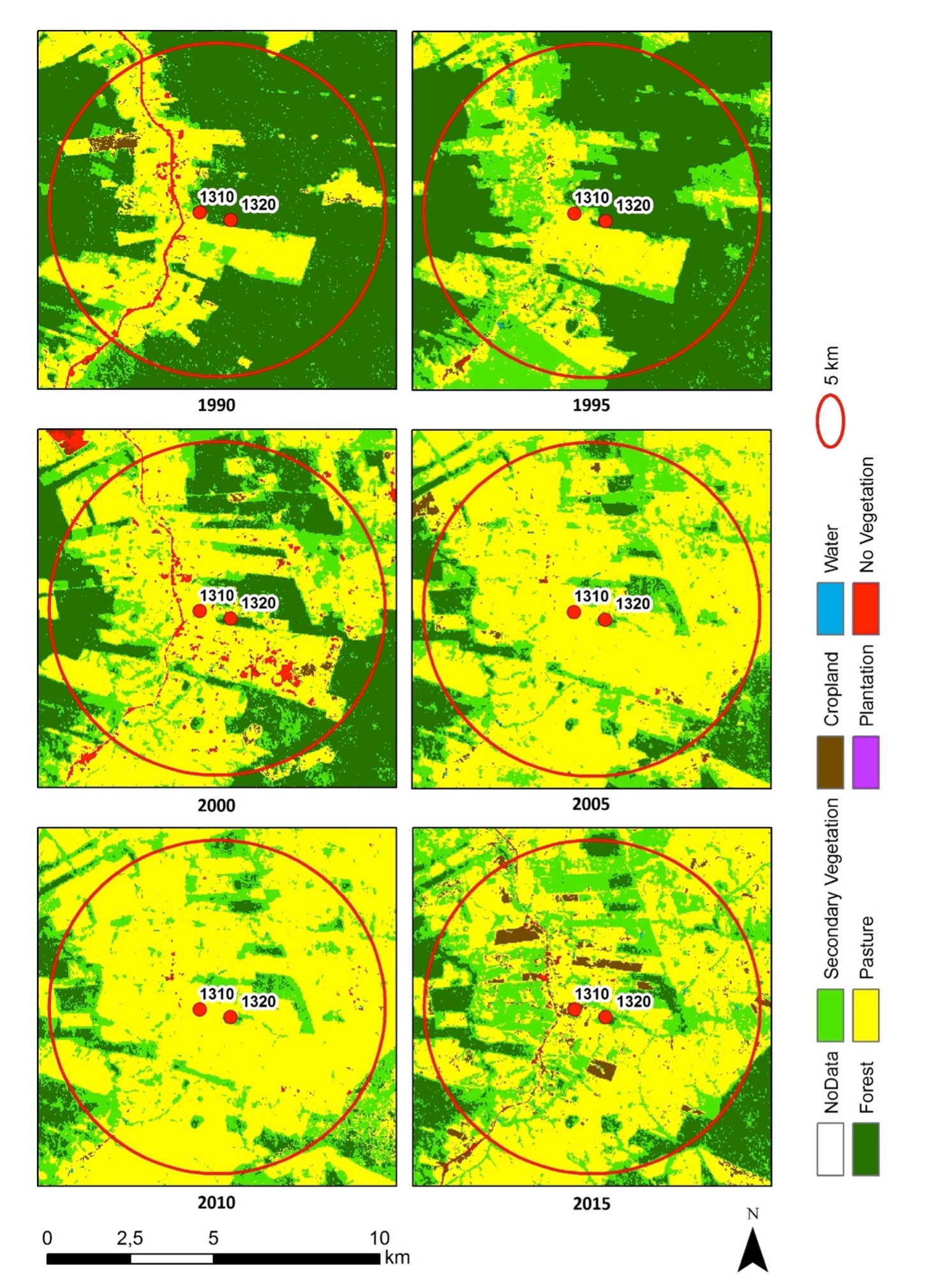
Figure 4: Land degradation dynamics near Boca do Acre (location 13) with time (1990–2015). The most prominent feature is the transition from forest (dark green) to pasture land (yellow).
Forest is the natural land cover for the Amazon biome. If humans with their current land-management practices retreated from the land, woodland would re-establish almost everywhere within years or decades. Such re-establishment would not be equal to a full recovery of the ecosystem, since the system would show its former disturbance for centuries. This is visible, in the biosphere reserve Adolfo Ducke near Manaus (location 04; Figure 1), where about 100 years after deforestation, the now protected system still shows impacts from the past (Oliveira et al., 2011). Recognising the relevance and importance of the natural Amazon rainforest biome for Brazil and beyond, and the doubtlessly detrimental effect of non-sustainable land use in the basin, society needs to think about ways out of this vicious cycle of a seemingly inescapable drive for more land grabbing for agriculture, agroforestry, settlements and industry, mining and other forms of natural resource exploitation (Brando et al., 2013).
Opposite to the example near Boca do Acre (location 13, Figure 4), an earlier devastated farm with pastureland near Itacoatiara (location 01; Figure 1) started to radically re-establish more natural land-use around 1990. The satellite images demonstrate that over the past 30 years, most of the formerly devastated soils have recovered under the canopy of newly planted Brazil nut trees with agroforestry economy (Figure 5), showing that carefully managed agroforestry may have significant beneficial effects.

Figure 5: Land (and soil) recovery by transition from devastated pastureland (1990) to dominantly agroforestry (2015) with Brazil nut plantation (Bertholletia excelsa Bonpl. in light green) near Itacoatiara (location 01).
Today, about 34 million people live in the Amazon basin. The population in the state of Amazonas state reached 4.207 million in 2020, with more than 2.2 million in the capital Manaus (IBGE 2021). Yet, this is very recent growth. Manaus had less than 300,000 inhabitants in 1980. Villages and towns that were home then to a few hundred to a few thousand residents are today (2020) home to tens of thousands. This also applies to the population dynamics of places near our sampling and experimental locations (see Figure 1) such as Itacoatiara (location 01, population 102,701), Rio Preto da Eva (location 02, 34,106), Apuí (locations 07 and 08, 22,359), Humaitá (location 09, 56,144), Lábrea (location 10, 46,882) and Boca do Acre (location 13, 34,635). Families established their lives and infrastructure has been developed. At present, hospitals, schools and even satellite campuses of universities, power plants, shopping centres, small airports and typical modern amenities can be found almost everywhere – not only in the state capitals.
Two key issues connected to this development appear underexplored. People with ethnic roots in Amazônia are a small minority today (data from governmental and NGO sources range between 80,000 and 200,000). Most people, even in more remote places, are immigrants from southern and north-eastern Brazil or from other countries. Most are still newcomers, since modern settlement started in the second half of the 20th century with the development of the Transamazônica Highway (Fearnside, 2005). Since immigrants came to develop the land and make a better life for themselves, a frontier spirit developed (similar to that in North America in the 19th century) with a clear emphasis on survival and economic success. Most of these people endured very tough conditions before they or their offspring reached a certain economic affluence, which can now be observed in many places. This affluence, however, came with the price of land degradation and massive deforestation in some places (Figure 4; Boca do Acre).
The people’s urge and need to survive and to succeed was coupled with rather reckless and ongoing suppression of indigenous people (first nations). With few exceptions, the radically different indigenous lifestyle has never been appreciated or even respected by most new immigrants. A perception of superiority over indigenous people has further hampered any attempt to learn from their long-term experience on how to deal with the harsh natural boundary conditions in the Amazon up to today.
In effect, new settlers mostly apply land management techniques that they imported from their home places. They force these techniques onto a radically different natural environment that cannot deal with the related impacts. Agricultural land may deliver decent yields for a limited number of years before soils become exhausted, leading the agriculturist and farmer to deforest more area for plantations or pastureland. The ever-growing immigrant population propagates the need for more land with every generation, demanding more and better infrastructures – driving a vicious cycle of biome disintegration and decay.
Brazilian and international scientists have produced a wide range of studies with robust data documenting the lack of social and environmental sustainability (Castro et al., 2019; Freitas & Freitas, 2018; Nobre et al., 2016; Pereira et al., 2019; Stewart et al., 2021) as well as the global risk of the ongoing hegemonic development path in the Amazon (Bastos Lima et al., 2020; Perreira & Viola, 2020). Such a path is characterised by the reduction of social and natural complexity in the Amazon region to an asset to be transformed into economic values in which the land is mostly owned by stakeholders outside of the Amazon region (Castro, 2019; Freitas & Freitas, 2018; Monteiro, 2005; Stewart et al., 2021; Urzedo & Chatterjee, 2021).
Changing this structure is no easy task and exceeds the competence and responsibility of science. It is the political system that has to organise decision-making processes leading to choices with broad social acceptance. Science-based observations of the way the political system operates in Brazil and in the Amazon states and municipalities can identify the structures that maintain the status quo and the obstacles to alternative development paths. The development agenda is mostly defined by players who see biological and geological diversity of the natural environment as a commodity only, able to be transformed into economic value (Abel, 2021; Aumeri and Bampi, 2019; Fearnside and De Alencastro Graça, 2006; Freitas & Freitas, 2018; Silva & Sobreiro, 2018; Urzedo & Chatterjee, 2021). That vision is highly appreciated and supported by the central government, which considers the Amazon as an important asset to serve national development interests (Carvalho et al., 2020; Oliveira Neto & Nogueira, 2020). Income generated by the export of mining, logging and agrarian products (meat, crops, etc.) contributes substantially to the national trade balance (Carvalho et al., 2020; Martins & Rugitsky, 2018). The central government widely and directly encourages these activities by special credit-rates and tax-liberation, and indirectly by failing to monitor or punish environmental legislation violations and by legalisation of land grabbing (Castro, 2019; Cardoso Jr & Rey, 2019).
On the other hand, economic actors who invest in sustainable forms of land and natural resource use receive next to no support from political authorities and may even face local resistance (Pokorny et al., 2014; Santos et al., 2021). Although economic viability and the success of more environmentally prudent forms of natural resource usage can be demonstrated, these still form a niche in the Amazonian economy (Gasperini & Gomes, 2020).
Dispute about the development path of a region is a political one, characterised by a battle of ideas and actors with different economic and political power (Lacerda, 2019; Moreira & Pereira, 2020; Sobrinho et al., 2018). It is crucial that a scientific community committed to a project dealing with aspects of a future society alongside social and environmental sustainability take an active role in the political dispute. Such positioning becomes even more important when public discussion is increasingly characterised by fake news and a growing aversion to scientific explanations in favour of those that deny complexity (Biancovilli et al., 2021; Figueira & Oliveira, 2017; Giordani et al., 2021; Silva & Viera, 2021). In respect to the Amazon, global networks that back local researchers and enable the exchange of experience with other regions of the humid tropics are most helpful. In doing so, universities – as a fundamental element of the scientific system – can assume a more proactive role as adviser or mediator in political decision-making processes regarding future choices of development paths of the region where they are socially and economically embedded (Mathis, 2001).
Approaches to problem-solving – Hypotheses
The following hypotheses are derived from numerous informal interviews with local people, mostly farm families.
- Some farmers do understand that their activities are non-sustainable;
- Such farmers do not want to degrade their land;
- Most farmers have no knowledge on how to change their practices without compromising their economic survival;
- The younger generation, often with some higher educational background, mostly wishes to stay in the region;
- This generation seeks answers to the described issues and wants to find solutions;
- There is critical mass in the current “immigrant” population that wishes to live and produce more sustainably;
- Solutions or more precisely, distinct improvements towards more sustainable land use without compromising peoples’ right to live and prosper, can be found on a local level only;
- Many if not most people in the region feel neglected by politicians and decision-makers in the capitals;
- A spirit of “every man for himself” prevails.
If we accept the additional hypothesis that only forestland is appropriate and sustainable for Amazon basin boundary conditions, then the direction to be taken must be towards maximum preservation of this natural resource. If we likewise accept results of acknowledged scientific studies that large-scale conventional agriculture for cash crops (independent of whether it consists of very large single farms or very many much smaller ones) can lead to quick soil impoverishment (nutrient loss, compaction, etc.) and soil loss (erosion), then we must stop this development and establish much tighter and efficient control to prevent further increase in such non-sustainable land use.
Yet there are 34 million people who already live there, have a right to live there and have the natural human wish to prosper and to further develop their region. To this respect, the Amazônia challenge is no different from other global challenges that demand human behavioural change as a prerequisite to betterment. This understanding that the challenge is of major dimensions and will not and cannot be met by piecemeal approaches bears the key for finding pathways to solutions (Figure 6).

Figure 6: Pathway to a more sustainable future of the human–nature interface in the Amazon basin
Seven Pathways to solutions
- Allow for many and highly “individualised” solutions. Try all options that have not proven false or misleading already. No one single roadmap can fix the issues. Instead, numerous pathways could help reach the aim, since local conditions highly differ from place to place with respect to social, economic and natural conditions – the sustainability triad.
- Open alternatives, think out of the box, use local potential – and include indigenous experience. Solutions, or more precisely distinct improvements towards more sustainable land use without compromising peoples’ right to live and prosper can be found on a local level only. Targeting individual farms and developing better land management techniques that make use of the potential without exhausting it is one of the necessary steps. Another step lies in fulfilling the demands of people without necessarily allowing for business-as-usual activities. Related alternatives can include very different, non-agriculture-related job opportunities or paying for the recovery of ecosystem services on a farm rather than for typical farm products (Börner et al., 2010; Nicholaides et al., 1985).
- Stop business as usual and explore higher levels of the value chain. Since the Amazon biome is not suited for successful long-term intensive conventional agriculture (neither plant nor animal production), alternatives are needed besides small-scale sustainable agricultural practice. So far, the potential for the productive industrial sector has been radically underexplored, with Manaus being the only place with noticeable industrial production activities. Since industry, including mining, can be done with much smaller ecological footprints than agriculture (Bansal, 2005; Matschullat & Gutzmer, 2012; Owen & Kemp, 2013), it appears worthwhile to actively pursue specific and environmentally-benign industrial development. However, development without compromises in the qualities of air, water and soils as well as social issues does not emerge without commitment to functional and honest governmental institutions nor clear environmental assessment studies, must follow the highest standards and use the best available technologies. Such development could and would turn Amazonas into a radically different human environment.
- Make serious and ambitious long-term plans and think from the end, not the start. Just as building the Transamazônica Highway was a serious challenge, involved national effort, and triggered a spirit comparable to sending the first humans to the Moon, similar effort and enthusiasm is required to manage the transition from current ways of non-sustainable life in the Amazon basin to a benign and yet beneficial for-the-people lifestyle. Such transition cannot be brought about overnight. Yet in the next 30 years, significant steps can be made that may halt the current rate of deforestation and degradation without forcing people away from the basin. Obviously, this calls for a concerted action plan and full support by the Federal Government and all its ministries as well as all state governments involved with their authorities. Such a master plan demands clear priority setting and perseverance.
- Appreciate local knowledge and experience, plan with the people, not above the people. They have to (and want to) live there and bear the consequences. Instead of any further (half-hearted) top-down-only attempt to mitigate deterioration of the Amazon biome and to develop sustainable adaptation to the environment, we suggest an accompanied bottom-up approach. People are suspicious of “politics” and politicians and are unlikely to collaborate if they feel that they are being forced to change by government. Existing, albeit relatively weak stakeholders in the region, who are willing and capable of becoming active players in reaching the prescribed aim, should receive the capacity to work on those changes that their specific social and natural boundary conditions permit. Many examples of local community spirit exist, partly groups of immigrants from the same area or region (e.g., Northeasteners or Southerners). There are established bodies such as IDAM (Institute for Sustainable Agriculture and Forestry Development of the State of Amazonas) under the wings of Embrapa – and the highly respected Embrapa itself. Both Embrapa and IDAM are closely linked with local agriculturists and farmers, a promising base for developing platforms and movement for successful change at that end.
- Transform existing institutions to provoke better collaboration, to decrease futile activism and to increase efficiency. Informal and creative education tools, such as those developed by FEAM (State Environmental Foundation) in Minas Gerais for village communities near mine sites (Oberdá et al., 2011) can – if done with engaged and well-trained personnel – lead to rather rapid behavioural change, provided that realistic alternative options are being offered. Stakeholders must develop the necessary awareness and understanding for the issue. It is unrealistic to assume that any such positive change can take place without incentives and significant governmental investment. While this notion may appear to contradict any bottom-up approach, it does not: the allocation of funding and infrastructure must not equal dominance over decisions on how money is spent and which kind of infrastructure is to be developed. It appears likely, however, that an existing body (such as IPAAM, Institute for Environmental Protection of Amazonas) or a newly created authority is needed to coordinate related efforts and to act as the interface between government with its authorities and the many local activities. Concerted long-term action demands concrete, concise and creative yet realistic planning, bolstering the public perception and appreciation of milestone achievements (Schönenberg et al., 2015).
- Make sure that all plans get scrutinised, and that independent capable experts critically evaluate all steps along the way. A coalition of state authorities with NGO’s and citizen committees has the potential to trigger sustainable change, to entice people to adapt and to progress towards a much less detrimental future for the Amazon basin. Science cannot – and should not – drive this process. Science can and should monitor and analyse the changes, both from the human perspective (sociology, social psychology) and the natural perspective (ecosystem recovery and change). Do not worry about necessary course corrections along the way. People can – and should – drive this process and be encouraged and respected in their efforts. Amazonians do have the chance to find ways towards equilibrium between their Amazon biome and its needs and their own demands. Every successful step in that direction will entice others and make Amazonians proud of their achievement – an important driver of positive development. It is not too late at all and the benefit doubtlessly is extremely significant capital for Brazilian’s future.
Conclusions
Persistence of any human system poses major challenges to those who intend to change that system – even if negative consequences of a specific established system may be apparent. This statement is likewise true for “modern” land use management in the inner humid tropics such as the Brazilian Amazon biome. If conventional practices reach their limits, then which sustainable land-use alternatives could emerge? To help elucidate that crucial question, we aimed at improved understanding of both the current chemical soil status and its gas exchange characteristics in direct comparison between little or undisturbed forest land as the natural land cover variant and various types of post-forest land-use.
- The first hypothesis that “Amazon soils are truly nutrient and carbon depleted” was rejected. The soils are not carbon (nor nitrogen depleted), and the same holds true for Si, Cl, Mn, Fe, and Mo. The other macro and micronutrients are clearly depleted. This can be explained through weathering processes and solute export as well as through fast recycling in the short circle between soils, plants and atmosphere.
- The second hypothesis that “Forest soils are less depleted than post-forest soils” was verified for a few elements only, namely carbon, nitrogen, sulphur and chlorine. The other analytes showed relative enrichment at least in the TOP layer, likely reflecting a shift in metabolic boundary conditions.
- The third hypothesis, “Gas exchange distinctively differs between forest and post-forest soils” was verified and corresponds to both reduced soil microbial activity as well as to decreased water storage capacity in post-forest soils. Forest soils are the most vital ones.
- The fourth hypothesis that “Agroforestry appears to be the best-adapted type of post-forest land cover” was verified. Pastureland is more damaging than other types of post-forest land cover.
- The fifth hypothesis “Sustainable alternatives to current land-use practices in the Amazon basin biome are possible” can be responded to on a theoretical level only, since current political and managerial land-use practice does not allow for practical evaluation.
- Sustainable management of the Amazon biome requires integrated analysis of the system as a socio-ecological system. Coupling human data (e.g., stakeholder sense of place) with ecological data (e.g., carbon and nutrient cycling, hydrological processes) can potentially isolate opportunities for restoration and building stakeholder attachment to a high-functioning ecosystem state.
Our data corroborate the many findings that the vulnerability of the biome is very high and critical large-scale forests need to be preserved to ensure long-term prosperity in the region. Science per se can deliver evidence and make meaningful suggestions to avoid or at least mitigate problems – it cannot implement societal change. Here, homo politicus is in demand to “make things happen”.
Acknowledgements
The authors thankfully acknowledge funding through the German Federal Ministry of Economic Cooperation and Development (BMZ) via the German Academic Exchange Service (DAAD) and Deutsche Gesellschaft für Internationale Zusammenarbeit (GIZ) through the NoPa2 project line for their continued support. Prof. Dr. Celso Paulo de Azevedo (Embrapa Amazonas Ocidental) and Dr. Alaerto Luiz Marcolan (Embrapa Rondônia) were invaluable in their infrastructural support and ongoing interest in our work. Numerous helpers in the field, namely the then students Laura Medeiros Braga, Thomas Drauschke, Julia Becher, Marcelo de Oliveira Teles and Carolin Schröder as well as Dr. Kamal Zurba (TU BAF), gave everything to make the field work possible, significantly supported and enhanced by Bruno Scarazatti, Cintia R. Souza, Ednilson Alves Figueiredo, Joel Gomes, Kikue Moroya, and Mabiane França (all Embrapa), as well as Drs. João Batista Gomes, Johannes van Leeuwen and Jorge Emídio Carvalho Soares (all INPA). In the Freiberg laboratories, former student Karsten Gustav and the entire team with Thurit Tschöpe, Ulrike Fischer, Claudia Malz, Heidrun Kodym, Elvira Rüdiger and Bianca Marschner, deserve a big thank you for their diligent and disciplined work on the sample materials. We are thankful for most constructive criticism of two anonymous referees, and to Héloïse Noblet, intern, and Oriana Blandon Pulido, MSc student, for helping with the French and Spanish abstract translations, respectively. A final big Thank you goes to all agriculturists and staff at each of the 13 locations. Their hospitality and support remain highly appreciated. Last but not least, we wish to acknowledge highly constructive language editing by Robin Nagano from the editorial office.
References
Abel, M. 2021. Transnational grain trade threatens Brazil’s Amazon. NACLA Report on the Americas 53, 1: 26-31. doi 10.1080/10714839.2021.1891630
Alvarado, A. 2016. Plant nutrition in tropical forestry. In: Pancel L, Köhl M (eds), Tropical Forestry Handbook. Springer, Berlin, Heidelberg. doi 10.1007/978-3-642-54601-3_105
Aumeri, C.A.F. de, Bampi, C. 2019. Regional dynamics of the Brazilian Amazon: Between modernization and land conflicts. Cuadernos de Geografía: Revista Colombiana de Geografía, 28, 2: 340-356. doi 10.15446/rcdg.v28n2.72872
Bansal, P. 2005. Evolving sustainably: A longitudinal study of corporate sustainable development. Strategic Management Journal, 26, 3: 197-218; doi 10.1002/smj.441
Bastos Lima, M.G., Harring, N., Jagers, S.C., Löfgren, Å., Persson, U.M., Sjöstedt, M., Brülde, B., Langlet, D., Steffen, W., Alpízar, F. 2020. Large-scale collective action to avoid an Amazon tipping point – Key actors and interventions. Current Research in Environmental Sustainability, 3: 100048; doi 10.1016/j.crsust.2021.100048
Bastviken, D., Thomsen, F., Svensson, T., Karlsson, S., Sandén, P., Shaw, G., Matucha, M., Öberg, G. 2007. Chloride retention in forest soil by microbial uptake and by natural chlorination of organic matter. Geochimica Cosmochimica Acta, 71: 3182–3192; doi 10.1016/j.gca.2007.04.028
Betts, R.A., Malhi, Y., Roberts, J.T. 2008. The future of the Amazon: new perspectives from climate, ecosystem and social sciences. Philosophical Transactions of the Royal Society B, 363: 1729-1735; doi 10.1098/rstb.2008.0011
Biancovilli, P., Makszin, L., Jurberg, C. 2021. Misinformation on social networks during the novel coronavirus pandemic: a quali-quantitative case study of Brazil. BMC Public Health, 21, 1:1200; doi 10.1186/s12889-021-11165-1
Börner, J., Wunder, S., Wertz-Kanounnikoff, S., Tito, MR., Perreira, L., Nascimento, N. 2010. Direct conservation payments in the Brazilian Amazon: Scope and equity implications. Ecological Economics. 69, 6: 1272-1282; doi 10.1016/j.ecolecon.2009.11.003
Brando, P.M., Coe, M.T., deFries, R., Azevedo, A.A. 2013. Ecology, economy and management of an agroindustrial frontier landscape in the southeast Amazon. Philosophical Transactions of the Royal Society B, 368, 1619; doi 10.1098/rstb.2012.0152
Bringhurst, K., Jordan, P. 2015. The impact on nutrient cycles from tropical forest to pasture conversion in Costa Rica. Sustainable Water Research Management, 1: 3–13; doi 10.1007/s40899-015-0003-x
Buringh, P. 1970. Introduction to the Study of Soils in Tropical and Subtropical Regions, 2nd ed. Wageningen: Centre for Agricultural Publishing and Documentation. https://edepot.wur.nl/214911
Cardoso Júnior, J.C.P., Rey, K.M.M. 2019. A zona franca de Manaus pós constituição federal de 1988: Trinta anos de desafios para a reinvenção do modelo de desenvolvimento da Amazônia (The Manaus Free Trade Zone after the 1988 Federal Constitution: Thirty years of challenges for reinventing the Amazon development model). Rev Ciência Trópico 43 ed espec; 227-252; doi 10.33148/CeTropico_v.43n.esp(2019)p.221-246
Carvalho, T.S., Souza, K.B. de, Domingues, E.P. 2020. Commodities demand growth and its impacts on deforestation and CO2 emissions in the Brazilian Amazon region. 23rd Ann Conf Global Econ Anal (Virtual Conf); https://www.gtap.agecon.purdue.edu/resources/res_display.asp?RecordID=6026
Castro, M.C., Baeza, A., Torres Codeço, C., Cucunubá, Z.M., Dal’Asta, A.P., De Leo, G.A., Dobson, A.P., Carrasco-Escobar, G., Martins Lana, R., Lowe, R., Vieira Monteiro, A.M., Pascual, M., Santos-Vega, M. 2019. Development, environmental degradation, and disease spread in the Brazilian Amazon. PLoS Biology, 17, 11: e3000526. doi 10.1371/journal.pbio.3000526
Castro, R.A. 2019. Os incentivos do programa grande Carajás às grandes empresas e as repercussões em comunidades rurais (The incentives for large companies under the Greater Carajás programme and the repercussions on rural communities). HOLOS 35, 6: e5573. doi 10.15628/holos.2019.5573
Fearnside, P.M. 2005. Deforestation in Brazilian Amazonia: History, rates and consequences. Conservation Biology, 19, 3: 680-688
Fearnside, P.M., De Alencastro Graça, P.M.L. 2006. BR-319: Brazil’s Manaus-Porto Velho Highway and the potential impact of linking the Arc of Deforestation to Central Amazonia. Environmental Management 38, 5: 705-716. doi 10.1007/s00267-005-0295-y
Figueira, A., Oliveira, L. 2017. The current state of fake news: Challenges and opportunities. Procedia Computer Science, 121: 817–825; doi 10.1016/j.procs.2017.11.106
Freitas, M. de, Freitas, M.C. de S. 2018. Regional development for sustainability in Amazonia: Controversies and challenges. Geography Environment Sustainability, 11, 4:112-131; doi 10.24057/2071-9388-2018-11-4-112-131
Gardner, C.B., Lyons, W.B., Litt, G., Ogden, F.L. 2014. Rock-derived micronutrient transport in the tropics: Molybdenum cycling in deeply-weathered Panama soils. Procedia Earth and Planetary Science, 10: 266-270. doi 10.1016/j.proeps.2014.08.057
Gasperini, M.M., Gomes, M.F. 2020. A integração lavoura pecuária floresta como alternativa para o desenvolvimento sustentável no agronegócio (Crop-livestock forest integration as an alternative for sustainable development in agribusiness). CONPEDI Law Revew, 6, 1: 01-18. doi 10.26668/2448-3931_conpedilawreview/2020.v6i1.6681
Gatti, L.V., Basso, L.S., Miller, J.B., Gloor, M., Gatti Domingues, L., Cassol, H.L.G., Tejada, G., Aragão, L.E.O.C., Nobre, C., Peters, W., Marani, L., Arai, E., Sanches, A.H., Corrêa, S.M., Anderson, L., Von Randow, C., Correia, C.S.C., Crispim, S.P., Neves, R.A.L. 2021. Amazonia as a carbon source linked to deforestation and climate change. Nature, 595, 388–393. doi 10.1038/s41586-021-03629-6
Giordani, R.C.F., Giordani Donasolo, J.P., Both Ames, V.D., Giordani, R.L. 2021. A ciência entre a infodemia e outras narrativas da pós-verdade: desafios em tempos de pandemia (Science between infodemy and other post-truth narratives: challenges in times of pandemic). Ciência Saúde Coletiva, 26, 7: 2863-2872. doi 10.1590/1413-81232021267.05892021 2863
Gullison, R.E., Frumhoff, P.C., Canadell, J.G., Field, C.B., Nepstad, D.C., Hayhoe, K., Avissar, R., Curran, L.M., Riedlingstein, P., Jones, C.D., Nobre, C. 2007. Tropical Forests and Climate Policy. Science, 316, 5827: 985-986. doi 10.1126/science.1136163
IBGE. 2021. Cidades e estados (Cities and states). Governmental statistics by the Instituto Brasileiro de Geografia e Estatística https://www.ibge.gov.br/cidades-e-estados/am.html (last access November 2021)
IPCC. 2021. Climate Change 2021: The Physical Science Basis. Contribution of Working Group I to the 6th Assessment Report of the Intergovernmental Panel on Climate Change [Masson-Delmotte, V., Zhai, P., Pirani, A., Connors, S.L., Péan, C., Berger, S., Caud, N., Chen, Y., Goldfarb, L., Gomis, M.I., Huang, M., Leitzell, K., Lonnoy, E., Matthews, J.B.R., Maycock, T.K., Waterfield, T., Yelekçi, O., Yu, R., Zhou, B. (eds)]. Cambridge: Cambridge University Press. In Press
Jiménez-Muñoz, J.C., Mattar, C., Barichivich, J., Santamaria-Artigas, A., Takahashi, K., Malhi, Y., Sobrino, J.A., van der Schrier, G. 2016. Record-breaking warming and extreme drought in the Amazon rainforest during the course of El Niño 2015-2016. Nature Science Reports, 6: 33130. doi 10.1038/serp33130
Juo, A.S.R., Franzluebbers, K. 2003. Tropical Soils: Properties and Management for Sustainable Agriculture. Oxford: Oxford University Press.
Keppler, F., Biester, H., Putschew, A., Silk, P.J., Schöler, H.F., Müller, G. 2003. Organoiodine formation during humification in peatlands. Environmental Chemistry Letters, 1: 219-223. doi 10.1007/s10311-003-0044-5
Kibler, K., Cook, G., Chambers, L., Donnelly, M., Hawthorne, T., Rivera, F., Walters, L. 2018. Integrating sense of place into ecosystem restoration: a novel approach to achieve synergistic social-ecological impact. Ecology and Society, 23, 4: 25. doi 10.5751/ES-10542-230425
Koljonen, T (ed) 1992. The Geochemical Atlas of Finland — Part 2: Till. Espoo: Geological Survey of Finland.
Kroeger, M.E., Delmont, T.O., Eren, A.M., Meyer, K.M., Guo, J., Khan, K., Rodrigues, J.L.M., Bohannan, B.J.M., Tringe, S.G., Borges, C.D., Tiedje, J.M., Tsai, S.M., Nüsslein, K. 2018. New biological insights into how deforestation in Amazonia affects soil microbial communities using metagenomics and metagenome-assembled genomes. Frontiers in Microbiology, 9: 1635. doi 10.3389/fmicb.2018.01635
Krogh, A. 2020. State of the tropical rainforest. Rainforest Foundation Norway. https://d5i6is0eze552.cloudfront.net/documents/Publikasjoner/Andre-rapporter/RF_StateOfTheRainforest_2020.pdf?mtime=20210505115205
Lacerda, R.B. 2019. Brigar junto contra o governo: alianças e disputas na implantação de um plano de desenvolvimento sustentável (Fighting together against the government: alliances and disputes in the implementation of a sustainable development plan). Revista Brasileira Ciências Sociais, 34, 100: e3410008 2019. doi 10.1590/3410008/2019
Laurance, W.F., Sayer, J., Cassman, K.G. 2013. Agricultural expansion and its impacts on tropical nature. Trends in Ecology & Evolution, 29, 2: 107-116. doi 10.1016/j.tree.2013.12.001
Lenton, T.M., Held, H., Kriegler, E., Hall, J.W., Lucht, W., Rahmstorf, S., Schellnhuber, H.J. 2008. Tipping elements in the Earth’s climate system. Proceedings of the National Academy of Sciences, 105, 6: 1786-1793. doi 10.1073/pnas.0705414105
Lewis, S.L., Brando, P.M., Phillips, O.L., vander Heijden, G.M.F., Nepstad, D. 2011. The 2010 Amazon drought. Science, 331: 554. doi 10.1126/science.1200807
Longobardi, P., Montenegro, A., Beltrami, H., Eby, M. 2016. Deforestation induced climate change: Effects of spatial scale. PLOS One, 11, 4: e0153357. doi 10.1371/journal.pone.0153357
Marengo, J.A. 2006. On the hydrological cycle of the Amazon basin: A historical review and current state-of-the-art. Revista Brasileira de Meteorologia, 21, 3a: 1-19.
Martins, G.K., Rugitsky, F. 2018. The commodities boom and the profit squeeze: Output and profit cycles in Brazil (1996–2016). The School of Economics, Business and Accounting, University of São Paulo, FEA-USP Working Paper No. 2018-09.
Mathis, A. 2001. Instrumentos para o desenvolvimento sustentável regional (Instruments for sustainable regional development). Adcontar Revista do Centro de Estudos Administrativos e Contábeis, Belém, Pará 2, 2: 19-30
Matschullat, J., Gutzmer, J. 2012. Mining and its environmental impacts. In: Meyers, R.A. (ed.), Encyclopedia of Sustainability Science and Technology, Vol. 9: New York: Springer Verlag. pp. 6633–6645. doi 10.1007/978-1-4419-0851-3
Matschullat, J., Deschamps, E. 2015. What is a successful environmental geochemical study? Applied Geochemistry, 63: 634–641. doi 10.1016/j.apgeochem.2015.08.011
Matschullat, J., Coimbra Martins, G., Enzweiler, J., Fromm, S.F. von, Leeuwen, J. van, Monteiro Bezerra de Lima, R., Schneider, M., Zurba, K. 2020. What influences upland soil chemistry in the Amazon basin, Brazil? Major, minor and trace elements in the upper rhizosphere. Journal of Geochemical Exploration, 211: 106433. doi 10.1016/j.gexplo.2019.106433
Medina, E., Klinge, H., Jordan, C., Herrera, R. 1980. Soil respiration in Amazonian rain forests in the Rio Negro basin. Flora, 170, 3: 240-259. doi 10.1016/S0367-2530(17)31209-4
Monteiro, M. de A. 2005. Meio século de mineração industrial na Amazônia e suas implicações para o desenvolvimento regional (Half a century of industrial mining in Amazonia and its implications for regional development). Estudos Avançados, 19, 53: 187-207. doi 10.1590/S0103-40142005000100012
Moran, E.F. 1981. Developing the Amazon. Bloomington: Indiana University Press.
Moreira, E.S., Pereira, A.d.R. 2020. Government and popular participation in the Brazilian eastern Amazon region. International Journal of Advanced Engineering Research and Science, 7, 4: 223-226. doi 10.22161/ijaers.74.29
Nagy, L., Forsberg, B., Artaxo, P. 2016. Interactions Between Biosphere, Atmosphere and Human Land Use in the Amazon Basin. Ecological Studies Series Vol. 227. Berlin, Heidelberg: Springer Science.
Nepstad, D., McGrath, D., Stickler, C., Alencar, A., Azevedo, A., Swette, B., Bezerra, T., DiGiano, M., Shimada, J., Da Motta, R.S., Armijo, E., Castello, L. 2014. Slowing Amazon deforestation through public policy and interventions in beef and soy supply chains. Science, 344, 6188: 1118-1123. doi 10.1126/science.1248525
Nicholaides III, J.J., Bandy, D.E., Sanchez, P.A., Benites, J.R., Villachica, J.H., Coutu, A.J., Valverde, C.S. 1985. Agricultural alternatives for the Amazon basin. Biosciences, 35, 5: 279-285. doi 10.2307/1309926
Nobre, C.A., Sampaio, G., Borma, L.S., Castilla-Rubio, J.C., Silva, J.S., Cardoso, M. 2016. Land-use and climate change risks in the Amazon and the need of a novel sustainable development paradigm. Proceedings of the National Academy of Sciences, 113, 39: 10759-10768. doi 10.1073/pnas.1605516113
Oberdá, S., Deschamps, E., Fittipaldi, L. 2011. Environmental and health education. In: Deschamps, E., Matschullat, J. (eds.), Arsenic: Natural and Anthropogenic. Boca Raton: CRC Press.
Oertel, C., Matschullat, J., Zurba, K., Zimmermann, F., Erasmi, S. 2016. Greenhouse gas emissions from soils—A review. Geochemistry, 76, 3: 27-352. doi 10.1016/j.chemer.2016.04.002
Oliveira, M.L., Baccaro, F.B., Braga-Neto, R., Magnusson, W.E. 2011. Reserva Ducke. A biodiversidade Amazônica através de uma grade (Amazonian Biodiversity Through a Grid). Manaus: Editora INPA.
Oliveira Neto, T., Nogueira, R. 2020. Circulação do transporte de commodities agrícolas na Amazônia (Circulation of agricultural commodities transportation in the Amazon). Revista de Geografia e Ordenamento do Território (GOT), 19: 74-105. doi 10.17127/got/2020.19.004
Ostrom, E., Janssen, M.A., Anderies, J.M. 2007. Going beyond panaceas. Proceedings of the National Academy of Sciences, 104, 39: 15176-15178. doi 10.1073/pnas.0701886104
Owen, J.R., Kemp, D. 2013. Social licence and mining: A critical perspective. Resources Policy, 38, 1: 29-35. doi 10.1016/j.resourpol.2012.06.016
Pan, Y., Birdsey, R.A., Fang, J., Houghton, R., Kauppi, P.E., Kurz, W.A., Phillips, O.L., Shvidenko, A., Lewis, S.L., Canadell, J.G., Ciais, P., Jackson, R.B., Pacala, S.W., McGuire, A.D., Piao, S., Rautiainen, A., Sitch, S., Hayes, D. 2011. A large and persistent carbon sink in the World’s forests. Science, 333, 6045: 988-993. doi 10.1126/science.1201609
Pereira, E.J. de A.L., Silveira Ferreira, P.J., de Santana Ribeiro, L.C., Sabadini Carvalho, T., Borges de Barros Pereira, H. 2019. Policy in Brazil (2016–2019) threaten conservation of the Amazon rainforest. Environmental Science & Policy 100: 8-12. doi 10.1016/j.envsci.2019.06.001
Perreira, J.C., Viola, E. 2020. Close to a Tipping Point? The Amazon and the challenge of sustainable development under growing climate pressures. Journal of Latin American Studies, 52, 3: 467-494. doi 10.1017/S0022216X20000577
Phillips, O.L., Aragão, L.E., Lewis, S.L., Fisher, J.B., Lloyd, J., López-González, G., Malhi, Y., Monteagudo, A., Peacock, J., Quesada, C.A., van der Heijden, G., Almeida, S., Amaral, I., Arroyo, L., Aymard, G., Baker, T.R., Bánki, O., Blanc, L., Bonal, D., Brando, P., Chave, J., de Oliveira, A.C., Cardozo, N.D., Czimczik, C.I., Feldpausch, T.R., Freitas, M.A., Gloor, E., Higuchi, N., Jiménez, E., Lloyd, G., Meir, P., Mendoza, C., Morel, A., Neill, D.A., Nepstad, D., Patiño, S., Peñuela, M.C., Prieto, A., Ramírez, F., Schwarz, M., Silva, J., Silveira, M., Thomas, A.S., Steege, H.T., Stropp, J., Vásquez, R., Zelazowski, P., Alvarez Dávila, E., Andelman, S., Andrade, A., Chao, K.J., Erwin, T., Di Fiore, A., Honorio, C.E., Keeling, H., Killeen, T.J., Laurance, W.F., Peña Cruz, A., Pitman, N.C., Núñez Vargas, P., Ramírez-Angulo, H., Rudas, A., Salamão, R., Silva, N., Terborgh, J., Torres-Lezama, A. 2009. Drought sensitivity of the Amazon rainforest. Science, 323, 5919:1344-1347. doi 10.1126/science.1164033
Pokorny, B., Godar, J., Hoch, L., Johnson, J., de Koning, J., Medina, G., Steinbrenner, R., Vos, V., Weigelt, J. 2014. A produção familiar como alternativa de um desenvolvimento sustentável para a Amazônia: Lições aprendidas de iniciativas de uso florestal por produtores familiares na Amazônia boliviana, brasileira, equatoriana e peruana (Family production as a sustainable development alternative for Amazonia: Lessons learned from forest use initiatives by family producers in the Bolivian, Brazilian, Ecuadorian and Peruvian Amazonia). Center for Internatational Forest Research (CIFOR). doi 10.17528/cifor/003324
Quesada, C.A., Lloyd, J., Schwarz, M., Patiño, S., Baler, T.R., Czimczik, C., Fyllas, N.M., Martinelli, L., Nardoto, G.B., Schmerler, J., Santos, A.J.B., Hodnett, M.G., Herrera, R., Luizão, F.J., Arneth, A., Lloyd, G., Dezzeo, N., Hilke, I., Kuhlmann, I., Raessler, M., Brand, W.A., Geilmann, H., Moraes Filho, J.O., Carvalho, F.P., Araujo Filho, R.N., Chaves, J.E., Cruz Junior, O.F., Pimentel, T.P., Paiva, R. 2010. Variations in chemical and physical properties of Amazon forest soils in relation to their genesis. Biogeosciences, 7: 1515-1541. doi 10.5194/bg-7-1515-2010
Rayner, S., Malone, E. (eds.). 1998. Human Choice and Climate Change. Columbus, Ohio: Battelle Press.
Reiners, W.A., Bouwman, A.F., Parsons, W.F.J., Keller, M. 1994. Tropical rain forest conversion to pasture: Changes in vegetation and soil properties. Ecological Applications, 4, 2: 363-377. doi 10.2307/1941940
Rudnick, R.L., Gao, S. 2014. 4.1 – Composition of the Continental Crust. In: Holland, H.D., Turekian, K.K. (eds). Treatise on Geochemistry 4, 2nd ed. Amsterdam: Elsevier Science. pp. 1-51.
Salminen. R (ed.) 2005. Geochemical Atlas of Europe. Part 1: Background Information, Methodology and Maps. Espoo: Geological Survey of Finland.
Sanchez, P.A. 2019. Properties and Management of Soils in the Tropics. 2nd ed. Cambridge: Cambridge University Press. doi 10.1017/9781316809785
Sanchez, P.A., Buol, S.W. 1975. Soils of the tropics and the world food crisis. Science, 188: 598-603.
Santos, A.B., Sousa Rocha, J., Zau Mafra, R., Couto Ferreira, M.A. 2021. A relevância da bioeconomia para o desenvolvimento regional: Estudo de caso em uma empresa de biocosméticos do estado do Amazonas (The relevance of bioeconomy to regional development: a case study in a biocosmetics company in Amazonas). Informe GEPEC, 25: 91-108. doi 10.48075/igepec.v25i0.26305
Schönenberg, R., Hartberger, K., Schumann, C., Benatti, J.H., Fischer, L. da C. 2015. What comes after deforestation control? Learning from three attempts of land-use planning in southern Amazonia. Gaia, 24, 2: 119-127. doi 10.14512/gaia.24.2.10
Shukla, J., Nobre, C., Sellers, P. 1990. Amazon deforestation and climate change. Science, 247, 4948: 1322-1325. doi 10.1126/science.247.4948.1322
Silva, C.T. da, Sobreiro, C.R. 2018. A expansão espacial do capitalismo na Amazônia Brasileira: O caso da duplicação da estrada de ferro Carajás e o futuro territorial dos Awá-Guajá (The spatial expansion of capitalism in the Brazilian Amazon: the case of the duplication of the Carajás railroad and the territorial future of the Awá-Guajá). Revista de Estudos & Pesquisas sobre as Américas, 12, 2: 124-147. doi 10.21057/10.21057/repamv12n2.2018.30503
Silva, M.P. da, Viera, A.F.G. 2021. The dilemma of fake news criminalization on social media. In: Bisset Álvarez, E. (ed.). Data and Information in Online Environments. DIONE 2021. Lecture Notes of the Institute of Computer Sciences, Social Information and Telecommunication Engineering, 378. Springer, Cham. pp. 181-194. doi 10.1007/978-3-030-77417-2_14
Sioli, H. 1983. Amazonien: Grundlagen der Ökologie des größten tropischen Waldlandes (The Amazon: Foundations of the Ecology of the World’s Greatest Tropical Forestland). Stuttgart: Wissenschaftliche Verlagsgesellschaft .
Sobrinho, M.V., De Albuquerque Vasconcellos. A.M., Pinheiro De Andrade, H.C., Nogueira Barros, J. 2018. Conflict and cooperation between civil society and state in spaces of interaction for territorial development in Brazilian Amazon. Praxis Sociológica, 23: 143-162.
Souza, J.J.L., Fontes, M.P.F., Gilkes, R., Costa, L.M., Oliveira, T.S. 2018. Geochemical signature of Amazon tropical rainforest soils. Revista Brasileira de Ciencia do Solo, 42, e0170192. doi 10.1590/18069657rbcs20170192
Stewart, P., Garvey, B., Torres, M., Borges de Farias, T. 2021. Amazonian destruction, Bolsonaro and COVID-19: Neoliberalism unchained. Capital Class, 45, 2: 173–181. doi 10.1177/0309816820971131
Svensson, T., Montelius, M., Andersson, M., Lindberg, C., Reyier, H., Rietz, K., Danielsson, Å., Bastviken, D. 2017. Influence of multiple environmental factors on organic matter chlorination in podsol soil. Environmental Science & Technology, 51, 24: 14114–14123. doi 10.1021/acs.est.7b03196
Svensson, T., Kylin, H., Montelius, M., Sandén, P., Bastviken, D. 2021. Chlorine cycling and the fate of Cl in terrestrial environments. Environmental Science & Pollution Research, 28: 7691-7709. doi 10.1007/s11356-020-12144-6
Tolimir, M., Kresović, B., Životić, L., Dragović, S., Dragović, R., Sredojević, Z., Gajić, B. 2020. The conversion of forestland into agricultural land without appropriate measures to conserve SOM leads to the degradation of physical and rheological soil properties. Scientific Reports, 10: 13668. doi 10.1038/s41598-020-70464-6
Urzedo, D., Chatterjee, P. 2021. The colonial reproduction of deforestation in the Brazilian Amazon: Violence against indigenous peoples for land development. Journal of Genocide Research, 23, 2: 302-324. doi 10.1080/14623528.2021.1905758
Van der Werf, G.R., Morton, D.C., DeFries, R.S., Olivier, J.G.J., Kasibhatla,P.S., Jackson, R.B., Collatz, G.J., Randerson, J.T. 2009. CO2 emissions from forest loss. Nature Geoscience, 2: 737-738. doi 10.1038/ngeo671
Yang, Y., Saatchi, S.S., Xu, L., Yu, Y., Choi, S., Phillips, N., Kennedy, R., Keller, M., Knyazikhin, Y., Myneni, R.B. 2018. Post-drought decline of the Amazon carbon sink. Nature Communications, 9: 317, 9 p. doi 10.1038/s41467-018-05668-6
Zemp, D.C., Schleussner, C.F., Barbosa, H.M.J., Hirota, M., Montade, V., Sampaio, G., Staal, A., Wang-Erlandsson, L., Rammig, A. 2017. Self-amplified Amazon Forest loss due to vegetation-atmosphere feedbacks. Nature Communications, 8: 14681. doi 10.1038/ncomms14681
Zurba, K. 2016. Is short rotation forestry biomass sustainable? PhD dissertation, Technische Universität Bergakademie Freiberg. https://nbn-resolving.org/urn:nbn:de:bsz:105-qucosa-212162
This article has been published in European Geologist Journal 52 – Soil – Our endangered food base
Read here the full issue:
